𝗨𝗦𝗗𝗗 𝗩𝗔𝗨𝗟𝗧 𝗢𝗡 𝗘𝗧𝗛𝗘𝗥𝗘𝗨𝗠: 𝗪𝗛𝗬 𝗖𝗢𝗟𝗟𝗔𝗧𝗘𝗥𝗔𝗟 𝗜𝗦𝗢𝗟𝗔𝗧𝗜𝗢𝗡 𝗖𝗢𝗨𝗟𝗗 𝗕𝗘 𝗔 𝗖𝗢𝗠𝗣𝗘𝗧𝗜𝗧𝗜𝗩𝗘 𝗔𝗗𝗩𝗔𝗡𝗧𝗔𝗚𝗘 𝗙𝗢𝗥 𝗘𝗧𝗛 𝗔𝗡𝗗 𝗪𝗕𝗧𝗖 𝗛𝗢𝗟𝗗𝗘𝗥𝗦
The evolution of decentralized lending has introduced an important strategic question for long-term cryptocurrency holders: should collateral be deposited into shared lending pools or maintained within independent collateralized debt positions?
While pooled lending protocols offer considerable flexibility, their dependence on liquidity availability and variable borrowing rates can introduce additional uncertainty for borrowers.
USDD Vault on Ethereum provides an alternative through its native collateralized debt position (CDP) architecture, allowing ETH and WBTC holders to mint USDD against eligible collateral.
The most compelling aspect of this approach is not simply access to stablecoin liquidity, but greater predictability in collateral management and borrowing expenditure.
𝗙𝗢𝗨𝗥 𝗦𝗧𝗥𝗨𝗖𝗧𝗨𝗥𝗔𝗟 𝗗𝗜𝗙𝗙𝗘𝗥𝗘𝗡𝗖𝗘𝗦 𝗕𝗘𝗧𝗪𝗘𝗘𝗡 𝗨𝗦𝗗𝗗 𝗩𝗔𝗨𝗟𝗧 𝗔𝗡𝗗 𝗣𝗢𝗢𝗟𝗘𝗗 𝗟𝗘𝗡𝗗𝗜𝗡𝗚
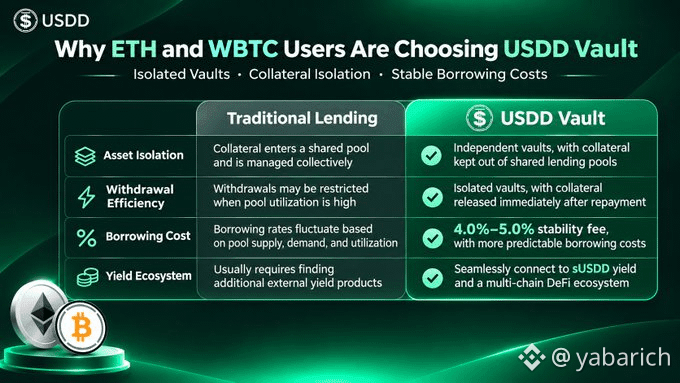
According to USDD's latest comparative announcement, its Ethereum vault architecture offers four distinguishing characteristics:
• Asset Isolation
Traditional pooled lending protocols generally manage deposited assets through shared liquidity pools.
USDD Vault maintains collateral within independent vault positions, keeping it outside shared lending pools.
• Withdrawal Efficiency
In pooled lending markets, withdrawals may be constrained when available liquidity is insufficient.
USDD Vault allows collateral to be released after the associated debt and applicable fees are repaid, subject to protocol conditions.
• Borrowing Cost Predictability
Pooled lending rates commonly fluctuate according to liquidity supply, borrowing demand and utilization.
USDD's announcement specifies stability fees ranging from 4.0% to 5.0%, offering a more predictable basis for financing calculations.
• Yield Ecosystem Accessibility
Minted USDD can be deployed into compatible financial applications, including sUSDD yield opportunities and multichain DeFi services.
These characteristics make USDD Vault particularly relevant to ETH and WBTC holders seeking stablecoin liquidity without immediately selling their underlying assets.
However, isolated collateral does not eliminate smart contract, liquidation, oracle or stablecoin risks. Stability fees may also be adjusted according to protocol governance and applicable parameters.
Source: USDD's official Ethereum Vault comparative announcement. The quoted fee range has not been independently verified against live vault parameters.
𝗠𝗬 𝗣𝗘𝗥𝗦𝗢𝗡𝗔𝗟 𝗩𝗜𝗘𝗪: 𝗣𝗥𝗘𝗗𝗜𝗖𝗧𝗔𝗕𝗟𝗘 𝗕𝗢𝗥𝗥𝗢𝗪𝗜𝗡𝗚 𝗖𝗢𝗦𝗧𝗦 𝗔𝗥𝗘 𝗔 𝗙𝗢𝗥𝗠 𝗢𝗙 𝗖𝗔𝗣𝗜𝗧𝗔𝗟 𝗘𝗙𝗙𝗜𝗖𝗜𝗘𝗡𝗖𝗬
I believe the most underestimated advantage of CDP-based lending is the ability to plan financing expenditure over longer periods.
Consider a hypothetical ETH holder with $100,000 in collateral who requires $30,000 in stablecoin liquidity.
Initial position:
• Collateral value: $100,000.
• USDD minted: 30,000.
• Initial collateralization ratio: 333.33%.
• Loan-to-value ratio: 30%.
Scenario A — USDD Vault:
• Annual stability fee: 4%–5%.
• Estimated annual financing expenditure: $1,200–$1,500.
Scenario B — Variable-rate pooled lending:
• Assumed annual borrowing rate: 8%.
• Estimated annual financing expenditure: $2,400.
Potential financing advantage:
• Annual savings: $900–$1,200.
• Relative borrowing cost reduction: 37.5%–50%.
The 8% pooled lending rate is a hypothetical assumption, not an observed market rate. Calculations assume unchanged rates, constant debt balances, USDD trading at $1 and simple annual financing costs, excluding transaction fees.
If the borrower deploys 30,000 USDD into a separate strategy generating an assumed annual yield of 6%, the gross annual income would be $1,800.
After the stated stability fees, the remaining income would be approximately $300–$600 before additional expenses.
This relatively narrow financing spread demonstrates why users should evaluate net returns rather than advertised yields alone.
Collateral volatility remains equally important.
If the underlying ETH collateral loses 50% of its market value, the collateralization ratio would decline from 333.33% to approximately 166.67%, excluding accrued fees.
Whether that position faces liquidation depends on the applicable vault threshold.
Therefore, predictable financing costs should be combined with conservative leverage, adequate collateral buffers and sufficient repayment liquidity.
𝗨𝗦𝗗𝗗'𝗦 𝗘𝗧𝗛𝗘𝗥𝗘𝗨𝗠 𝗘𝗫𝗣𝗔𝗡𝗦𝗜𝗢𝗡: 𝗙𝗥𝗢𝗠 𝗜𝗦𝗢𝗟𝗔𝗧𝗘𝗗 𝗩𝗔𝗨𝗟𝗧𝗦 𝗧𝗢 𝗠𝗨𝗟𝗧𝗜𝗖𝗛𝗔𝗜𝗡 𝗖𝗔𝗣𝗜𝗧𝗔𝗟 𝗠𝗔𝗡𝗔𝗚𝗘𝗠𝗘𝗡𝗧
USDD's expansion into Ethereum-based ETH and WBTC collateral markets represents an opportunity to diversify stablecoin issuance beyond its established TRON ecosystem.
Rather than competing exclusively through liquidity incentives, USDD could differentiate itself through transparent collateral management, predictable financing parameters and accessible multichain financial applications.
The most meaningful indicators I would monitor include:
• Total USDD minted against ETH and WBTC.
• Number of active Ethereum vault positions.
• Collateral composition and concentration.
• Average collateralization ratios.
• Stability fee revenue.
• Borrower retention and repayment activity.
• Liquidation frequency and associated losses.
• USDD liquidity and peg stability across supported networks.
• Actual borrowing costs relative to competing lending protocols.
Importantly, Ethereum-based vault activity should not automatically be interpreted as direct growth in TRON network transactions or TRX demand.
Its broader ecosystem value depends on how newly minted USDD circulates across financial applications and whether multichain adoption creates sustainable protocol revenue.
Pooled lending can remain economically attractive when utilization is low and borrowing rates are competitive. Independent vaults may be more suitable for borrowers prioritizing collateral isolation and financing predictability.
Neither architecture is universally superior.
In my assessment, USDD Vault's strongest competitive opportunity lies in giving ETH and WBTC holders an additional choice in how they manage collateralized liquidity.
Collateral isolation improves structural separation.
Predictable stability fees support financial planning.
Multichain accessibility expands capital deployment opportunities.
Responsible risk management determines long-term sustainability.
The future of decentralized lending should not force users into a single financial architecture. It should provide transparent alternatives that allow borrowers to select the mechanism best aligned with their liquidity requirements, risk tolerance and economic objectives.
Explore USDD Vault:
https://app.usdd.io
Public research resources:
https://usdd.io
https://defillama.com/stablecoin/usdd
https://etherscan.io