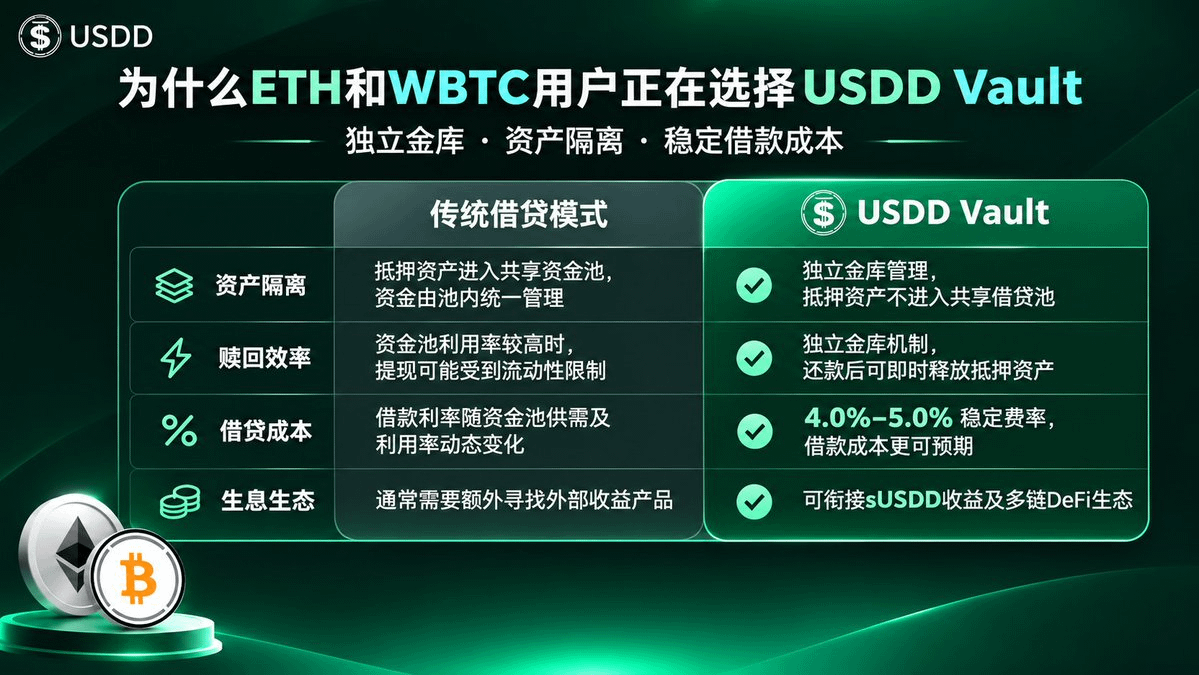
Decentralized borrowing can be organized through different financial architectures.
Shared lending pools connect supplied capital with borrowing demand, while collateralized debt positions introduce a mechanism for generating debt against deposited collateral.
Both approaches can address liquidity requirements, but their economic structures and risk profiles differ.
USDD highlights that its Ethereum Vault remains available for native collateralized debt positions, offering ETH and WBTC holders an alternative to shared lending pools.
This distinction is particularly relevant for participants who wish to access stablecoin liquidity without immediately selling their underlying assets.
However, maintaining economic exposure to collateral does not eliminate the restrictions and risks associated with securing a debt position.
𝗦𝘁𝗮𝗿𝘁𝗲𝗱 🌱
Three concepts help explain the vault architecture:
✅ Eligible collateral can support the creation of a USDD-denominated debt position.
✅ Borrowers can retain economic exposure to their deposited assets while the collateral remains secured by the protocol.
✅ Debt repayment and collateral management remain subject to applicable vault conditions and liquidation requirements.
𝗪𝗵𝘆 𝗨𝗦𝗗𝗗 𝗠𝗮𝘁𝘁𝗲𝗿𝘀
Native CDPs introduce several important financial considerations.
𝗕𝗼𝗿𝗿𝗼𝘄𝗶𝗻𝗴 𝗰𝗵𝗼𝗶𝗰𝗲: Users can evaluate vault-based borrowing alongside shared lending markets.
𝗖𝗼𝗹𝗹𝗮𝘁𝗲𝗿𝗮𝗹 𝘂𝘁𝗶𝗹𝗶𝘁𝘆: ETH and WBTC can potentially support additional financial activities without requiring an immediate sale.
𝗗𝗲𝗯𝘁 𝗺𝗮𝗻𝗮𝗴𝗲𝗺𝗲𝗻𝘁: Individual positions require ongoing attention to collateral value, debt obligations, and applicable fees.
𝗥𝗶𝘀𝗸 𝘀𝗲𝗽𝗮𝗿𝗮𝘁𝗶𝗼𝗻: Vault-based and pooled lending architectures introduce different dependencies that should be evaluated independently.
For example, a hypothetical $10,000 collateral position supporting $4,000 in debt begins with a 250% collateralization ratio.
If collateral value declines to $6,000 while debt remains unchanged, that ratio falls to 150%.
Whether liquidation occurs depends on the actual protocol parameters.
𝗙𝗶𝗻𝗮𝗹 𝗜𝗻𝘀𝗶𝗴𝗵𝘁 🌸
The availability of native USDD vaults preserves an alternative approach to decentralized borrowing.
Nevertheless, no single architecture is universally preferable for every financial objective.
Users should compare borrowing costs, collateral requirements, liquidation conditions, and smart contract dependencies before selecting a mechanism.
For the broader ecosystem, maintaining diverse borrowing architectures can support more flexible financial participation.
Meaningful financial autonomy requires not only access to different tools, but also a clear understanding of the obligations and risks accompanying each choice.
@justinsuntron @USDD - Decentralized USD #TRONEcoStar