
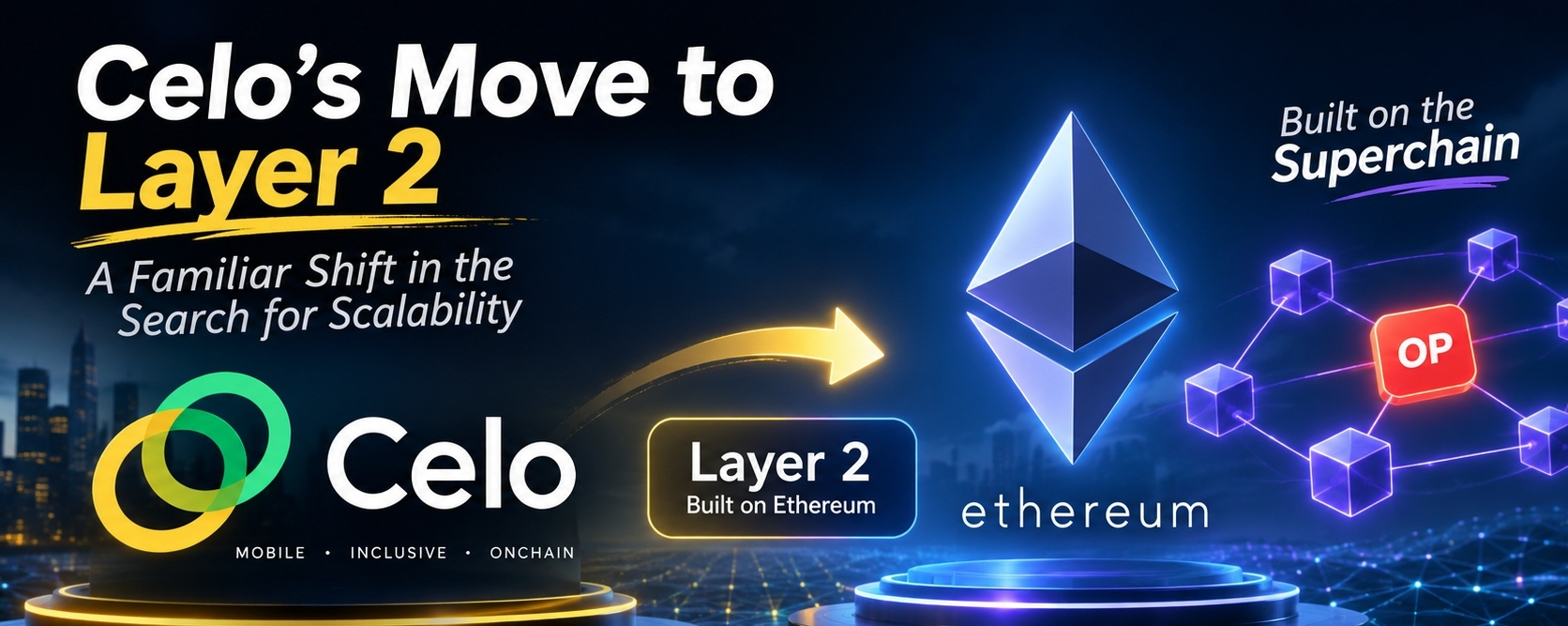

I’ve noticed that blockchain infrastructure tends to move in cycles. Every few years, the industry revisits the same fundamental problems: scalability versus decentralization, security versus flexibility, and performance versus accessibility. The solutions change, the architecture evolves, and the terminology becomes more sophisticated, but the underlying tensions rarely disappear.
Celo’s transition to an Ethereum Layer 2 is an interesting example of this pattern.
Originally built as an independent Layer 1 with a strong focus on mobile accessibility and real-world payments, Celo is now moving toward a different infrastructure model. By becoming part of Ethereum’s security ecosystem and building on the Optimism Superchain, it is positioning itself within a broader network of interconnected rollups.
The reasoning is understandable. Ethereum offers an established security foundation, while Layer 2 architecture creates opportunities for lower transaction costs, greater scalability, and closer integration with an expanding ecosystem. For Celo, this could strengthen its ability to support stablecoin payments, mobile-first applications, and financial services designed for everyday users.
But I don't see this as an entirely new idea. Blockchain networks have repeatedly reconsidered whether maintaining their own independent infrastructure is worth the cost when larger ecosystems can offer shared security, liquidity, and developer support.
The shift introduces a different set of trade-offs. Greater alignment with Ethereum can improve security assumptions and interoperability, but it also means accepting dependencies on another network's infrastructure, governance decisions, and upgrade processes. Being part of the Superchain creates opportunities for coordination, yet coordination itself introduces complexity.
What interests me most is the gap between architectural improvements and actual adoption. Lower fees and stronger security are useful, but they do not automatically create better payment experiences or bring new users into decentralized finance. Celo still needs to demonstrate that its infrastructure can translate technical advantages into consistent, everyday utility.
I think the bigger question is whether this transition changes how blockchain ecosystems compete, or simply reflects another stage in their evolution. Independent chains once represented freedom and flexibility. Now, shared security and interconnected infrastructure are becoming increasingly attractive.
Perhaps the industry is gradually learning that building everything independently isn't always the most sustainable approach.
But does Celo's move to Ethereum represent genuine progress toward a more practical blockchain ecosystem, or is it another refined version of the same search for the right balance between independence,
security, and scale?