𝗢𝗡𝗘 𝗕𝗜𝗚 𝗕𝗔𝗚 𝗢𝗥 𝗦𝗘𝗣𝗔𝗥𝗔𝗧𝗘 𝗦𝗔𝗙𝗘𝗧𝗬 𝗕𝗢𝗫𝗘𝗦: 𝗛𝗢𝗪 𝗝𝗨𝗦𝗧𝗟𝗘𝗡𝗗'𝗦 𝗦𝗕𝗠 𝗩𝟭 𝗔𝗡𝗗 𝗩𝟮 𝗚𝗜𝗩𝗘 𝗕𝗢𝗥𝗥𝗢𝗪𝗘𝗥𝗦 𝗥𝗘𝗔𝗟 𝗖𝗛𝗢𝗜𝗖𝗘
Packing for a trip teaches you a simple lesson fast: throwing everything into one giant duffel bag is super convenient until a single shampoo bottle leaks over your favorite jacket.
On-chain lending runs into that exact same trade-off between maximum convenience and clean risk isolation.
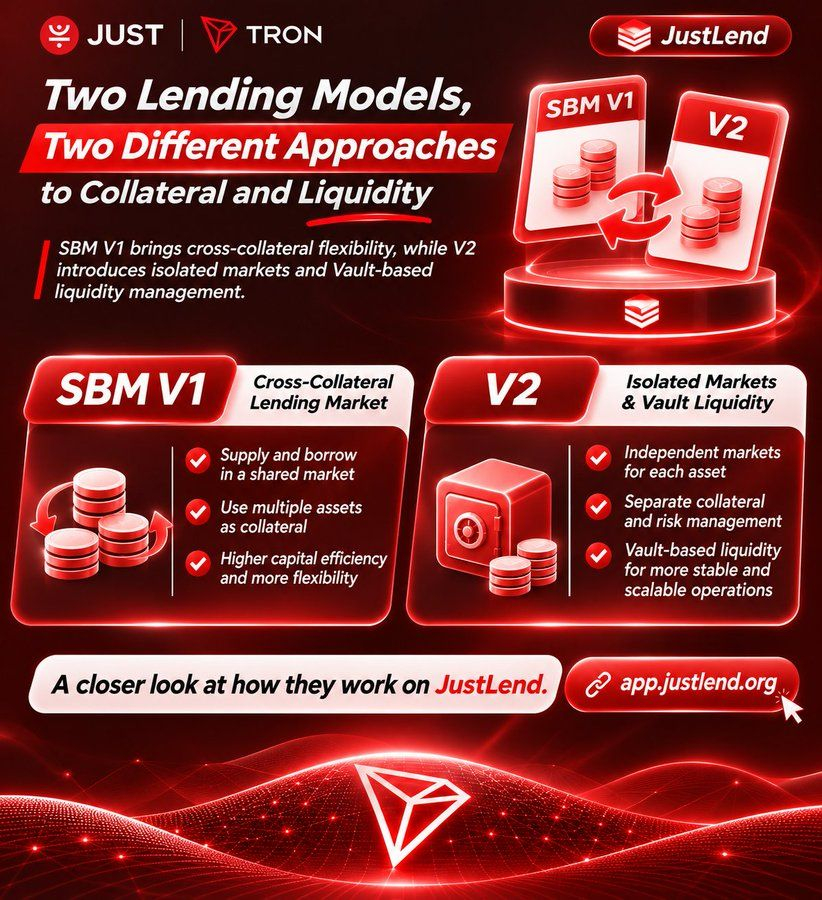
Instead of forcing every borrower into a one-size-fits-all mold, JustLend offers two distinct engines—SBM V1 and SBM V2—so you can match your collateral setup to your actual risk appetite.
𝗛𝗼𝘄 𝗦𝗕𝗠 𝗩𝟭 𝗔𝗻𝗱 𝗦𝗕𝗠 𝗩𝟮 𝗛𝗮𝗻𝗱𝗹𝗲 𝗖𝗼𝗹𝗹𝗮𝘁𝗲𝗿𝗮𝗹 𝗔𝗻𝗱 𝗟𝗶𝗾𝘂𝗶𝗱𝗶𝘁𝘆 𝗗𝗶𝗳𝗳𝗲𝗿𝗲𝗻𝘁𝗹𝘆
Understanding the core design split helps you put the right assets in the right place:
➞ SBM V1 (Cross-Collateral Flexibility): Your eligible supplied assets pool together into one unified borrowing limit, making it effortless to manage mainstream TRON holdings under a single health factor
➞ SBM V2 (Isolated Markets): Each lending pair stands inside its own walled-off compartment, ensuring volatility in one market never spills over to threaten your unrelated positions
➞ Vault-Based Liquidity Management: V2 pairs isolated risk with dedicated Vault architecture, giving liquidity providers tailored control over where their capital works
SBM V1 = Shared cross-collateral convenience | SBM V2 = Isolated markets + Vault-based liquidity
𝗚𝗼𝗼𝗱 𝗥𝗶𝘀𝗸 𝗗𝗲𝘀𝗶𝗴𝗻 𝗜𝘀 𝗔𝗯𝗼𝘂𝘁 𝗖𝗵𝗼𝗶𝗰𝗲, 𝗡𝗼𝘁 𝗥𝗲𝘀𝘁𝗿𝗶𝗰𝘁𝗶𝗼𝗻
Experienced DeFi users rarely want every position tangled together, yet beginners hate juggling five separate dashboards just to borrow against core holdings.
By running SBM V1 and SBM V2 side by side, JustLend lets TRON users choose seamless flexibility or strict risk containment whenever they click supply.
When borrowing on JustLend, do you lean toward SBM V1's unified cross-collateral ease or SBM V2's isolated market protection?
@Justin Sun孙宇晨 @JUST DAO #TRONEcoStar