𝐓𝐑𝐎𝐍 𝐒𝐓𝐀𝐁𝐋𝐄𝐂𝐎𝐈𝐍 𝐆𝐑𝐎𝐖𝐓𝐇: 𝐅𝐑𝐎𝐌 $𝟕𝟗.𝟒𝐁 𝐓𝐎 $𝟗𝟑.𝟕𝐁 𝐀𝐍𝐃 𝐀 𝐑𝐈𝐒𝐈𝐍𝐆 𝐆𝐋𝐎𝐁𝐀𝐋 𝐒𝐇𝐀𝐑𝐄
𝐈. 𝐓𝐇𝐄 𝐍𝐔𝐌𝐁𝐄𝐑𝐒: 𝐒𝐔𝐏𝐏𝐋𝐘 𝐀𝐍𝐃 𝐌𝐀𝐑𝐊𝐄𝐓 𝐒𝐇𝐀𝐑𝐄 𝐌𝐎𝐕𝐄 𝐇𝐈𝐆𝐇𝐄𝐑
The cited stablecoin data reveals two important changes in TRON's position over the past year.
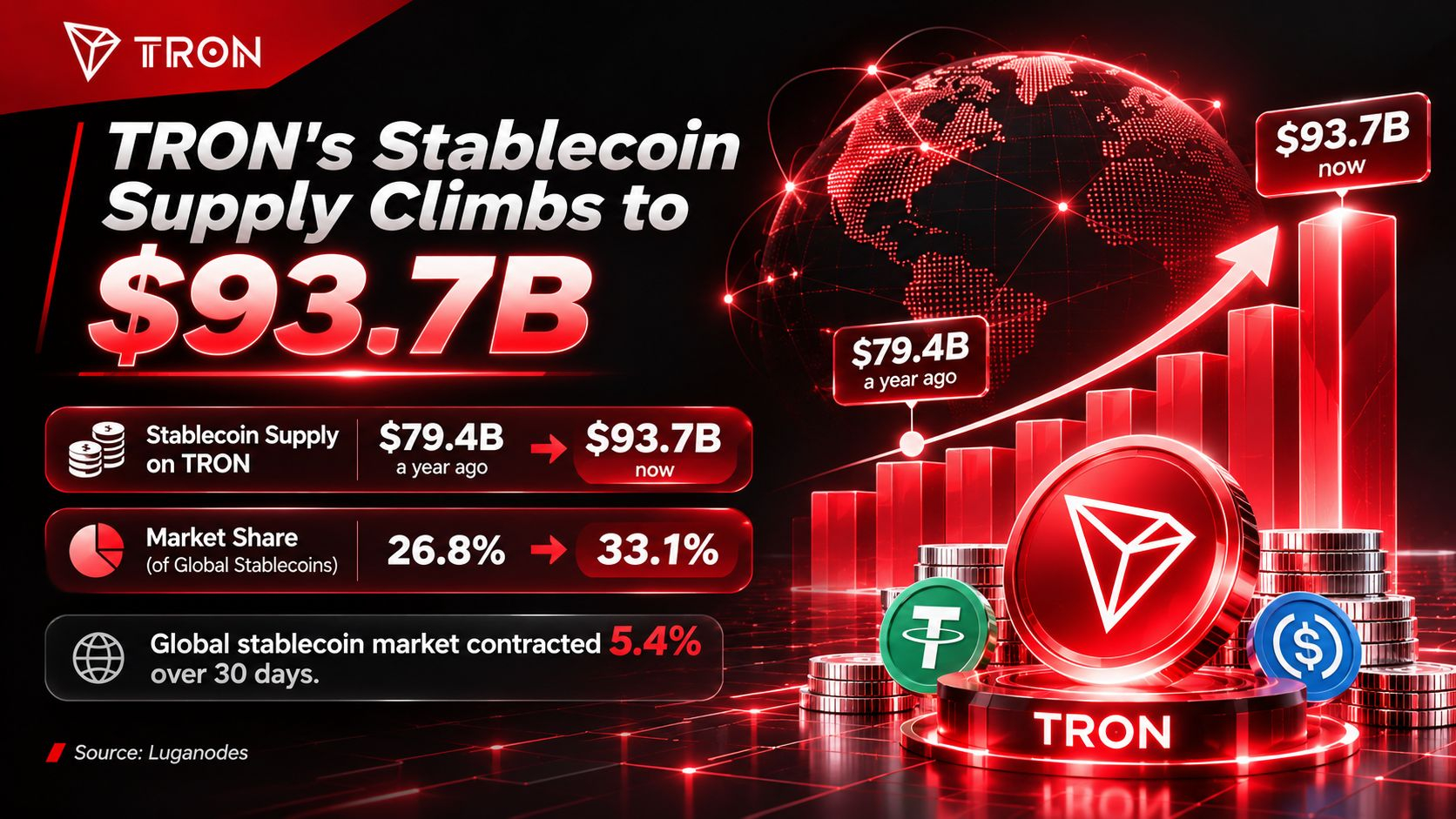
Stablecoin supply increased from $79.4 billion to $93.7 billion.
That represents an absolute increase of $14.3 billion, equivalent to approximately 18.0% growth.
Over the same comparison period, TRON's share of the global stablecoin market increased from 26.8% to 33.1%.
This represents a gain of 6.3 percentage points.
The relative increase in market share is approximately 23.5% compared with its starting level.
These figures describe two different developments.
Supply growth shows that the reported dollar value of stablecoins on TRON increased.
Market share growth shows that TRON also accounted for a larger proportion of the global stablecoin supply.
Together, they suggest that TRON's stablecoin position strengthened both in absolute terms and relative to the wider market.
𝐈𝐈. 𝐖𝐇𝐘 𝐓𝐇𝐄 𝐆𝐋𝐎𝐁𝐀𝐋 𝐌𝐀𝐑𝐊𝐄𝐓 𝐂𝐎𝐍𝐓𝐄𝐗𝐓 𝐌𝐀𝐓𝐓𝐄𝐑𝐒
The cited source also reports that the global stablecoin market declined by 5.4% over a 30-day period.
This introduces an important analytical distinction.
TRON's supply growth figures cover a one-year comparison, while the global market contraction refers to a separate 30-day window.
These periods should not be directly compared as if they measured simultaneous changes.
Nevertheless, the combination highlights why market share can be an informative indicator.
A blockchain may gain share because its own stablecoin supply grows, because competing networks contract, or through some combination of both.
The supplied annual figures show TRON's reported supply increasing alongside its market share.
However, the 30-day global decline alone does not establish how TRON performed during that same month.
A precise short-term comparison would require matching 30-day network-level data.
𝐈𝐈𝐈. 𝐌𝐘 𝐏𝐄𝐑𝐒𝐏𝐄𝐂𝐓𝐈𝐕𝐄: 𝐑𝐄𝐋𝐀𝐓𝐈𝐕𝐄 𝐆𝐑𝐎𝐖𝐓𝐇 𝐈𝐒 𝐀𝐒 𝐈𝐌𝐏𝐎𝐑𝐓𝐀𝐍𝐓 𝐀𝐒 𝐀𝐁𝐒𝐎𝐋𝐔𝐓𝐄 𝐆𝐑𝐎𝐖𝐓𝐇
I believe the most significant feature of this dataset is not simply the additional $14.3 billion in stablecoin supply.
It is the simultaneous increase in TRON's share of the global market.
A network can grow while losing competitive relevance if the broader industry expands more quickly.
In this case, the cited figures indicate that TRON's share rose from 26.8% to 33.1%.
That suggests stronger relative positioning over the annual comparison period.
However, I would avoid interpreting this as automatic evidence of increasing payment adoption.
Stablecoin supply can change through issuance, redemption, cross-chain allocation, exchange balances, and treasury activity.
To understand the economic drivers, I would examine adjusted transfer volumes, active stablecoin users, and changes in issuer-specific supply.
𝐈𝐕. 𝐋𝐎𝐍𝐆-𝐓𝐄𝐑𝐌 𝐈𝐌𝐏𝐀𝐂𝐓: 𝐒𝐔𝐒𝐓𝐀𝐈𝐍𝐈𝐍𝐆 𝐆𝐑𝐎𝐖𝐓𝐇 𝐁𝐄𝐘𝐎𝐍𝐃 𝐌𝐀𝐑𝐊𝐄𝐓 𝐂𝐘𝐂𝐋𝐄𝐒
TRON's reported growth from $79.4 billion to $93.7 billion demonstrates substantial expansion in its stablecoin supply over the cited year.
The increase from 26.8% to 33.1% global market share adds a second dimension: relative competitive strength.
Against the source's reported 5.4% global market contraction over 30 days, these figures invite further investigation into network-level resilience and capital allocation.
The long-term question is whether TRON can maintain this position through changing market conditions.
I would monitor sustained liquidity, payment activity, stablecoin issuer diversification, and network reliability.
The strongest outcome would be growth supported by genuine financial usage rather than temporary shifts in where stablecoins are held.
@Justin Sun孙宇晨 @TRON DAO #TRONEcoStar