

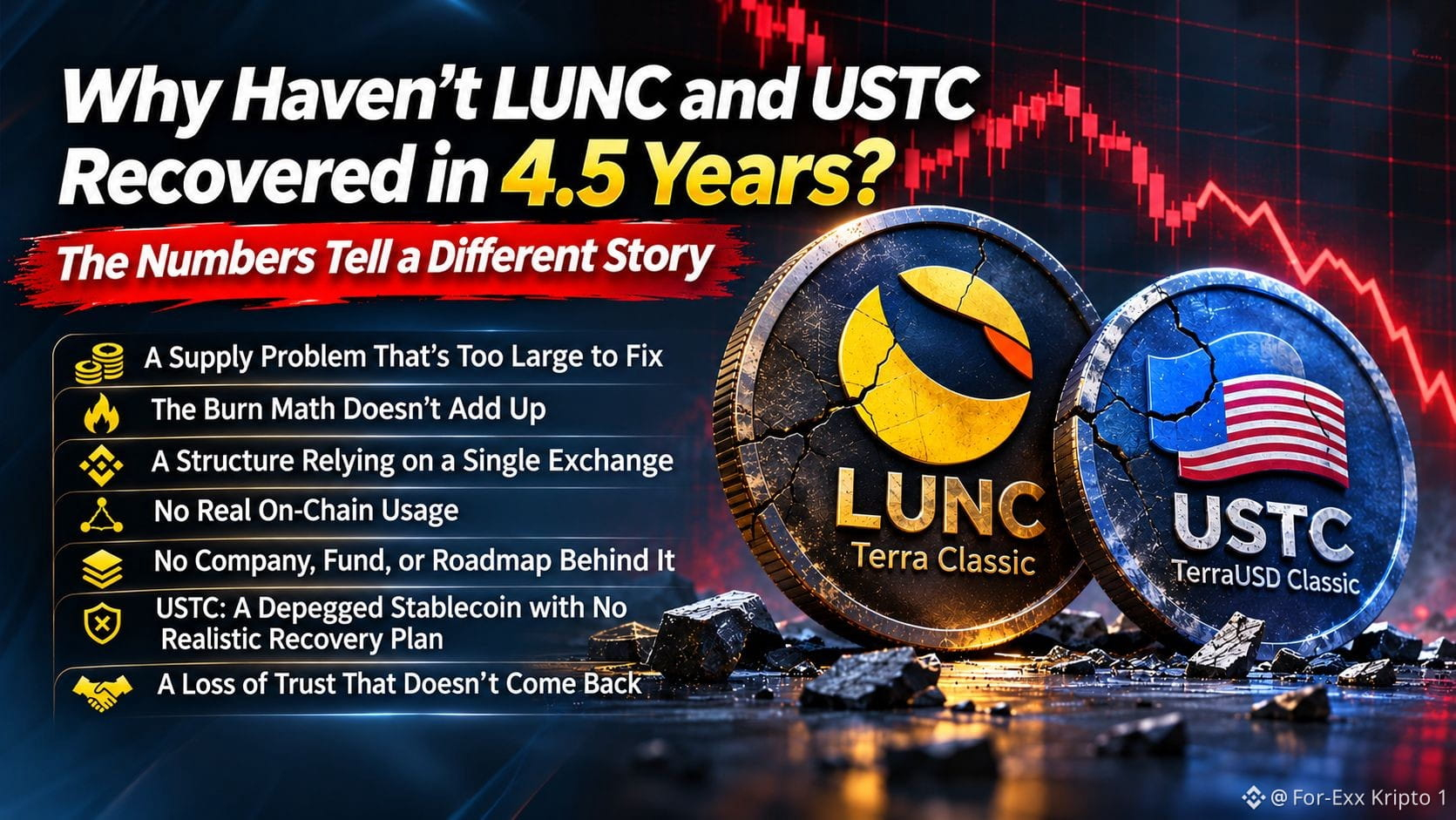
Why Haven’t LUNC and USTC Recovered in 4.5 Years? 🧵 A ~$40B ecosystem collapsed in May 2022. The community still expects burns to restore it. The numbers say otherwise. 1️⃣ Massive supply ~350M LUNA circulated before the crash. Unlimited minting to defend UST pushed supply to 6.9T. $LUNC supply remains ~6.45T; only ~464B has been burned since May 2022 (6.7%). 2️⃣ Slow burns ~39.8B LUNC burned in the past year: 0.62% of supply. At this pace, halving supply takes ~112 years. The burn tax rose from 0.5% to 1.5% in August 2026, but monthly burns rose only ~60% as volume fell. 3️⃣ Binance dependence Binance burned ~88B LUNC, but skipped its November 2026 burn, ending a 44-month streak. The burn narrative relies on one exchange. 4️⃣ Little utility Terra Classic TVL is <$1M (~$817K); daily DEX volume is ~$5K. Before the crash, Terra had >$20B TVL and ranked second in DeFi. Most LUNC trades now happen on centralized exchanges. 5️⃣ No institutional backing Terraform Labs moved to Terra 2.0, leaving Classic to its community and validators. No lasting development budget or institutional partner exists; upgrades mostly maintain infrastructure. 6️⃣ USTC’s repeg problem ~6B $USTC remain. A $1 peg needs~$6B in real collateral, which is unavailable. Minting stopped in 2023; repeg proposals failed. Staking was approved in April 2026; KuCoin, OKX and Bybit delisted USTC. Repeg headlines trigger temporary 30%–60% spikes, not recovery 7️⃣ Lost trust Do Kwon pleaded guilty to US fraud charges in August 2025 and received 15 years in December 2025. South Korean cases continue. Trust remains damaged. 8️⃣ Why it survives Low prices attract speculation; exchange listings provide liquidity; the community remains loyal; burns and proposals create trades 📌 Bottom line The problem is structural: 6.45T LUNC supply, ~0.6% annual burns, <$1M TVL, one-exchange dependence and an uncollateralized stablecoin. Volatility offers trades,but the numbers do not support a return to former highs
انضم إلى مُستخدمي العملات الرقمية حول العالم على Binance Square
⚡️ احصل على أحدث المعلومات المفيدة عن العملات الرقمية.
💬 موثوقة من قبل أكبر منصّة لتداول العملات الرقمية في العالم.
👍 اكتشف الرؤى الحقيقية من صنّاع المُحتوى الموثوقين.
البريد الإلكتروني / رقم الهاتف