

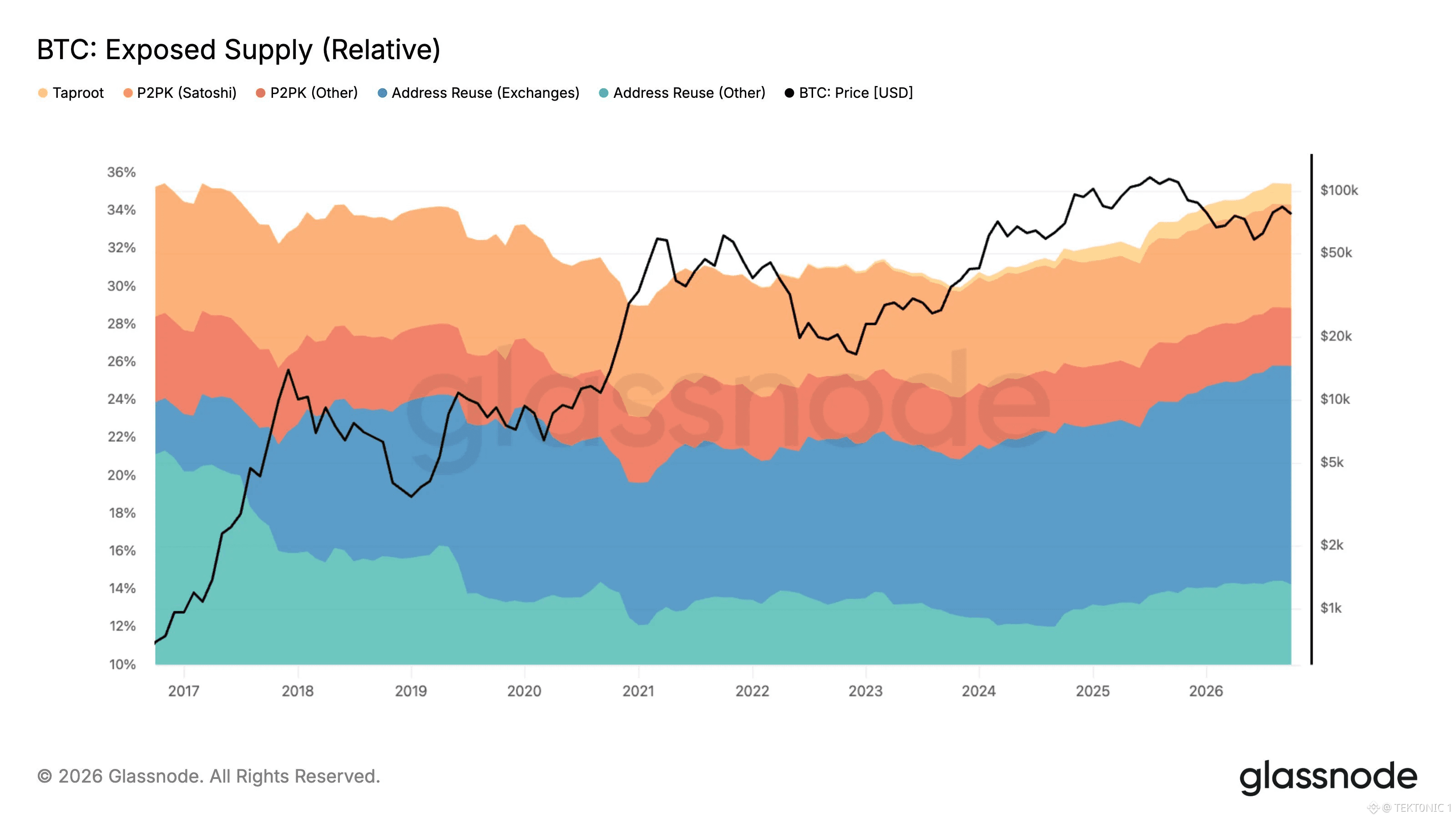
BITCOIN'S QUANTUM-EXPOSED SUPPLY PROBLEM HAS 4 POSSIBLE SOLUTIONS. BUT THE LAST ONE IS THE MOST CONTROVERSIAL. ⚛️ Quantum computing could eventually threaten Bitcoin's existing cryptographic signatures, particularly coins whose public keys are already exposed on-chain. Preparing for that risk involves more than simply upgrading the network. 1. Exchanges retire reused addresses. Reusing addresses can expose public keys. Exchanges and custodians can reduce avoidable exposure by using fresh addresses and improving wallet practices. 2. Introduce quantum-resistant signatures. Bitcoin would need cryptographic signatures capable of resisting quantum attacks. BIP-360 proposes a new output type designed to reduce public-key exposure, but it remains a draft, not an activated upgrade. 3. Give holders a migration window. If new quantum-resistant address types are introduced, holders would need time to move their $BTC . Exchanges, wallets and individual users would all have to migrate. BIP-361 proposes a phased migration approach, but it is also still a draft. 4. Decide what happens to Satoshi-era coins. Some early $BTC have exposed public keys and could become vulnerable if sufficiently powerful quantum computers emerge. If owners never move those coins, should Bitcoin freeze them, leave them vulnerable or preserve their ability to spend indefinitely? The first three are largely engineering and coordination challenges. The fourth raises a much deeper question about ownership, immutability, censorship and whether Bitcoin should ever restrict coins that their owners cannot or will not move. Quantum computers capable of breaking Bitcoin's cryptography aren't here today, but migration could take years to coordinate. the technical upgrade may be achievable. deciding what happens to untouched coins is the debate that could divide the community. #BTC Price Analysis# #Bitcoin Price Prediction: What is Bitcoins next move?#
انضم إلى مُستخدمي العملات الرقمية حول العالم على Binance Square
⚡️ احصل على أحدث المعلومات المفيدة عن العملات الرقمية.
💬 موثوقة من قبل أكبر منصّة لتداول العملات الرقمية في العالم.
👍 اكتشف الرؤى الحقيقية من صنّاع المُحتوى الموثوقين.
البريد الإلكتروني / رقم الهاتف