
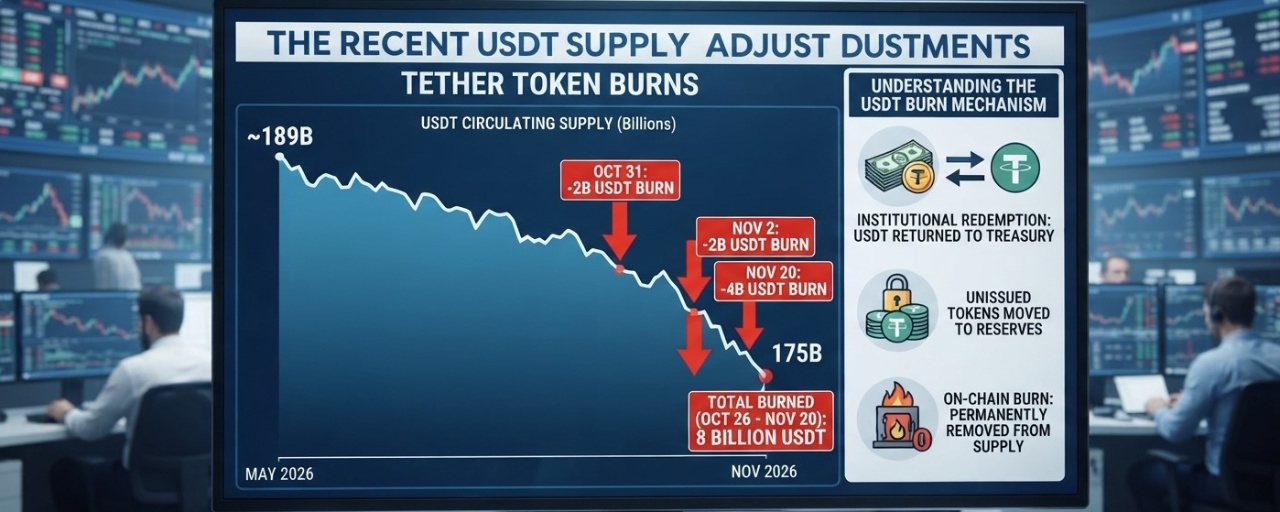

Here is what actually happened across the market as a result of the 8 billion USDT burn:
USDT Held Its $1.00 Peg: There was no depeg, panic run, or liquidity freeze. Tether’s reserves remained fully intact, so 1 USDT continued trading normally at $1.00.
Net Circulating Supply Dropped by ~5 Billion USDT: Even though 8 billion USDT was burned from Tether's treasury wallets, the actual active supply in the market dropped by roughly 5.03 billion USDT between November 1 and November 21 (falling from ~179.8 billion to ~174.8 billion), because some of those burned tokens had already been sitting idle in Tether's treasury.
Higher Exchange Volume, Mixed Altcoin Action: Major exchanges saw a noticeable spike in transaction volume as traders repositioned around the news, while altcoins showed mixed performance rather than a unified crash or rally.
Thinner "Dry Powder" on Exchanges: A smaller circulating supply of USDT means slightly less sideline cash is sitting on crypto exchanges ready to buy dips. In the short term, that can make price swings on smaller or volatile coins slightly sharper when big buy or sell orders hit.
Unlike a regular cryptocurrency (like BNB or SHIB) where burning tokens makes the coin rarer and pushes the price up, burning a stablecoin never increases its price—it just shrinks the total pool of digital dollars in circulation to match lower demand.