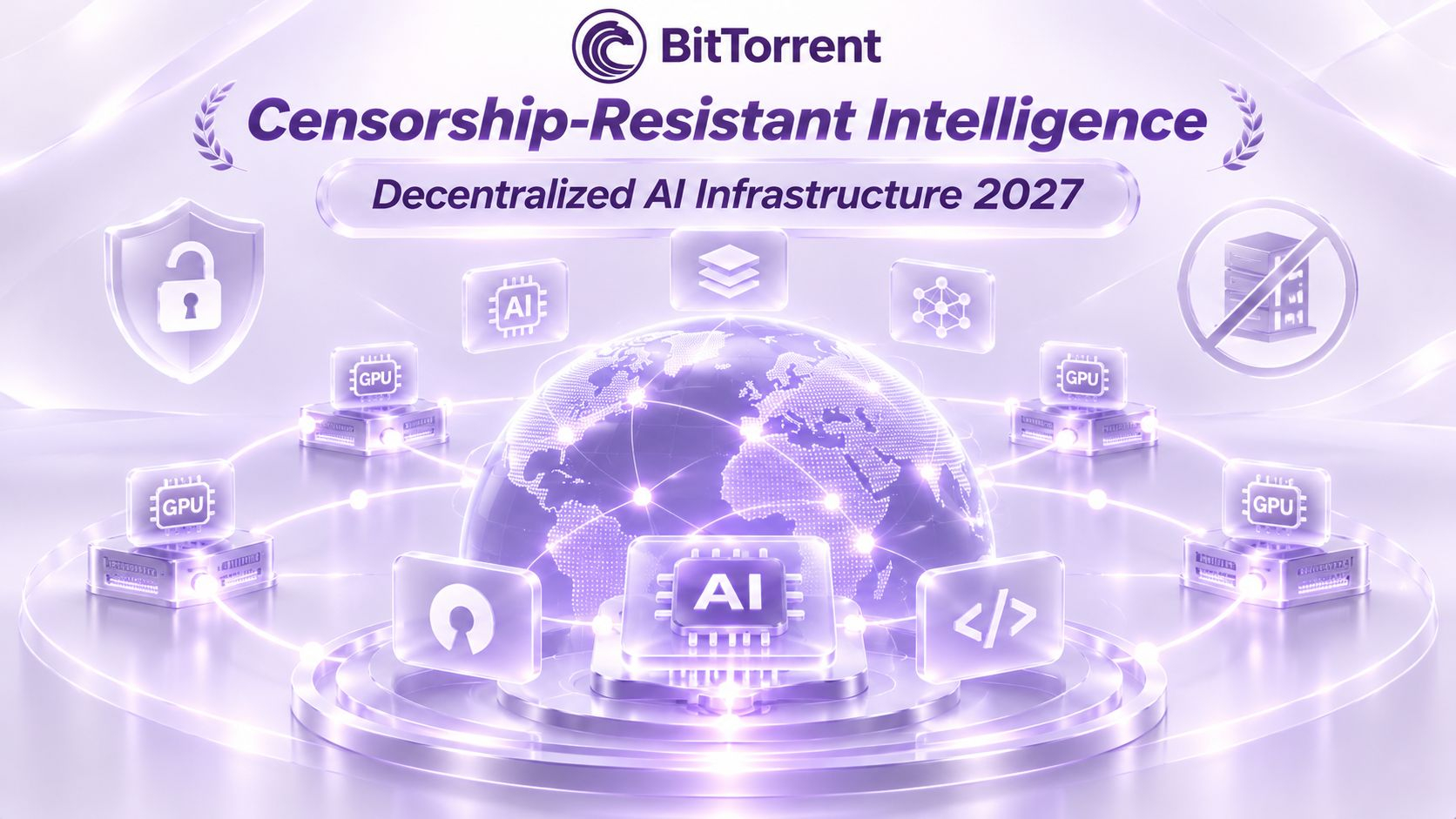
𝗖𝗘𝗡𝗦𝗢𝗥𝗦𝗛𝗜𝗣-𝗥𝗘𝗦𝗜𝗦𝗧𝗔𝗡𝗧 𝗜𝗡𝗧𝗘𝗟𝗟𝗜𝗚𝗘𝗡𝗖𝗘 𝟮𝟬𝟮𝟳: 𝗧𝗛𝗘 𝗩𝗜𝗦𝗜𝗢𝗡 𝗢𝗙 𝗗𝗘𝗖𝗘𝗡𝗧𝗥𝗔𝗟𝗜𝗭𝗘𝗗 𝗔𝗜
𝗪𝗵𝗼 𝗖𝗼𝗻𝘁𝗿𝗼𝗹𝘀 𝘁𝗵𝗲 𝗜𝗻𝗳𝗿𝗮𝘀𝘁𝗿𝘂𝗰𝘁𝘂𝗿𝗲 𝗕𝗲𝗵𝗶𝗻𝗱 𝗜𝗻𝘁𝗲𝗹𝗹𝗶𝗴𝗲𝗻𝗰𝗲?
As artificial intelligence becomes more influential, the infrastructure supporting it becomes increasingly important.
Today, much of the AI ecosystem depends on centralized platforms for computing resources, model access, and service delivery. These systems have enabled rapid development, but they also raise an important question: how much control should a small number of infrastructure providers have over access to AI?
The vision of Censorship-Resistant Intelligence for 2027 offers an opportunity to think about a different architecture.
𝗙𝗿𝗼𝗺 𝗖𝗲𝗻𝘁𝗿𝗮𝗹𝗶𝘇𝗲𝗱 𝗗𝗲𝗽𝗲𝗻𝗱𝗲𝗻𝗰𝗲 𝘁𝗼 𝗗𝗶𝘀𝘁𝗿𝗶𝗯𝘂𝘁𝗲𝗱 𝗣𝗮𝗿𝘁𝗶𝗰𝗶𝗽𝗮𝘁𝗶𝗼𝗻
A decentralized AI infrastructure aims to distribute important resources across a broader network.
Instead of depending entirely on one provider, the architecture can bring together distributed data networks, independent computing resources, and different infrastructure participants.
This direction aligns with the principles behind BitTorrent's P2P technology and the broader vision of decentralized GPU computing.
The potential benefit is greater infrastructure diversity. When computing resources and data distribution are not concentrated in one place, the ecosystem may become less dependent on individual infrastructure operators.
However, censorship resistance does not mean eliminating every form of moderation or legal responsibility. It means designing systems that reduce unnecessary centralized control while maintaining appropriate security and accountability.
𝗠𝘆 𝗣𝗲𝗿𝘀𝗽𝗲𝗰𝘁𝗶𝘃𝗲: 𝗥𝗲𝘀𝗶𝗹𝗶𝗲𝗻𝗰𝗲 𝗜𝘀 𝗔 𝗦𝘁𝗿𝗮𝘁𝗲𝗴𝗶𝗰 𝗔𝗱𝘃𝗮𝗻𝘁𝗮𝗴𝗲
I believe the most important part of this vision is not simply removing centralized infrastructure.
Centralized systems will continue to have advantages in coordination, optimization, and operational management. Decentralized alternatives must demonstrate that they can provide meaningful reliability, performance, and security.
The strongest architecture may ultimately be one where users have more choices and the ecosystem does not depend on a single point of failure.
For AI, this also means considering access to models, computing capacity, data availability, and the ability to move between providers.
𝗪𝗵𝘆 𝟮𝟬𝟮𝟳 𝗜𝘀 𝗮𝗻 𝗜𝗻𝘁𝗲𝗿𝗲𝘀𝘁𝗶𝗻𝗴 𝗛𝗼𝗿𝗶𝘇𝗼𝗻
The 2027 vision creates a useful framework for discussing what decentralized AI infrastructure should achieve.
Rather than measuring progress through announcements alone, I would look for practical evidence: independent computing participation, dependable inference, robust data distribution, privacy protections, and transparent coordination.
These are the characteristics that could make decentralized AI more than an interesting concept.
The future of intelligence should offer users meaningful choices about the infrastructure they depend on.
Do you believe censorship-resistant AI infrastructure will become a necessity by 2027, or will centralized platforms remain the dominant model?