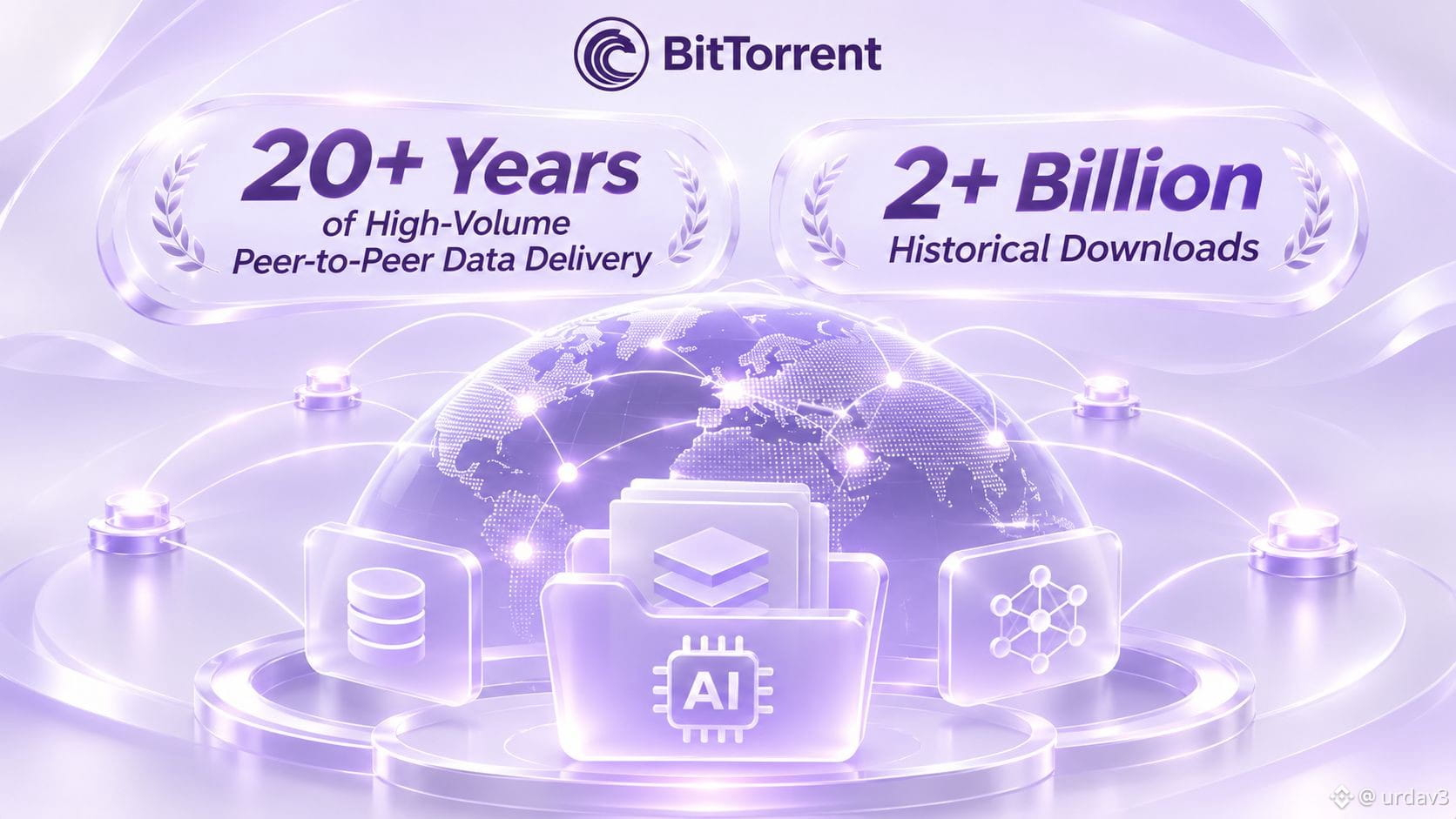
𝗕𝗜𝗧𝗧𝗢𝗥𝗥𝗘𝗡𝗧: 𝟮𝟬+ 𝗬𝗘𝗔𝗥𝗦 𝗢𝗙 𝗣𝟮𝗣 𝗜𝗡𝗡𝗢𝗩𝗔𝗧𝗜𝗢𝗡
𝗙𝗿𝗼𝗺 𝗮 𝗙𝗶𝗹𝗲-𝗦𝗵𝗮𝗿𝗶𝗻𝗴 𝗣𝗿𝗼𝘁𝗼𝗰𝗼𝗹 𝘁𝗼 𝗚𝗹𝗼𝗯𝗮𝗹 𝗗𝗶𝘀𝘁𝗿𝗶𝗯𝘂𝘁𝗲𝗱 𝗜𝗻𝗳𝗿𝗮𝘀𝘁𝗿𝘂𝗰𝘁𝘂𝗿𝗲
Some technologies become relevant because they follow a trend. Others remain relevant because they solve a fundamental problem exceptionally well. BitTorrent belongs to the second category.
For more than 20 years, BitTorrent has demonstrated the potential of peer-to-peer (P2P) technology: allowing participants across a distributed network to exchange data without relying entirely on a centralized distribution system.
With more than 2 billion historical downloads, its reach represents an extraordinary example of how distributed infrastructure can operate at global scale.
𝗧𝗵𝗲 𝗣𝗼𝘄𝗲𝗿 𝗼𝗳 𝗣𝗲𝗲𝗿-𝘁𝗼-𝗣𝗲𝗲𝗿 𝗗𝗶𝘀𝘁𝗿𝗶𝗯𝘂𝘁𝗶𝗼𝗻
The fundamental idea behind BitTorrent is remarkably practical.
Instead of requiring one central server to deliver every copy of a file, P2P technology allows users to exchange pieces of data with one another. As more participants contribute resources, distribution can become more efficient and resilient.
This architecture changed how people thought about large-scale file distribution.
It also introduced an important infrastructure principle: a network can become more useful when its participants contribute resources instead of acting exclusively as consumers.
𝗠𝘆 𝗣𝗲𝗿𝘀𝗽𝗲𝗰𝘁𝗶𝘃𝗲: 𝗟𝗼𝗻𝗴𝗲𝘃𝗶𝘁𝘆 𝗖𝗼𝗺𝗲𝘀 𝗙𝗿𝗼𝗺 𝗨𝘁𝗶𝗹𝗶𝘁𝘆
What interests me most about BitTorrent is not simply its history or download milestone. It is the underlying technology philosophy.
The internet continuously produces larger datasets, more demanding applications, and increasingly complex digital services. Efficiently moving information between participants remains an essential challenge.
P2P architecture offers a different way to approach that challenge by distributing the responsibility across a network.
This principle also has potential relevance beyond traditional file sharing, particularly as AI development creates growing demand for distributing datasets and model files.
𝗙𝗿𝗼𝗺 𝗣𝟮𝗣 𝗛𝗶𝘀𝘁𝗼𝗿𝘆 𝘁𝗼 𝗙𝘂𝘁𝘂𝗿𝗲 𝗜𝗻𝗳𝗿𝗮𝘀𝘁𝗿𝘂𝗰𝘁𝘂𝗿𝗲
BitTorrent's two decades of development provide a valuable foundation for thinking about decentralized infrastructure.
The next opportunity is exploring how established distribution technology can support emerging workloads such as AI.
In my view, the most interesting technologies are those that continue finding new applications for problems they already know how to solve.
Can P2P distribution become an important foundation for the next generation of decentralized AI infrastructure?