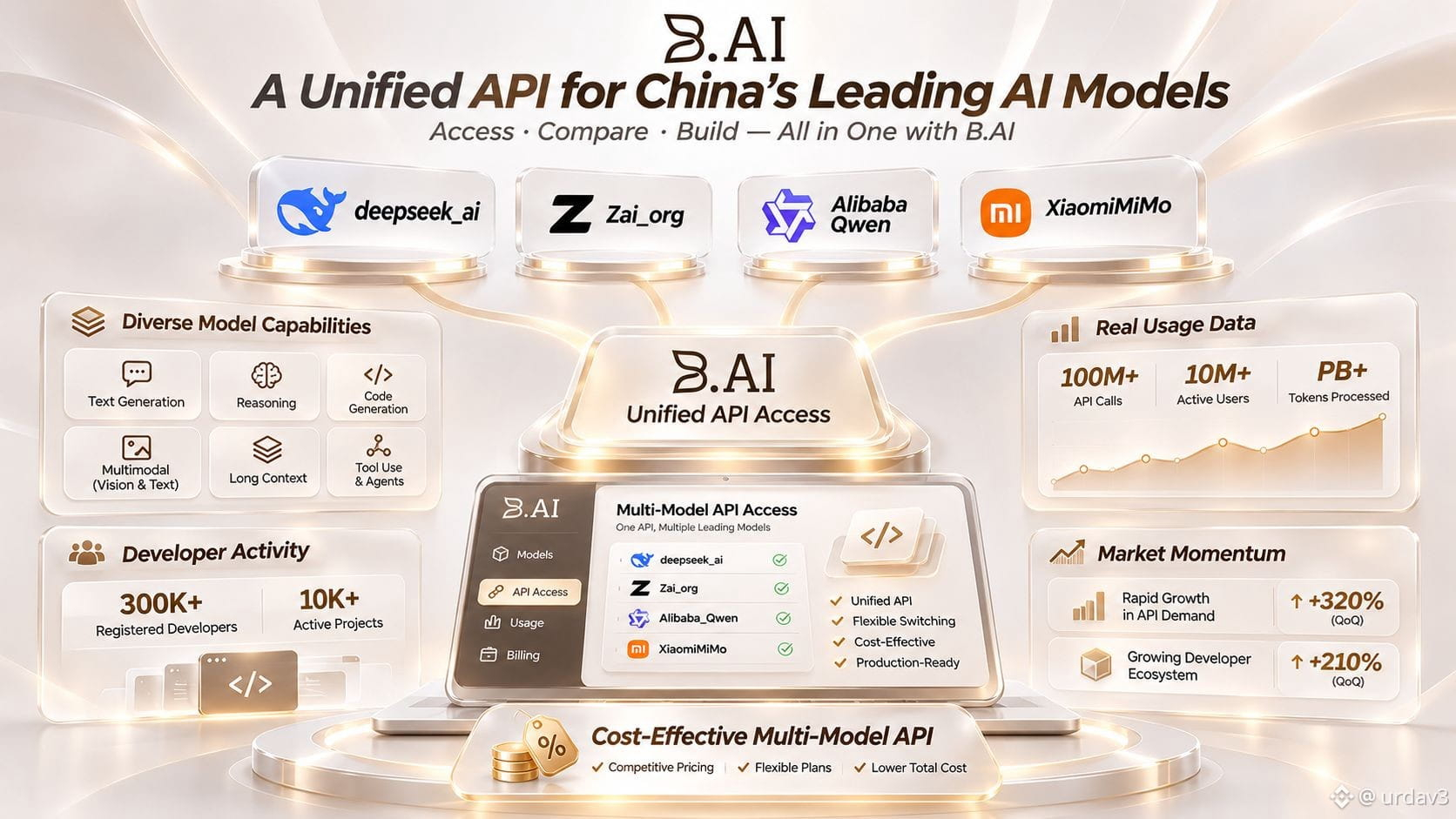
𝗨𝗡𝗜𝗙𝗜𝗘𝗗 𝗠𝗨𝗟𝗧𝗜-𝗠𝗢𝗗𝗘𝗟 𝗔𝗣𝗜: 𝗢𝗡𝗘 𝗜𝗡𝗧𝗘𝗥𝗙𝗔𝗖𝗘, 𝗠𝗨𝗟𝗧𝗜𝗣𝗟𝗘 𝗔𝗜 𝗣𝗢𝗦𝗦𝗜𝗕𝗜𝗟𝗜𝗧𝗜𝗘𝗦
𝗧𝗵𝗲 𝗣𝗿𝗼𝗯𝗹𝗲𝗺 𝗪𝗶𝘁𝗵 𝗮 𝗙𝗿𝗮𝗴𝗺𝗲𝗻𝘁𝗲𝗱 𝗔𝗜 𝗪𝗼𝗿𝗸𝗳𝗹𝗼𝘄
The AI industry is moving toward a multi-model environment. Developers are no longer limited to considering just one provider or one model for every task.
However, this diversity introduces a practical challenge. Connecting to multiple providers can mean managing different integrations, credentials, configurations, and usage arrangements.
As the number of models increases, maintaining these connections can become another layer of development complexity.
𝗛𝗼𝘄 𝗮 𝗨𝗻𝗶𝗳𝗶𝗲𝗱 𝗔𝗣𝗜 𝗖𝗵𝗮𝗻𝗴𝗲𝘀 𝘁𝗵𝗲 𝗪𝗼𝗿𝗸𝗳𝗹𝗼𝘄
B.AI addresses this concept by connecting multiple Chinese AI models through a unified API system.
The main idea is straightforward: instead of approaching every model through an entirely separate access structure, users can access multiple model options through a common API environment.
This approach is particularly relevant when developers want to experiment with different models or build applications that may benefit from having multiple AI options available.
For example, a developer might want to compare how different models handle reasoning, content generation, or other application-specific tasks. A unified access layer can make the process of exploring those alternatives more manageable.
𝗠𝘆 𝗣𝗲𝗿𝘀𝗽𝗲𝗰𝘁𝗶𝘃𝗲
I believe the most important advantage of multi-model infrastructure is flexibility.
No single AI model should automatically be assumed to be the best choice for every task. Different models can have different strengths, limitations, and cost structures.
A unified API environment can help developers evaluate those differences while reducing the friction associated with managing multiple integrations.
This also creates an opportunity to think more carefully about model selection. Instead of choosing one provider and building everything around it, developers can consider which model is appropriate for each particular requirement.
Of course, a unified API does not automatically guarantee identical performance, pricing, or compatibility across every provider. Those details still need to be evaluated individually.
𝗪𝗵𝘆 𝗧𝗵𝗶𝘀 𝗠𝗮𝘁𝘁𝗲𝗿𝘀 𝗳𝗼𝗿 𝘁𝗵𝗲 𝗙𝘂𝘁𝘂𝗿𝗲
The next stage of AI development will likely involve more experimentation across different models and providers.
Infrastructure that makes this process easier can become increasingly valuable because developers need freedom to compare, adapt, and improve their applications.
B.AI's unified multi-model API represents an interesting approach to that challenge.
For me, the real question is no longer whether developers will use multiple AI models, but how efficiently they can coordinate them.
Would you rather build an application around one specialized model or maintain access to multiple models through a unified API?