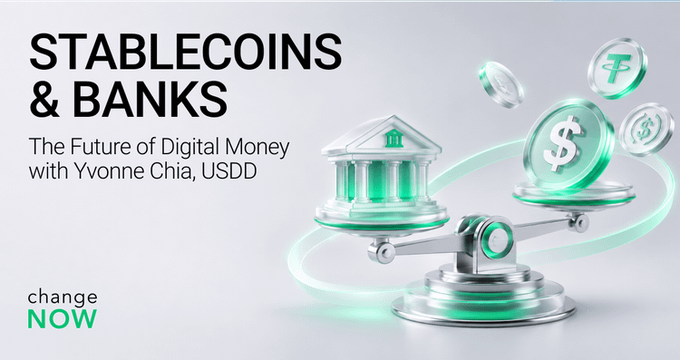
𝗨𝗦𝗗𝗗 × 𝗖𝗛𝗔𝗡𝗚𝗘𝗡𝗢𝗪: 𝗔𝗦 𝗕𝗔𝗡𝗞𝗦 𝗘𝗡𝗧𝗘𝗥 𝗧𝗛𝗘 𝗦𝗧𝗔𝗕𝗟𝗘𝗖𝗢𝗜𝗡 𝗠𝗔𝗥𝗞𝗘𝗧, 𝗪𝗛𝗬 𝗢𝗡𝗖𝗛𝗔𝗜𝗡 𝗙𝗜𝗡𝗔𝗡𝗖𝗜𝗔𝗟 𝗖𝗢𝗡𝗧𝗥𝗢𝗟 𝗦𝗧𝗜𝗟𝗟 𝗠𝗔𝗧𝗧𝗘𝗥𝗦
𝗧𝗛𝗘 𝗣𝗥𝗢𝗕𝗟𝗘𝗠: 𝗗𝗜𝗚𝗜𝗧𝗔𝗟 𝗗𝗢𝗟𝗟𝗔𝗥𝗦 𝗔𝗥𝗘 𝗕𝗘𝗖𝗢𝗠𝗜𝗡𝗚 𝗠𝗔𝗜𝗡𝗦𝗧𝗥𝗘𝗔𝗠, 𝗕𝗨𝗧 𝗨𝗦𝗘𝗥 𝗖𝗢𝗡𝗧𝗥𝗢𝗟 𝗥𝗘𝗠𝗔𝗜𝗡𝗦 𝗔 𝗞𝗘𝗬 𝗤𝗨𝗘𝗦𝗧𝗜𝗢𝗡
The growing interest of banks and financial institutions in stablecoins represents an important development in digital finance.
Stablecoins are increasingly being examined as infrastructure for payments, settlement, and the movement of dollar-denominated value.
However, institutional participation introduces a fundamental question:
Will stablecoins simply make existing financial intermediaries more efficient, or can they also give individuals greater control over their own financial activity?
These outcomes are not mutually exclusive.
Banks can use stablecoin infrastructure to improve certain payment processes, while decentralized applications can provide users with alternative ways to hold, transfer, and manage digital assets.
Following discussions with @yvchiax at TOKEN2049, ChangeNOW's coverage of USDD highlights this distinction.
The conversation focuses on three areas: self-custody, transparency around stablecoin backing, and opportunities to earn yield onchain.
Together, they provide a useful framework for evaluating what stablecoins can offer beyond faster transactions.
𝗧𝗛𝗘 𝗦𝗢𝗟𝗨𝗧𝗜𝗢𝗡: 𝗖𝗢𝗠𝗕𝗜𝗡𝗜𝗡𝗚 𝗦𝗘𝗟𝗙-𝗖𝗨𝗦𝗧𝗢𝗗𝗬, 𝗧𝗥𝗔𝗡𝗦𝗣𝗔𝗥𝗘𝗡𝗖𝗬, 𝗔𝗡𝗗 𝗢𝗡𝗖𝗛𝗔𝗜𝗡 𝗙𝗜𝗡𝗔𝗡𝗖𝗜𝗔𝗟 𝗔𝗣𝗣𝗟𝗜𝗖𝗔𝗧𝗜𝗢𝗡𝗦
USDD's approach highlights three capabilities relevant to users who want to manage digital dollars directly on blockchain networks.
1. Self-Custody and Continuous Transfers
Self-custody allows users to control their digital assets through wallets where they manage the relevant private keys.
This differs from holding balances entirely within a custodial financial account.
Supported blockchain networks can process transactions continuously, without relying on conventional banking business hours.
However, self-custody also transfers important security responsibilities to the user.
Losing private keys, approving malicious transactions, or sending assets to an incorrect address can result in irreversible losses.
Continuous blockchain operation also does not guarantee uninterrupted access to every wallet, exchange, or application.
2. Public Reporting on Stablecoin Backing
For collateral-backed stablecoins, transparency is essential.
Users need information about the assets supporting outstanding supply, the composition of collateral, and the mechanisms intended to manage financial risk.
USDD emphasizes public reporting as part of its approach to stablecoin transparency.
This can provide users with additional information for evaluating the system.
However, publicly available figures should still be assessed for completeness, timeliness, independent verification, and the accessibility of the underlying assets.
Transparency improves the ability to examine risk; it does not eliminate risk.
3. Onchain Yield Through USDD Earn
USDD Earn introduces opportunities for eligible holders to deploy stablecoins into supported earning products.
This expands the potential role of USDD beyond transfers and settlement.
Instead of treating digital dollars solely as payment instruments, users can explore financial applications that seek to generate returns.
However, yield is not an automatic property of holding a stablecoin.
Returns depend on the specific product, its underlying strategy, and applicable market conditions.
Smart contract vulnerabilities, liquidity constraints, counterparty exposure, and changing incentive structures can all affect outcomes.
𝗨𝗦𝗘𝗥 𝗕𝗘𝗡𝗘𝗙𝗜𝗧𝗦: 𝗪𝗛𝗬 𝗧𝗛𝗘 𝗗𝗜𝗦𝗧𝗜𝗡𝗖𝗧𝗜𝗢𝗡 𝗕𝗘𝗧𝗪𝗘𝗘𝗡 𝗣𝗔𝗬𝗠𝗘𝗡𝗧 𝗘𝗙𝗙𝗜𝗖𝗜𝗘𝗡𝗖𝗬 𝗔𝗡𝗗 𝗙𝗜𝗡𝗔𝗡𝗖𝗜𝗔𝗟 𝗔𝗨𝗧𝗢𝗡𝗢𝗠𝗬 𝗠𝗔𝗧𝗧𝗘𝗥𝗦
A bank-issued or bank-integrated stablecoin may improve the efficiency of certain financial services.
But greater settlement efficiency does not necessarily mean that users gain direct control over the assets they hold.
The distinction becomes clearer when comparing different financial arrangements.
In a custodial model, users depend on an intermediary to maintain accounts and process permitted transactions.
In a self-custodial blockchain model, users can initiate supported transfers directly, subject to network conditions and the rules of the relevant asset or protocol.
Neither model is universally superior.
Custodial services may offer account recovery, customer support, and certain consumer protections.
Self-custody may offer greater direct control, but also requires stronger personal security practices.
For USDD users, the potential value lies in having additional options.
They can evaluate self-custodial transfers, examine publicly available collateral information, and choose whether to participate in supported DeFi earning products.
These capabilities should be assessed individually rather than treated as guarantees of safety or profitability.
𝗟𝗢𝗡𝗚-𝗧𝗘𝗥𝗠 𝗜𝗠𝗣𝗔𝗖𝗧: 𝗦𝗧𝗔𝗕𝗟𝗘𝗖𝗢𝗜𝗡 𝗔𝗗𝗢𝗣𝗧𝗜𝗢𝗡 𝗪𝗜𝗟𝗟 𝗗𝗘𝗣𝗘𝗡𝗗 𝗢𝗡 𝗧𝗥𝗨𝗦𝗧, 𝗨𝗧𝗜𝗟𝗜𝗧𝗬, 𝗔𝗡𝗗 𝗨𝗦𝗘𝗥 𝗖𝗛𝗢𝗜𝗖𝗘
The entrance of traditional financial institutions into stablecoins should not be viewed simply as competition between banks and decentralized finance.
It may instead accelerate the development of multiple models for digital money.
Some users will prioritize regulated custodial services and familiar banking interfaces.
Others will value direct asset control, public blockchain verification, and access to decentralized financial applications.
Many may use both approaches for different purposes.
For USDD, this creates an opportunity to demonstrate the practical value of onchain stablecoin infrastructure.
Self-custody can support direct asset management.
Public reporting can help users examine collateral-related risks.
USDD Earn can expand the range of financial activities available to stablecoin holders.
However, long-term adoption requires more than offering these features.
It depends on maintaining reliable liquidity, understandable risk disclosures, accessible applications, and transparent operations.
The most important outcome would be a financial environment in which users can make informed choices between different custody, payment, and earning models.
The future of stablecoins is not only about moving digital dollars faster. It is about giving users clearer information, more practical financial tools, and greater choice over how their digital assets are managed.
That is the broader significance of the discussion surrounding USDD, ChangeNOW, and the growing institutional interest in stablecoin payments.
💚 USDD × ChangeNOW — Exploring the Next Stage of Stablecoin Adoption
• Self-custody and 24/7 blockchain transfers.
• Public reporting on assets supporting USDD.
• Onchain earning opportunities through USDD Earn.
• Greater attention to the risks associated with stablecoin yield.
Explore USDD: https://usdd.io
Source: USDD and ChangeNOW announcement following discussions with @yvchiax at TOKEN2049. The complete article URL was not included in the supplied announcement. This analysis reflects the stated discussion topics rather than attributing additional claims to the unpublished article text.
@USDDecentralize @ChangeNOW @yvchiax @trondao $USDD #USDD #Stablecoin #DeFi #OnchainFinance
@USDD - Decentralized USD #TRONEcoStar