𝗨𝗦𝗗𝗗 𝗣𝗦𝗠: 𝗪𝗛𝗬 𝗦𝗧𝗔𝗕𝗟𝗘𝗖𝗢𝗜𝗡 𝗖𝗢𝗡𝗩𝗘𝗥𝗧𝗜𝗕𝗜𝗟𝗜𝗧𝗬 𝗠𝗔𝗧𝗧𝗘𝗥𝗦 𝗠𝗢𝗥𝗘 𝗧𝗛𝗔𝗡 𝗔 𝗣𝗥𝗢𝗠𝗜𝗦𝗘 𝗢𝗙 $𝟭 𝗦𝗧𝗔𝗕𝗜𝗟𝗜𝗧𝗬
𝗧𝗛𝗘 𝗣𝗥𝗢𝗕𝗟𝗘𝗠: 𝗔 𝗦𝗧𝗔𝗕𝗟𝗘𝗖𝗢𝗜𝗡 𝗣𝗘𝗚 𝗡𝗘𝗘𝗗𝗦 𝗔 𝗣𝗥𝗔𝗖𝗧𝗜𝗖𝗔𝗟 𝗖𝗢𝗡𝗩𝗘𝗥𝗦𝗜𝗢𝗡 𝗠𝗘𝗖𝗛𝗔𝗡𝗜𝗦𝗠
Stablecoins are designed to maintain a relatively stable value, typically around one US dollar. However, maintaining that value in decentralized markets requires more than simply declaring a target price.
When market conditions change, differences between supply and demand can cause stablecoins to trade above or below their intended peg.
For users, these fluctuations create uncertainty.
Someone transferring, saving, or deploying stablecoins in DeFi needs to understand not only the asset's target value but also how it can be exchanged for other assets.
This is where USDD's Peg Stability Module, or PSM, becomes important.
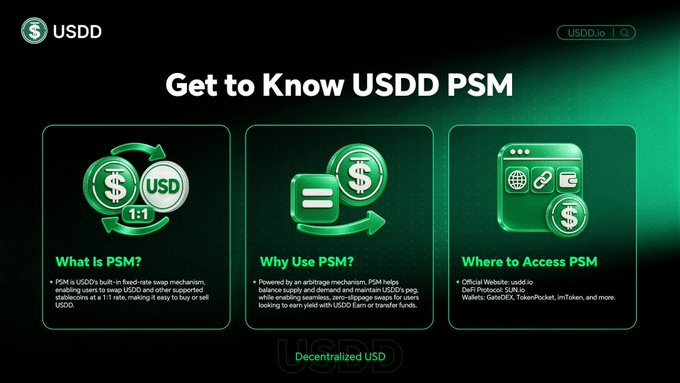
USDD's latest educational infographic highlights the PSM as a mechanism supporting stablecoin conversion, liquidity management, and access to the broader USDD ecosystem.
𝗧𝗛𝗘 𝗦𝗢𝗟𝗨𝗧𝗜𝗢𝗡: 𝗛𝗢𝗪 𝗧𝗛𝗘 𝗨𝗦𝗗𝗗 𝗣𝗘𝗚 𝗦𝗧𝗔𝗕𝗜𝗟𝗜𝗧𝗬 𝗠𝗢𝗗𝗨𝗟𝗘 𝗪𝗢𝗥𝗞𝗦
The PSM is a direct-swap mechanism designed to let users exchange USDD and supported stablecoins at a 1:1 rate, subject to the module's operating conditions.
Instead of relying exclusively on external decentralized exchange liquidity, the PSM provides a dedicated conversion pathway.
Consider a simplified example.
If a user holds 1,000 units of an eligible stablecoin and the PSM supports conversion into USDD, the mechanism is designed to provide an equivalent 1,000 USDD at the stated 1:1 exchange rate.
This can make conversion more predictable than executing a market swap through a liquidity pool experiencing significant price fluctuations.
The infographic also highlights USDD's use of a zero-slippage swap mechanism.
However, zero quoted slippage does not necessarily mean zero transaction costs. Network fees, supported asset restrictions, available reserves, and transaction limits may still affect the user experience.
𝗨𝗦𝗘𝗥 𝗕𝗘𝗡𝗘𝗙𝗜𝗧𝗦: 𝗪𝗛𝗬 𝗣𝗦𝗠 𝗜𝗦 𝗠𝗢𝗥𝗘 𝗧𝗛𝗔𝗡 𝗔 𝗦𝗜𝗠𝗣𝗟𝗘 𝗦𝗪𝗔𝗣 𝗧𝗢𝗢𝗟
1. More Predictable Stablecoin Conversion
A predefined 1:1 conversion mechanism can reduce uncertainty associated with variable exchange rates.
This is particularly useful when users need to move between supported stablecoins without relying solely on external market prices.
2. Supporting Peg Stability
The PSM can help connect USDD's market price with its intended dollar reference value.
When appropriate conversion opportunities are available, market participants may have an incentive to exchange between supported stablecoins and USDD.
These activities can contribute to price alignment, although they do not guarantee that USDD will always trade at exactly $1.
3. Improving Liquidity Accessibility
A dedicated conversion mechanism can provide an additional liquidity pathway for users entering or leaving USDD positions.
Its effectiveness depends on available reserves, supported assets, and the module's operational parameters.
4. Connecting Users to the USDD Ecosystem
The infographic identifies the official USDD website and supported wallet interfaces as access points.
It lists GateDEX, TokenPocket, imToken, and other wallet options.
Users should verify current PSM availability and supported networks through official interfaces before initiating transactions.
𝗟𝗢𝗡𝗚-𝗧𝗘𝗥𝗠 𝗜𝗠𝗣𝗔𝗖𝗧: 𝗣𝗘𝗚 𝗦𝗧𝗔𝗕𝗜𝗟𝗜𝗧𝗬 𝗜𝗦 𝗔𝗡 𝗜𝗡𝗙𝗥𝗔𝗦𝗧𝗥𝗨𝗖𝗧𝗨𝗥𝗘 𝗖𝗛𝗔𝗟𝗟𝗘𝗡𝗚𝗘
The broader significance of USDD's PSM lies in the relationship between stablecoin liquidity and financial usability.
A stablecoin becomes more useful when holders have accessible mechanisms for converting, transferring, and deploying it across supported applications.
For the TRON and wider DeFi ecosystems, conversion infrastructure can help reduce friction between different stablecoin assets.
However, long-term stability also depends on reserve quality, collateral management, market liquidity, and confidence in the protocol.
The PSM should therefore be understood as one component of a broader stability framework rather than a complete solution to every stablecoin risk.
A stablecoin's strength is not determined solely by its target price. It also depends on whether users have reliable, transparent, and practical mechanisms for exchanging it under changing market conditions.
💚 USDD PSM: Simpler Conversion. Better Liquidity Access. A More Practical Approach to Stablecoin Stability.
Explore the official USDD platform:
https://usdd.io
Source: USDD Quick Guide — Get to Know USDD PSM. Actual swap availability, fees, limits, and supported assets should be checked before use.
@USDD - Decentralized USD #TRONEcoStar