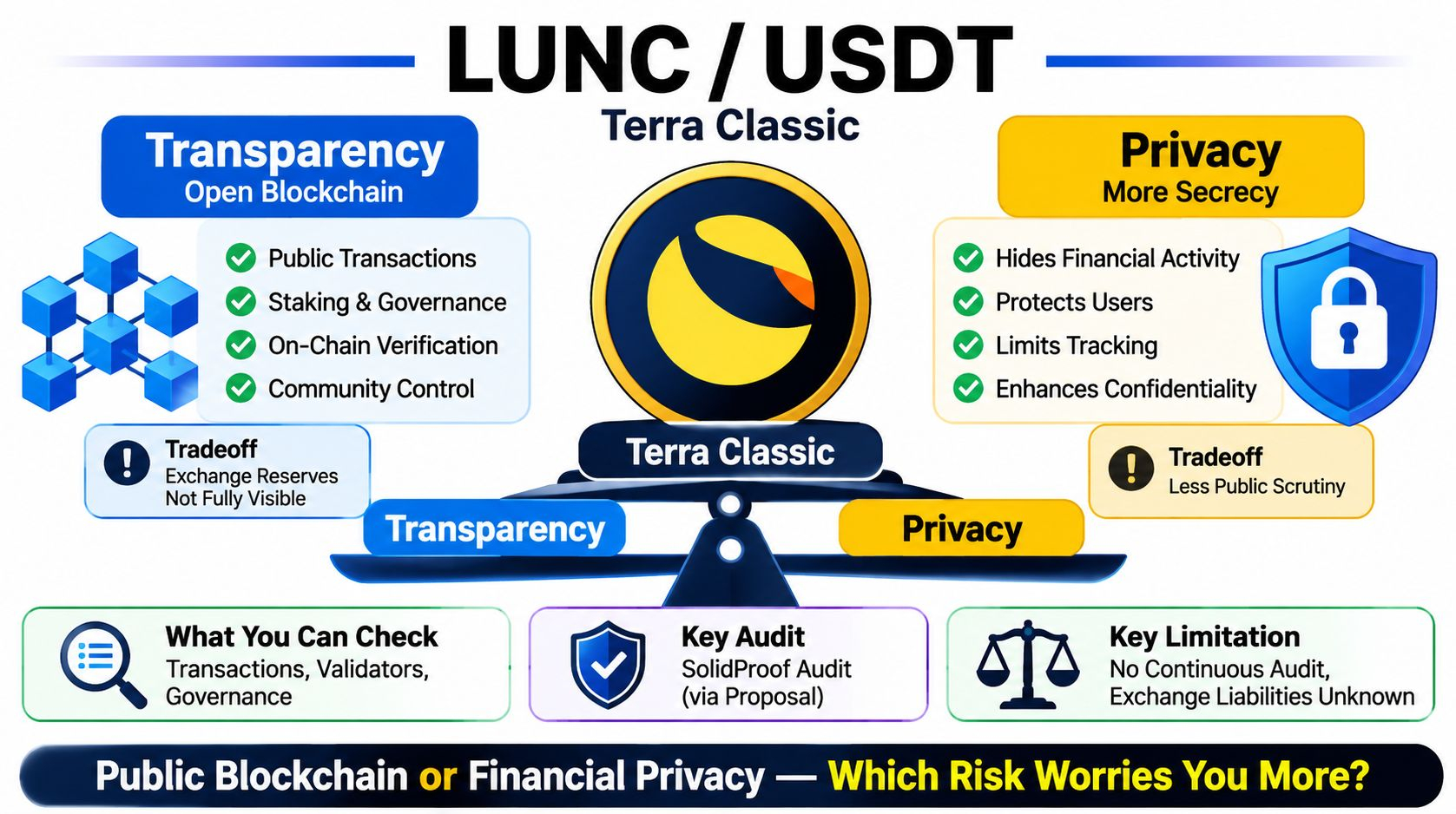
LUNC is Terra Classic’s native staking and governance token, operating on a public proof-of-stake blockchain. Its transactions and governance activity are publicly verifiable, but exchange-held balances and off-chain custody arrangements are not. That distinction is not an oversight. It is a limitation of what blockchain transparency can reveal.
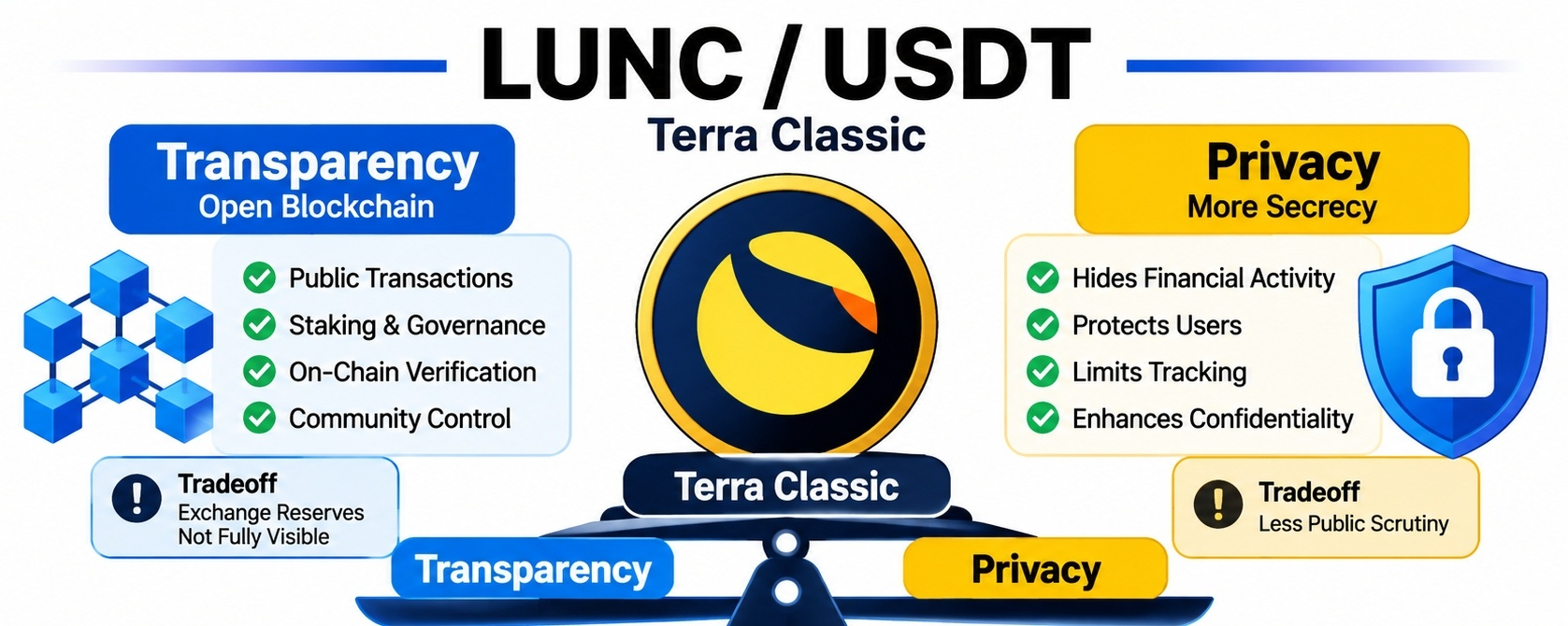
The network prioritizes public transaction verification rather than hiding financial activity. Anyone can inspect transactions, validator activity, staking and governance decisions. However, holders cannot use on-chain data alone to verify whether centralized exchanges maintain sufficient LUNC reserves for every customer balance. More visibility on-chain does not eliminate custodial uncertainty.
LUNC holders can examine public blockchain records, validator participation, staking activity and community treasury movements. Terra Classic governance also provides a public record of proposals and voting. A SolidProof security audit has appeared as a governance proposal, but a proposed audit is not a completed audit. There is no basis to claim recurring independent reserve attestations. Exchange liabilities and custody arrangements remain outside direct on-chain verification.
Monero takes the opposite approach. Its mandatory privacy technology hides transaction senders, receivers and amounts. That protects financial privacy, but outsiders lose transaction-level visibility. More privacy comes at the cost of public scrutiny.
Neither approach removes counterparty risk. LUNC exposes transaction activity but cannot prove exchange solvency. Monero protects transaction privacy but limits public financial traceability.
LUNC's trust model leans on public blockchain verification, validators and community governance.
Which risk worries you more: limited financial privacy through public transparency, or reduced public verifiability through transact