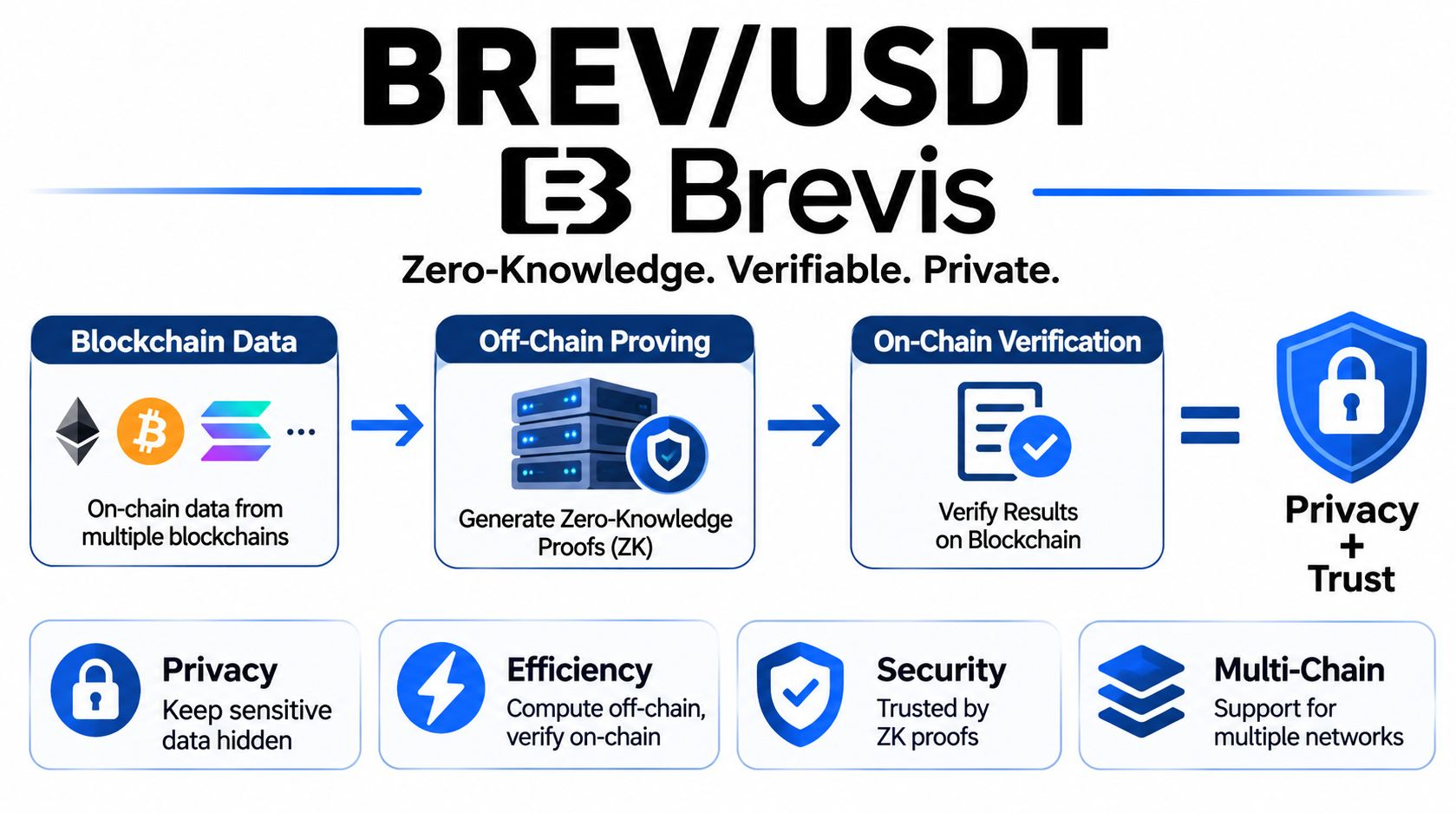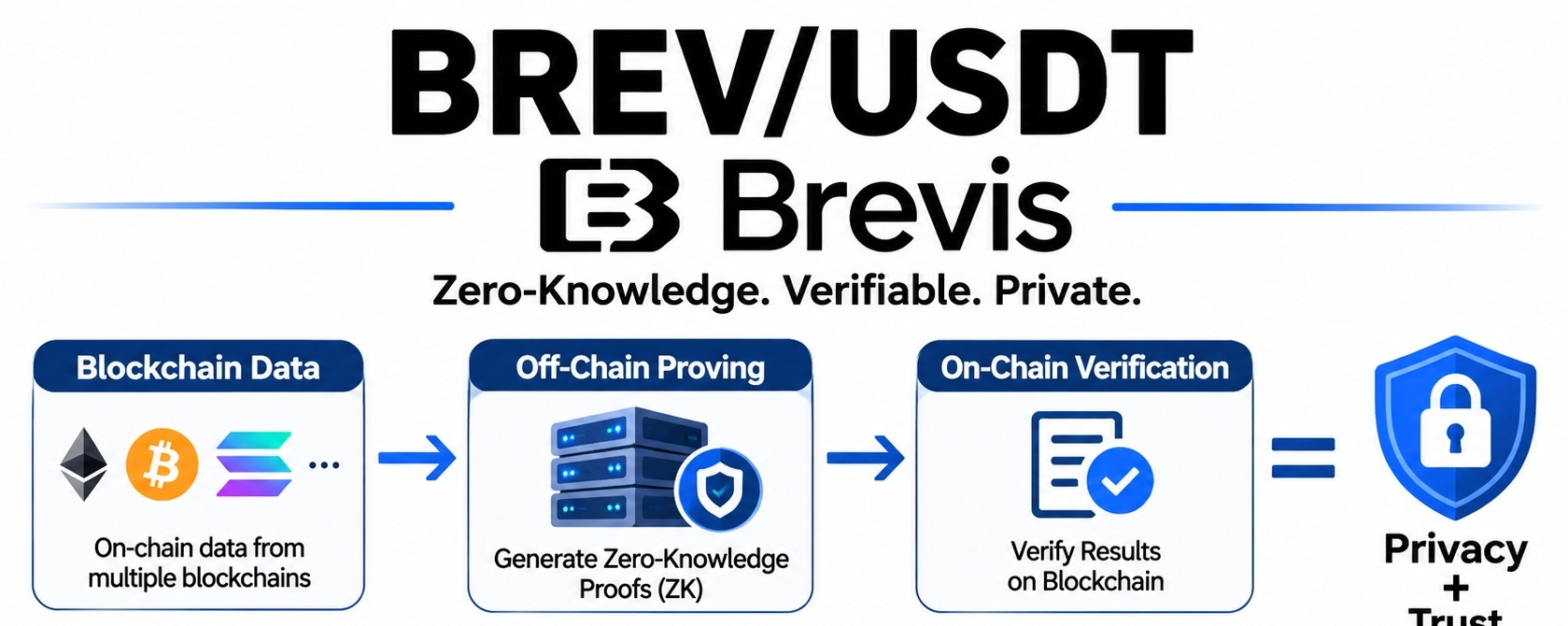

BREV is built around zero-knowledge technology, allowing smart contracts to use historical blockchain data without exposing every underlying input or computation.
That's not an oversight. It's a stated architectural choice.
Brevis moves complex computation off-chain to protect efficiency and reduce unnecessary data exposure. But holders face a different question: how much of the actual proving process can outsiders independently inspect?
The mechanism is interesting. Brevis generates zero-knowledge proofs off-chain and submits results for on-chain verification. This allows smart contracts to verify computational correctness without repeating the entire process. Brevis zkCoprocessor +1
Brevis also publishes security audit reports from Zellic, Sherlock and SlowMist covering different components of its system. However, these are component-specific audits, not continuous security monitoring. No recurring audit schedule is publicly established. What happens between reviews still matters. Brevis zkCoprocessor +1
Now compare Ethereum. Its public execution model exposes transaction details and on-chain activity for direct inspection. More exposure, in exchange for greater visibility into what happens on-chain. Aleo Docs
Neither approach removes counterparty risk.
Brevis relies on cryptographic proofs, prover infrastructure and protocol enforcement.
Ethereum relies more heavily on publicly observable execution, but transparency cannot eliminate smart-contract or network risks.
BREV has chosen computational privacy with verifiable results, rather than exposing every underlying operation.
Which risk worries you more — hidden execution details, or publicly exposed activity and i