

Where Does Your Money Go When You Get Liquidated in Crypto Trading?
The money doesn't simply disappear. Someone, somewhere, may be on the other side of that trade.
Liquidation is one of the most misunderstood concepts in cryptocurrency Futures trading. Thousands of traders lose their positions every day, but have you ever wondered what actually happens to their money?
Let's break it down.
1. What Happens When a Trader Gets Liquidated?
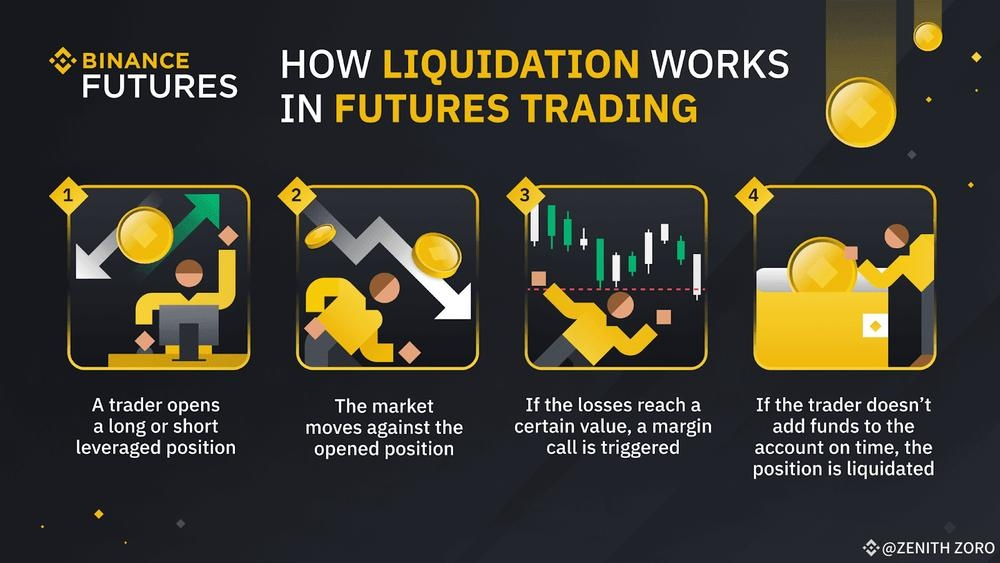
Imagine you open a Binance Futures position:
Your margin: $100
Leverage: 10x
Total position size: $1,000
You open a Long position, expecting the price to rise. Unfortunately, the market moves against you.
As your losses approach the required maintenance margin threshold, the exchange may forcibly close your position.
This is called Liquidation.
Your margin is used to cover the trading loss, subject to the exchange's liquidation rules and fees.
2. Where Does the Liquidated Money Go?
This is where things get interesting.
The money involved in liquidation can flow through several mechanisms:
A. Counterparty Profits
When one trader loses, another trader may profit from the opposite market movement. In a matched trade, the winning side benefits from the losing side's price movement, after applicable costs.
B. Liquidation Fees
The exchange may charge liquidation fees according to its rules. These fees are handled through the exchange's designated fee mechanisms.
C. Insurance Fund
Crypto exchanges maintain insurance funds to help cover losses when liquidated positions cannot be closed at a price sufficient to cover their obligations.
D. Auto-Deleveraging (ADL)
In extreme situations, when the insurance fund cannot adequately cover a deficit, the exchange may use ADL to reduce profitable opposing positions.
3. A Simple Example
Imagine two traders:
Ali opens a Long position.
Ahmed opens a Short position.
The market suddenly moves upward.
Ali's position gains value, while Ahmed's position loses value.
If Ahmed's position gets liquidated, Ali may benefit from the opposite market movement.
However, actual settlement depends on the matching system, liquidity, fees, and exchange rules. It is not always a direct transfer of one trader's entire margin to another.
4. Why Do Whales Watch Liquidation Zones?
Large traders and market analysts monitor areas where significant leveraged positions may be concentrated.
Why?
Because forced liquidations can create additional buying or selling pressure.
For example:
A sudden price drop can liquidate leveraged Long positions.
Forced selling can push prices even lower.
More Long positions may then get liquidated.
This can create a liquidation cascade.
The same phenomenon can happen in reverse during a sharp upward move, triggering Short liquidations.
This is one reason crypto markets can move violently within minutes.
5. The Biggest Lesson for Retail Traders
Leverage can multiply profits, but it also increases the speed and size of potential losses.
Smart traders don't just ask:
"How much can I make?"
They also ask:
"Where could I get liquidated?"
Understanding liquidation levels, maintaining reasonable leverage, and using proper risk management can make a significant difference.
Final Thought:
In Futures trading, one trader's forced exit can become another trader's opportunity. But remember, the market doesn't care about your entry price, your emotions, or your expectations.
It only responds to orders, liquidity, and market conditions.
Trade smart. Protect your capital. Never let leverage control your decisions.
#Binance #cryptotrading #FuturesTrading #Liquidation #Bitcoin #RiskManagement #CryptoEducation #TradingPsychology