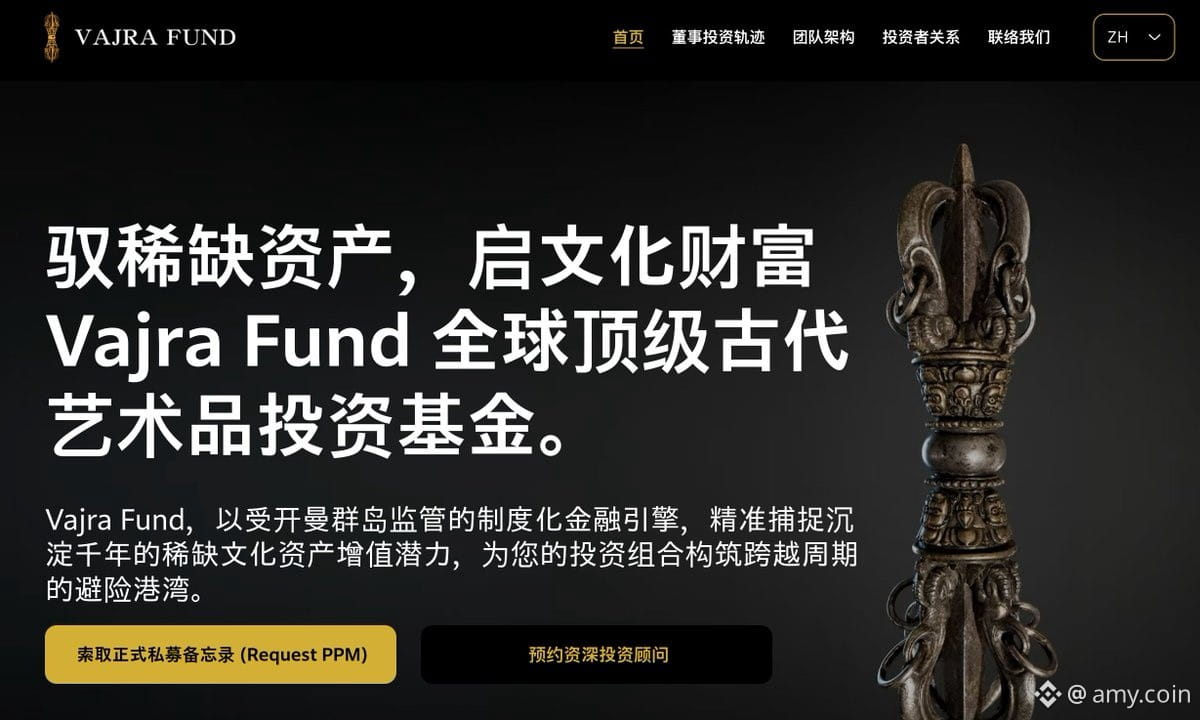
Been deep diving into antique/art appraisal content lately and it sparked a thought: high-value traditional collectibles (comparable to gold/stocks in worth) - do they have real on-chain potential?
Found @Vajracoins actually building in this space. Interesting angle that might set a template for mass art/antique tokenization.
What caught my attention:
1/ Their collection = museum-grade pieces with institutional authentication + full coverage from AA-rated insurers (AXA Hong Kong etc). AXA is a €100B+ AUM heavyweight with top-tier licensing and global capital market credibility.
2/ The narrative hits a real pain point: selling a valuable antique traditionally takes months or years (auctions, buyer hunting, price negotiations). Tokenization aims to inject crypto-level liquidity into the illiquid "priced but not tradable" antique market. Efficiency arbitrage play.
Decent premise + institutional backing = worth watchlisting. But narratives mean nothing without execution. Key metrics to track:
- Are illiquid fund shares actually trading post-tokenization?
- If physical pieces sit unsold for months, is there sustained real volume on secondary markets?
- What's the slippage on larger orders? How deep is the liquidity?
Results are the only truth. Watching closely.
PS: This is a niche alternative asset RWA play. Volatility and liquidity risks are real. DYOR. Not financial advice.
PPS: Just saw Lbank listing. Exchange expansion roadmap will be a key signal - let's see if they can land better venues with momentum.