Filepack, the new project from the creator of Ordinals: a package format for file sharing. No chain, no token.
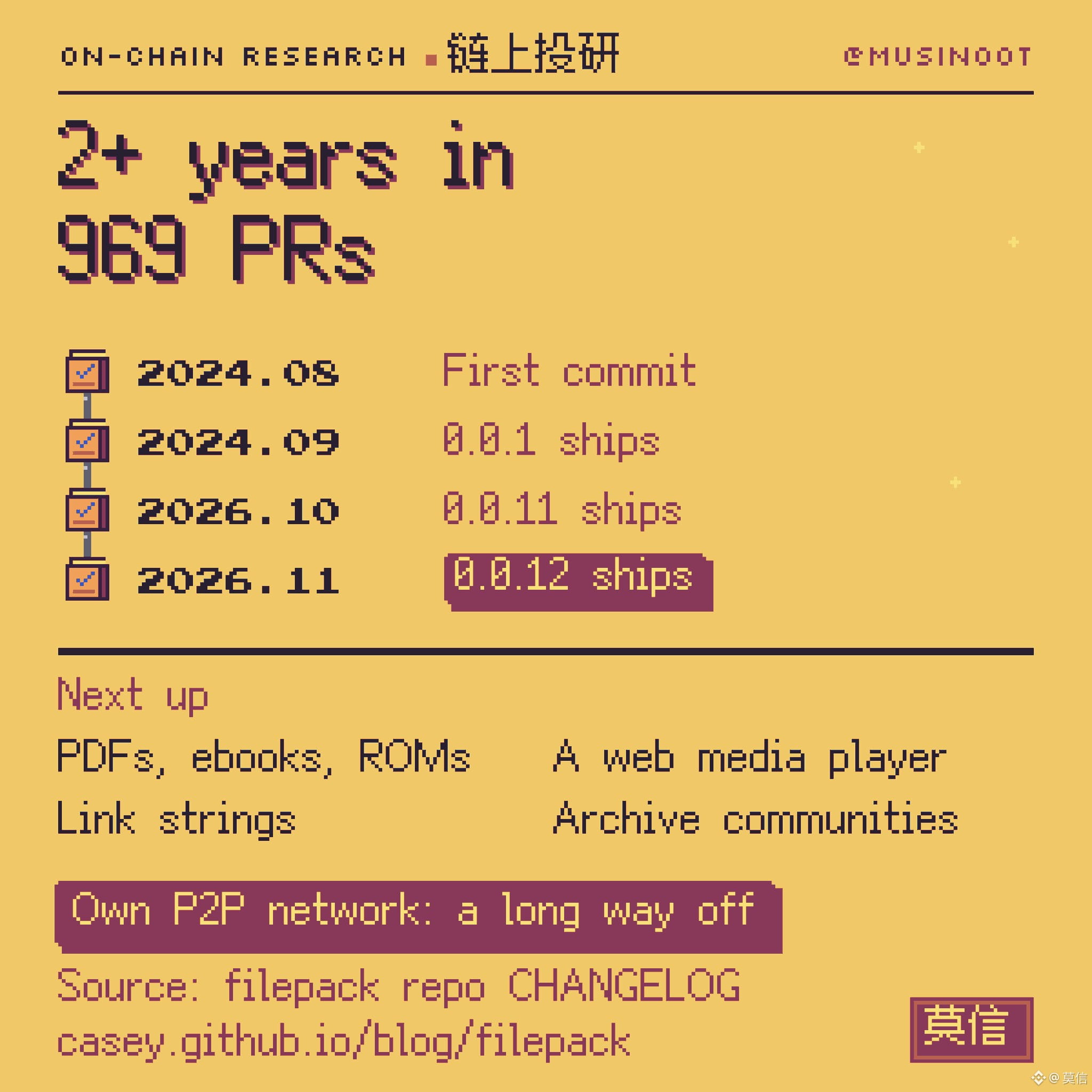
On Nov 11, @rodarmor, the creator of Ordinals and Runes, shipped Filepack 0.0.12. He's been building it since Aug 2024, 969 PRs in. In his words: "It's pretty bad to get to 969 PRs on a project with no users."
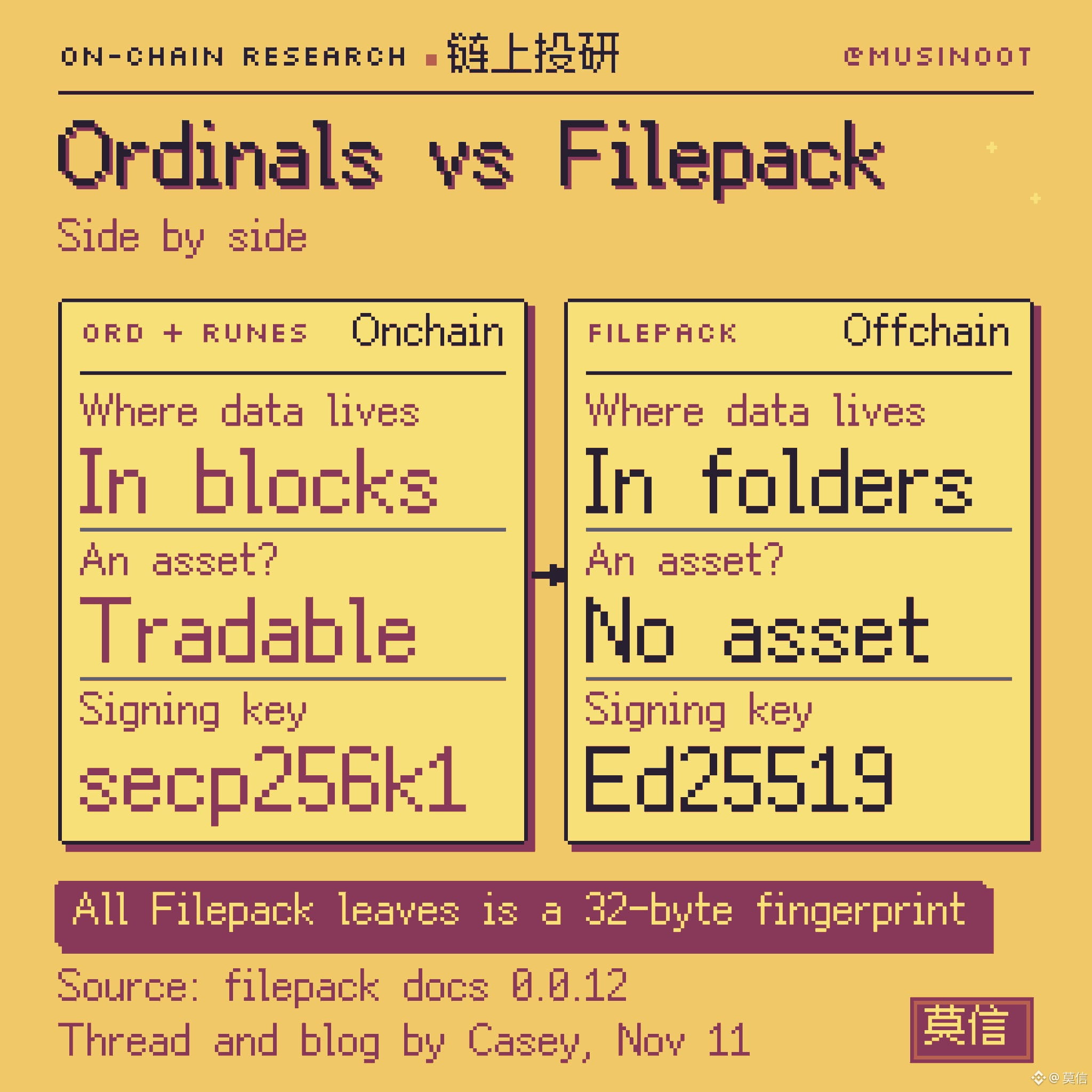
Filepack doesn't touch Bitcoin. No chain, no token, no way to issue assets. Here's what it is, what it's for, and whether it can plug into Ordinals or Runes.
🐋 TL;DR
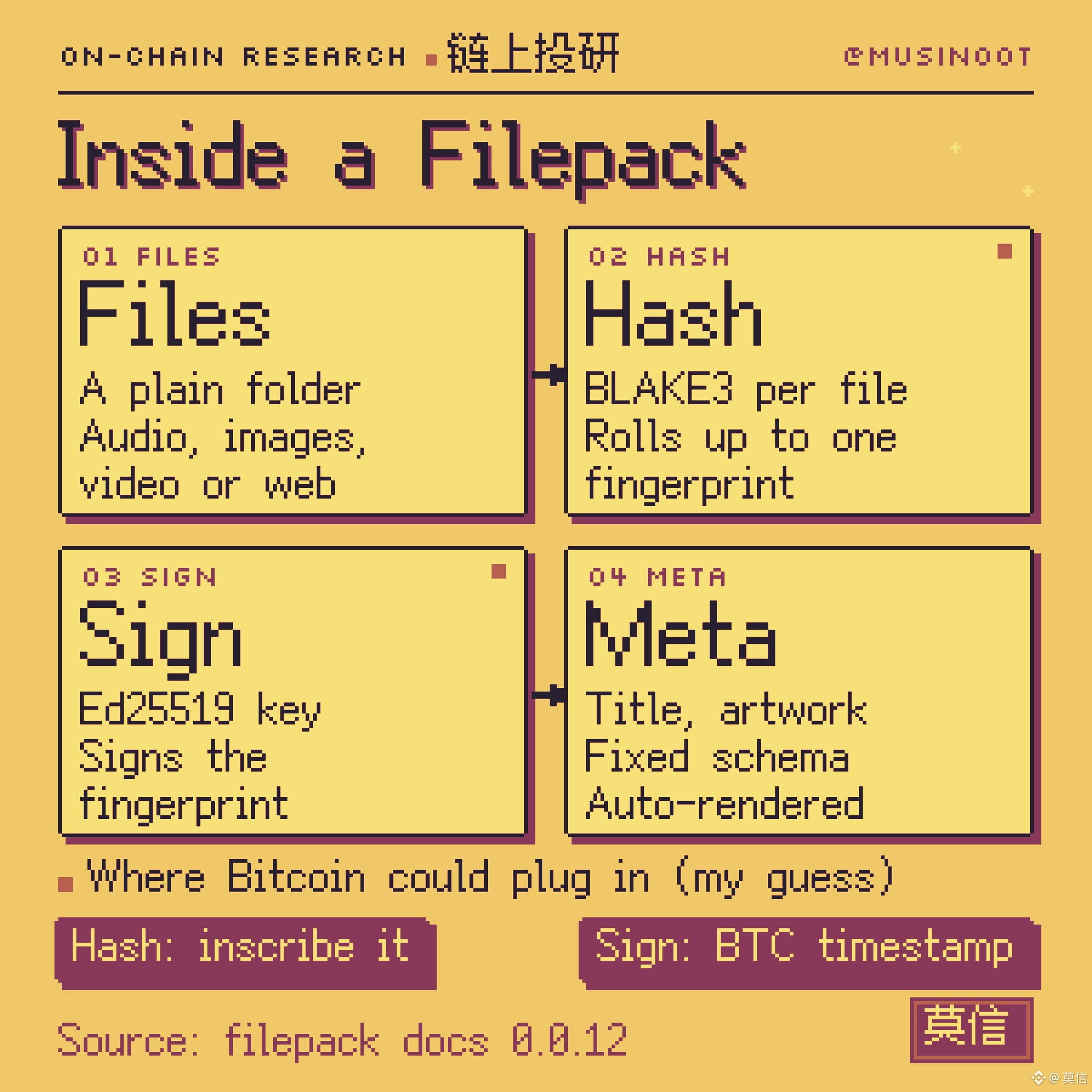
- What: a package format. It turns a folder into a "package" that records each file's hash, who signed it, and what's inside
- For: decentralized file sharing: torrents, archives, media libraries
- Ships with: a Rust CLI and a package server with a web frontend. The code is CC0
- Status: 0.0.12. The format will still change, with no backward-compat promise. A demo server at filepack.com hosts a set of free packages
github.com/casey/filepack
🐋 What's in a package
A package is a normal folder plus one manifest file:
- The BLAKE3 hash and size of every file
- All hashes roll up into one root hash, the "fingerprint", which serves as the package's ID. Change one byte and the fingerprint changes
- Optional Ed25519 signatures over the fingerprint, with an optional timestamp
- Fixed-schema metadata: title, creator, artwork, description, and whether the content is audio, images, video or a web app
Check the fingerprint and you know nothing was altered. Check the signature and you know who published it.
🐋 Why build it
Casey's docs compare Netflix with BitTorrent. On Netflix every movie has artwork and a description, plays instantly, and search works. On BitTorrent the same movie is a messy filename with no artwork that may or may not play on your device. Ask someone over to "BitTorrent and chill" and you get a blank stare.
The content is all on BitTorrent. What's missing is machine-readable metadata. A server that reads Filepack metadata can render pages with artwork and playback automatically. That's how filepack.com works, and even the docs are a package.
……
——
完整版见 X @musinoot