
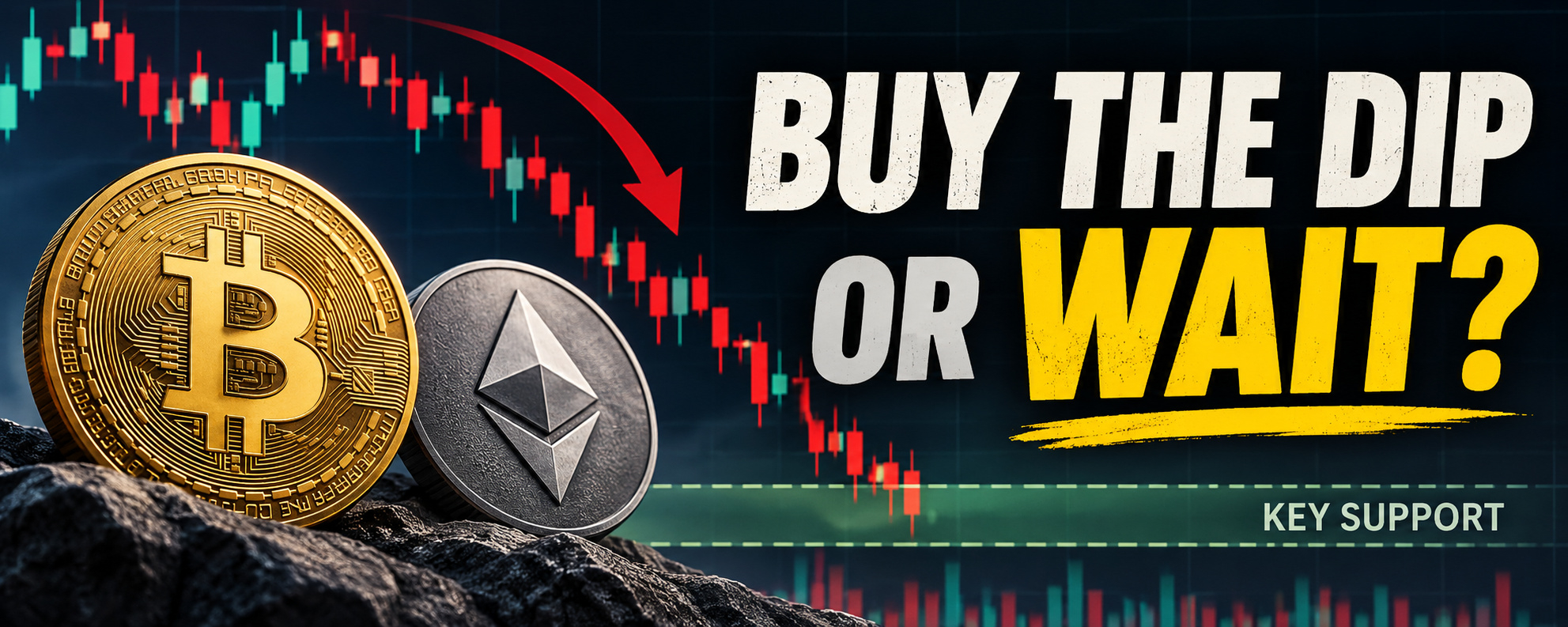

The crypto market has entered another difficult phase. $BTC is struggling around $74,000, $ETH has moved closer to the psychologically important $2,000 level, and several major altcoins have experienced even sharper declines.
For investors who have been waiting for a buying opportunity, the obvious question is: Have prices fallen enough, or could this correction have further to go?

The answer is not as simple as it looks.
Why Is the Market Falling?
Several factors are putting pressure on cryptocurrency prices.
1. Inflation and interest rate concerns
Stronger-than-expected US inflation data has increased concerns about monetary policy. Higher interest rates and rising Treasury yields generally make riskier investments less attractive.
2. Institutional selling
Recent outflows from Bitcoin ETFs suggest that institutional demand has weakened. When large investment funds reduce their exposure, the market can struggle to recover.
3. Uncertainty and market sentiment
Regulatory concerns, security incidents and broader economic uncertainty have made investors more cautious. This creates additional selling pressure, particularly in smaller cryptocurrencies.
Are Current Prices Attractive?
There are reasons to consider buying.
Bitcoin is trading considerably below its previous all-time high. Ethereum has also experienced a substantial correction, while Solana and several other altcoins have lost a significant portion of their recent value.
For long-term investors, these lower prices may offer better entry opportunities than buying during periods of excitement.
However, a lower price does not automatically mean an asset is undervalued.
A cryptocurrency can fall another 10%, 20% or even more if market conditions deteriorate.
What Should Buyers Watch?
There are three important signals worth monitoring:
Bitcoin support: The $73,000–$74,000 region is important. A sustained recovery could help stabilize market sentiment. A decisive breakdown could invite further selling.
Ethereum stability: The $2,000 region is an important psychological level. A recovery above nearby resistance would improve the short-term outlook.
Institutional demand: ETF flows are worth watching. A return of consistent inflows could indicate that larger investors are becoming interested again.
Buy Now or Wait?
There are two common mistakes investors make during market corrections.
The first is buying too aggressively because prices look cheap.
The second is waiting for the absolute bottom, which is almost impossible to identify in real time.
A more balanced approach could be gradual accumulation.
Instead of investing the entire available amount at once, investors can divide their intended investment into several portions.
For example:
- Make a small initial purchase.
- Keep additional funds available if prices decline further.
- Increase exposure if the market demonstrates genuine recovery.
- Avoid excessive leverage during uncertain market conditions.
This approach does not guarantee profits, but it reduces the risk of committing all available capital at an unfavorable moment.
The current correction has created opportunities, but it has not yet provided convincing evidence that the market has reached its bottom.
Long-term investors may find selected cryptocurrencies attractive at these levels, while short-term traders should remain cautious until market momentum improves.
Perhaps the smartest decision is neither to buy everything today nor to wait endlessly.
The objective should not be to catch the lowest price. It should be to build a position at reasonable prices while keeping enough capital to handle further uncertainty.
The market may be approaching an opportunity, but patience remains an investment strategy of its own.