
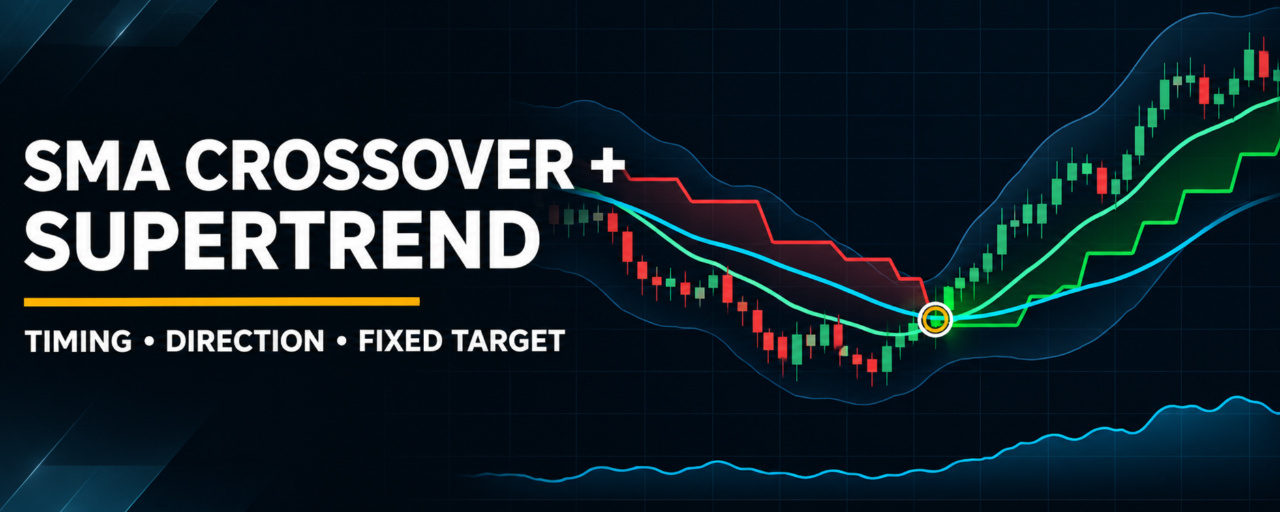

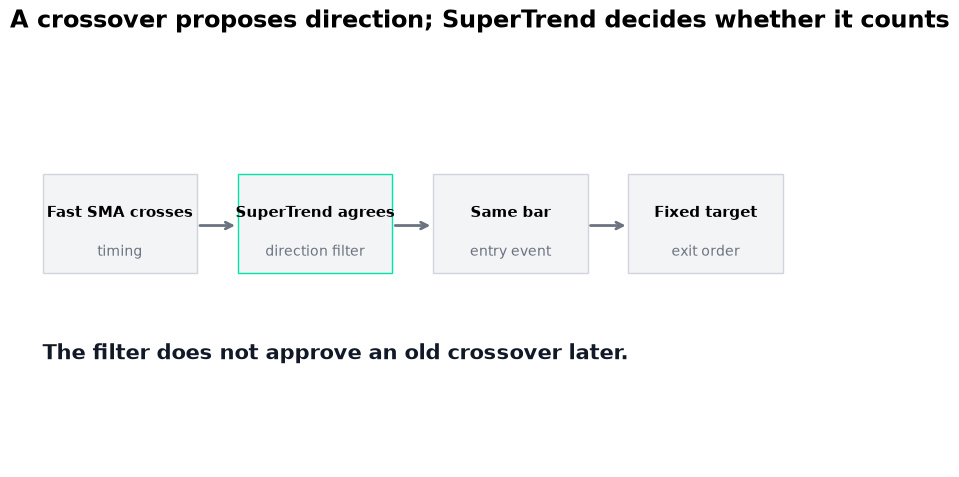
This strategy combines a 20/50 SMA crossover with SuperTrend, but the filter works more strictly than many readers may expect.
A long entry needs the fast SMA to cross above the slow SMA while SuperTrend is already upward on that same bar. A short entry needs the opposite crossover while SuperTrend is already downward.
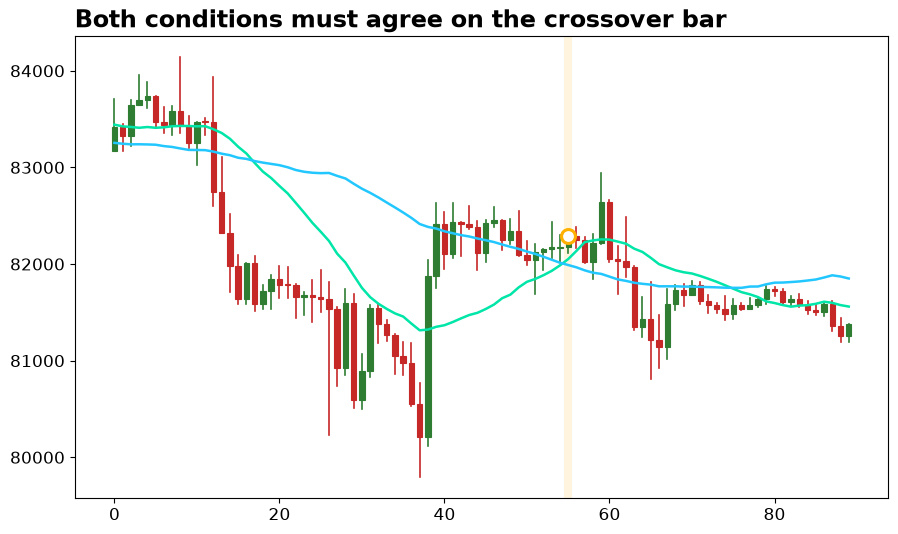
If the SMA crossover happens first and SuperTrend changes direction later, the earlier crossover is not remembered. The strategy waits for another SMA cross.
SuperTrend uses HL2, a 10-bar ATR, and a multiplier of 3. Its distance expands and contracts with recent bar travel. That is the adaptive part; the SMA periods themselves remain fixed.
The exit is also easy to misread. The source places a fixed percentage limit target from the average entry price. It does not use the SuperTrend band as a trailing exit and it contains no explicit stop-loss.
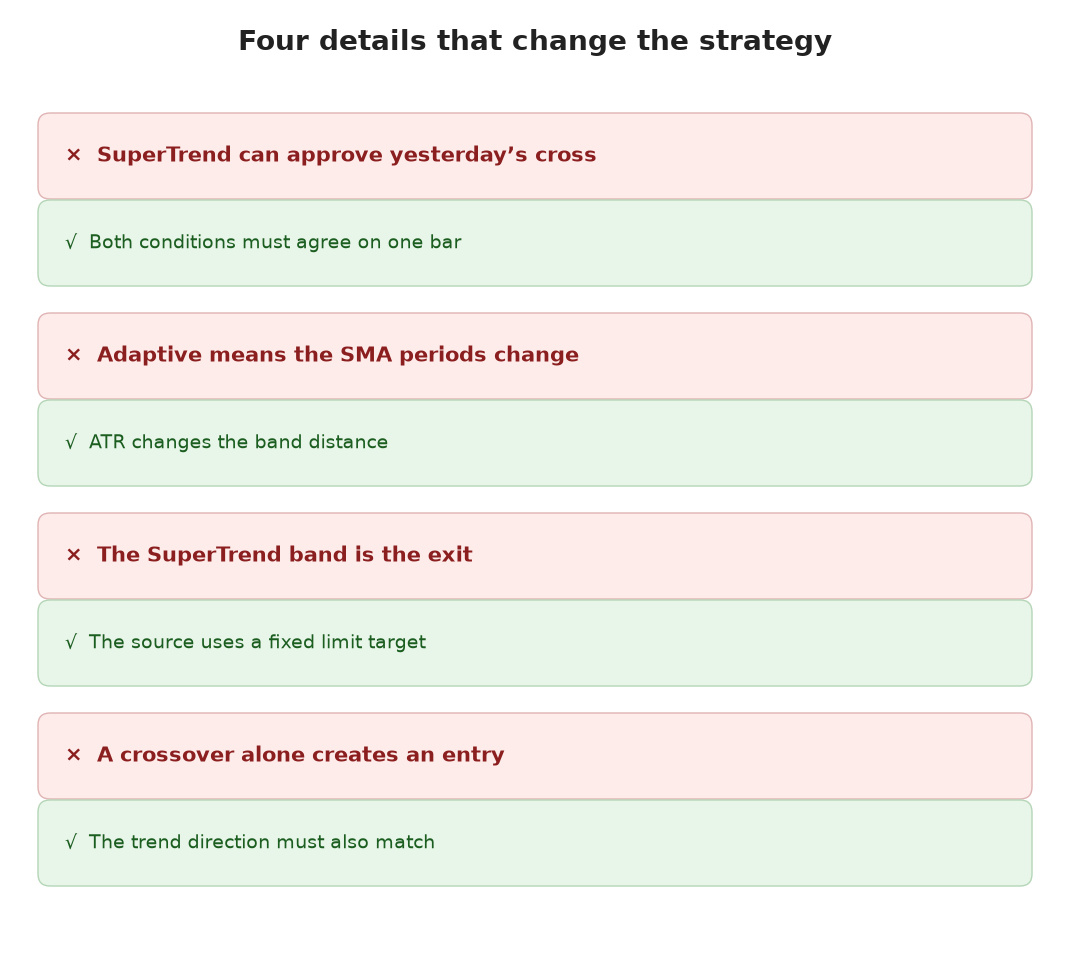
So the system has three separate jobs:
• SMA crossover supplies timing.
• SuperTrend supplies same-bar directional permission.
• The fixed percentage supplies the target.
Would you keep the strict same-bar rule, or treat a crossover as valid for several bars while waiting for SuperTrend to agree? The second design may sound like a small modification, but it creates a different state machine.
Want to verify these claims? Open ChatGPT or Claude, install AlgoRover (algorover.ai), and ask it to compare SMA lengths 10/50, 20/50, and 20/100; compare SuperTrend multipliers 2, 3, and 4; or check whether a later SuperTrend flip can activate an earlier crossover. Research mode does not require an exchange account.
Prepared by AlgoRover from the strategy logic and example configuration. This explains mechanism and learning method, not individualized trading advice.