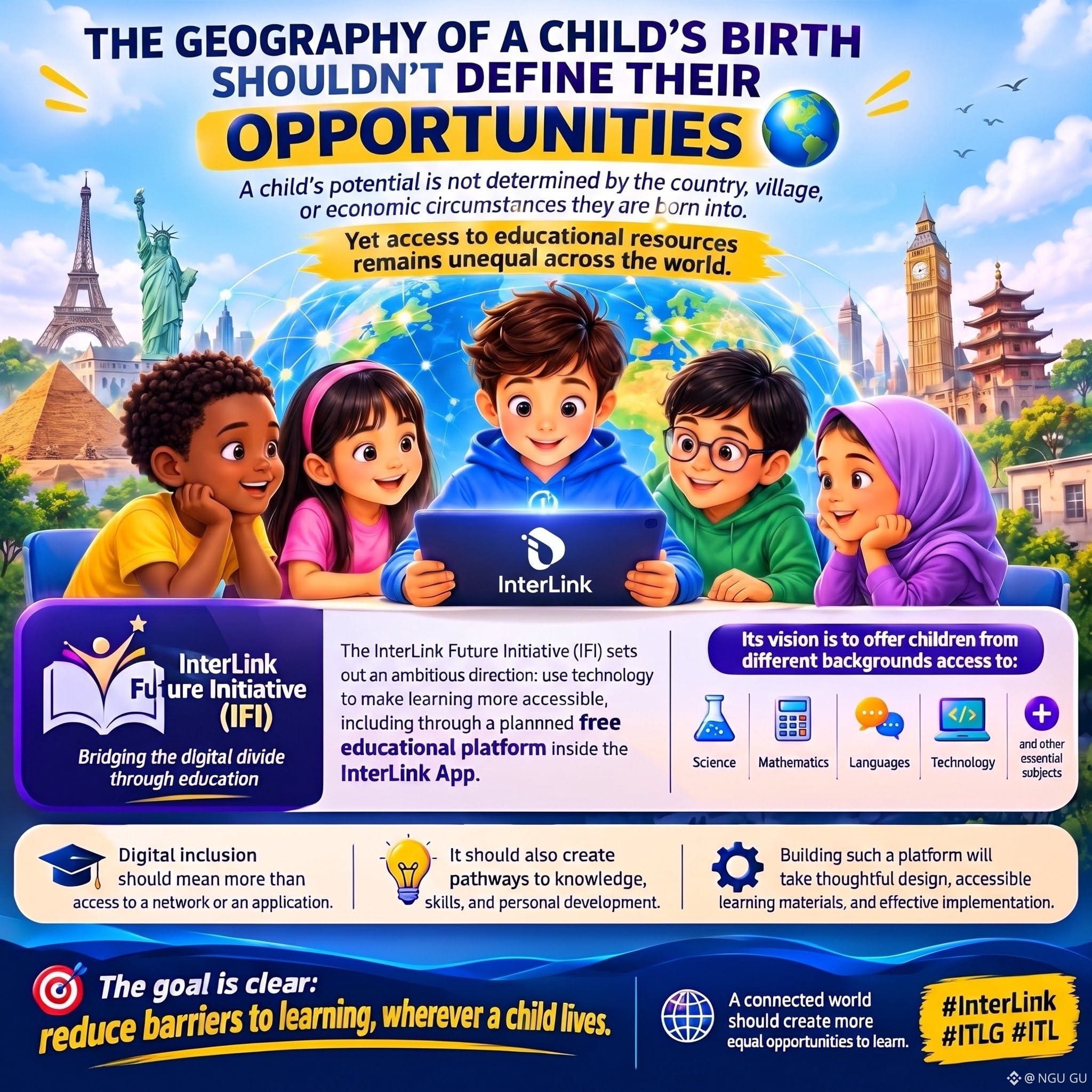
𝗧𝗛𝗘 𝗚𝗘𝗢𝗚𝗥𝗔𝗣𝗛𝗬 𝗢𝗙 𝗔 𝗖𝗛𝗜𝗟𝗗’𝗦 𝗕𝗜𝗥𝗧𝗛 𝗦𝗛𝗢𝗨𝗟𝗗𝗡’𝗧 𝗗𝗘𝗙𝗜𝗡𝗘 𝗧𝗛𝗘𝗜𝗥 𝗢𝗣𝗣𝗢𝗥𝗧𝗨𝗡𝗜𝗧𝗜𝗘𝗦
A child’s potential is not determined by the country, village, or economic circumstances they are born into. Yet access to educational resources remains unequal across the world.
The InterLink Future Initiative (IFI) sets out an ambitious direction: use technology to make learning more accessible, including through a planned free educational platform inside the InterLink App.
Its vision is to offer children from different backgrounds access to courses across science, mathematics, languages, technology, and other essential subjects.
This matters because digital inclusion should mean more than access to a network or an application. It should also create pathways to knowledge, skills, and personal development.
Building such a platform will take thoughtful design, accessible learning materials, and effective implementation. The goal is clear: reduce barriers to learning, wherever a child lives.
A connected world should create more equal opportunities to learn.
#InterLink #ITLG #ITL