

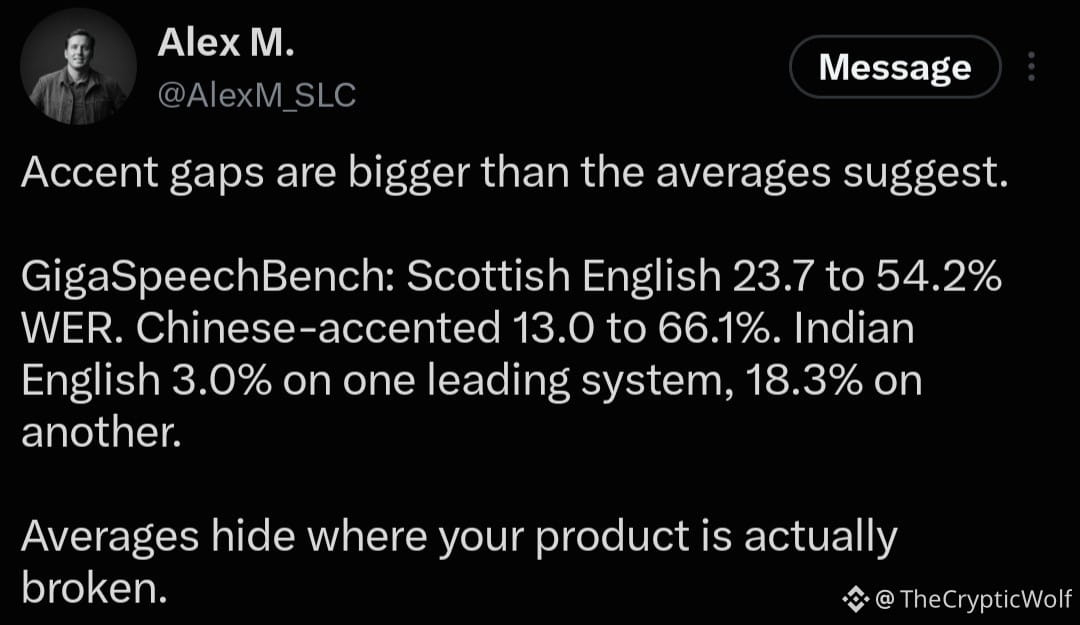
This is exactly why what $SLC is building matters. We talk a lot about how powerful AI voice technology is becoming, but there's a problem that doesn't get nearly enough attention: it doesn't understand everyone equally. When Scottish English produces a 23.7–54.2% WER range, or Chinese accented English jumps from 13% to 66.1%, that's more than a performance gap. That's an accessibility problem. Think about what that means for someone trying to use voice AI at work, access a service, communicate with a device, or simply be understood. AI shouldn't work beautifully for one voice and struggle with another. That's where @silencionetwork becomes important. Building better voice AI starts with better speech data. Diverse accents, dialects, languages, and the voices that have historically been underrepresented in datasets need to be part of the foundation, not an afterthought. Silencio is building toward a future where voice technology can better reflect the diversity of the people actually using it. Because the next generation of voice AI shouldn't just recognize more words. It should understand more people. The future of voice AI needs everyone's voice and that's why I'm bullish on what $SLC is building.
انضم إلى مُستخدمي العملات الرقمية حول العالم على Binance Square
⚡️ احصل على أحدث المعلومات المفيدة عن العملات الرقمية.
💬 موثوقة من قبل أكبر منصّة لتداول العملات الرقمية في العالم.
👍 اكتشف الرؤى الحقيقية من صنّاع المُحتوى الموثوقين.
البريد الإلكتروني / رقم الهاتف