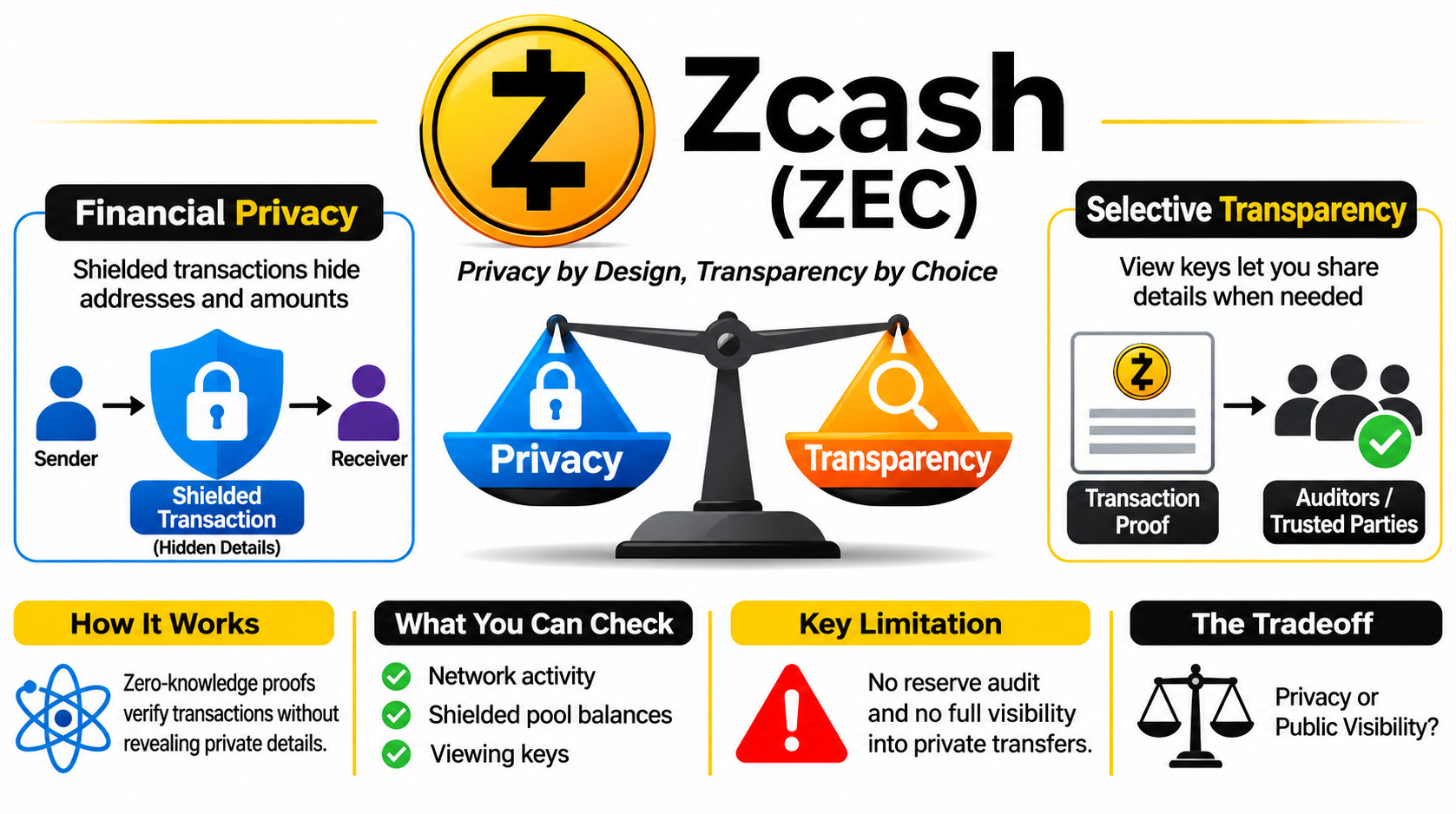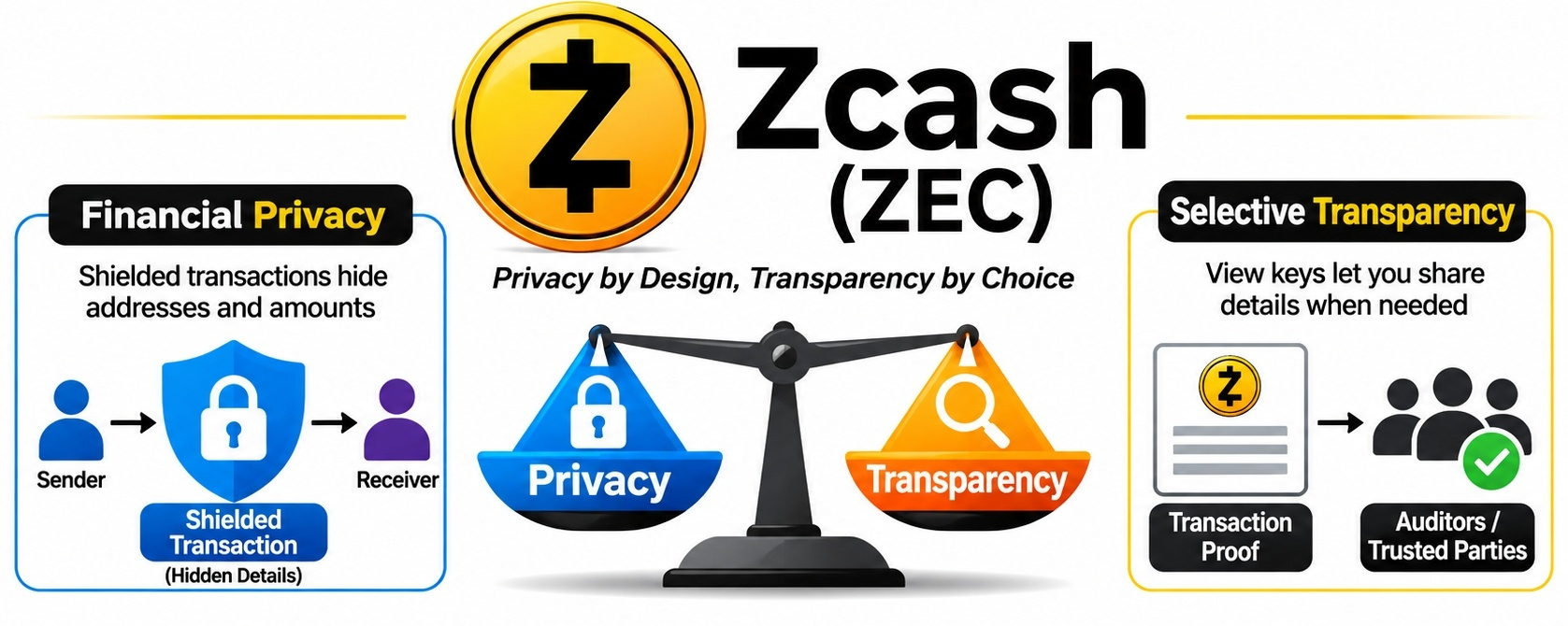

ZEC is a decentralized cryptocurrency with a fixed maximum supply of 21 million coins. But unlike Bitcoin, Zcash allows users to hide transaction addresses and amounts through shielded transactions. That's not an oversight. It's a stated choice.
The reason is financial privacy. Zcash uses zero-knowledge proofs, a cryptographic method that lets network participants verify transactions without seeing sensitive transaction details. The tradeoff is that outside observers lose the ability to independently inspect individual shielded transfers and wallet balances.
Holders can still verify network activity and monitor aggregate shielded pool balances through public blockchain data. Zcash also supports viewing keys, allowing users to selectively disclose transaction information to auditors or other trusted parties without granting spending access.
However, there is no reserve-backed issuer, independent reserve auditor, or monthly attestation schedule for ZEC. Network verification happens continuously through protocol rules, not periodic financial attestations. Outsiders cannot independently reconstruct private transaction histories between blocks or reporting dates.
Bitcoin takes the opposite approach. Its public ledger exposes transaction amounts and addresses, allowing anyone to independently examine transaction history and verify supply. More exposure, in exchange for greater public scrutiny.
Neither approach removes trust-related risks. ZEC relies on cryptographic proofs, protocol integrity, and secure key management. Bitcoin sacrifices financial privacy for publicly inspectable transactions.
ZEC chooses selective transparency over permanent public exposure.
Which risk worries you more — private transactions that outsiders cannot fully inspect, or public financial activity that any