

#BinanceReopensWithdrawalsForMoreAssets
Trust in an exchange is tested when people want to move their money somewhere else. A balance on a screen may look simple, but behind that number are wallets, private keys, blockchain networks, liquidity, and systems that all have to work properly. When withdrawals stop, the difference between having enough money on the books and being able to return a specific crypto asset becomes much easier to see.
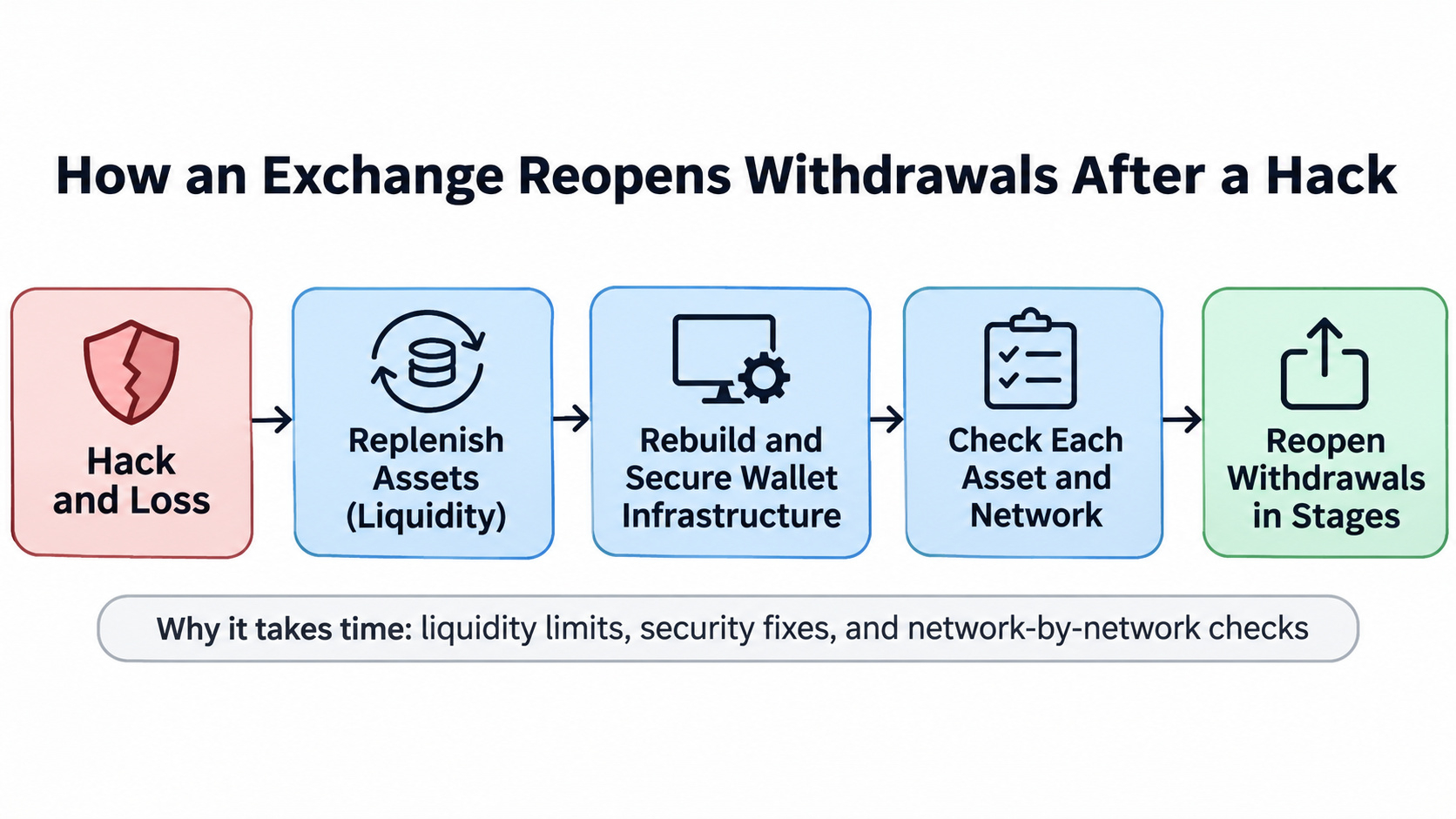
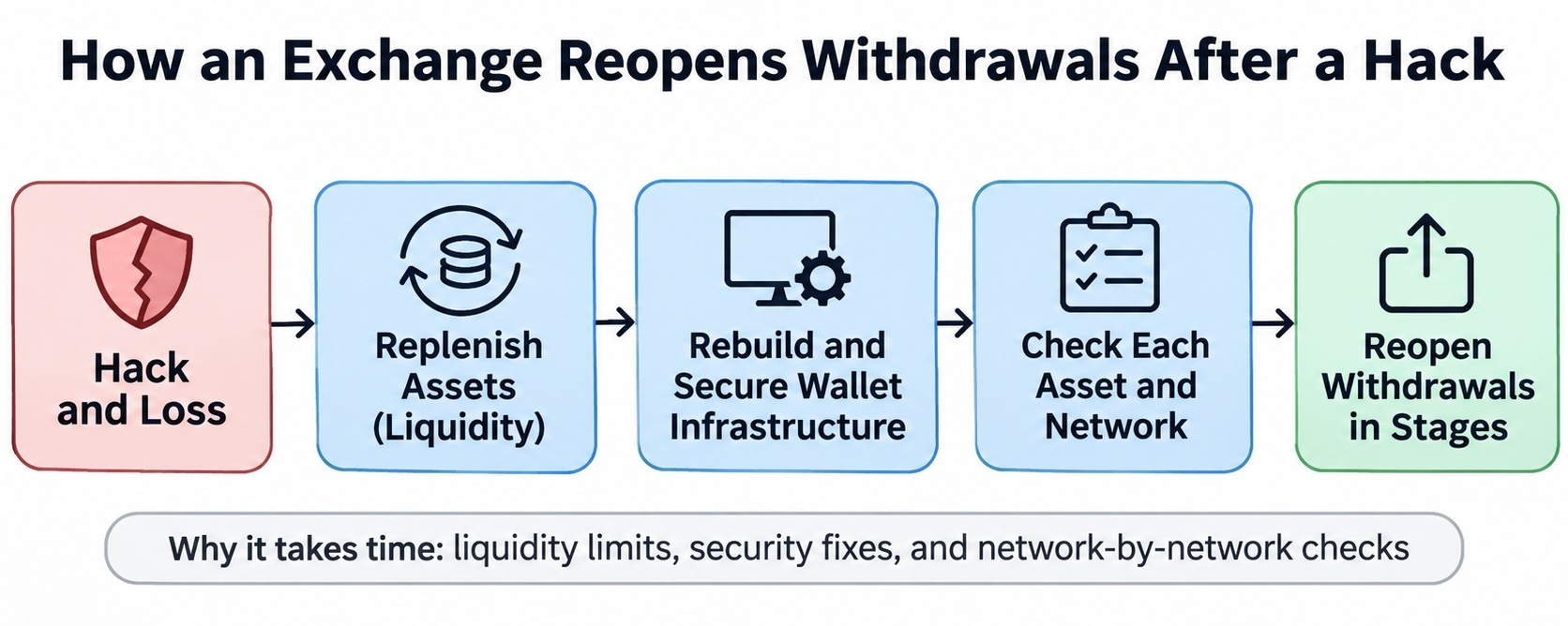
The hard part of reopening withdrawals after a major exchange compromise is not simply having enough dollars or enough crypto overall. Binance says it has replaced about 98% of the affected token assets, while the remaining assets are harder to replace because they have less liquidity. That means an exchange can have enough value to cover a loss and still not be able to give a customer the exact asset they want right away.
This comes down to how an exchange actually holds crypto. Customer balances are tracked in Binance’s internal accounting system, but the actual assets are held in blockchain wallets controlled by the exchange. A withdrawal is much more than removing a number from a database. The exchange has to create and approve an on-chain transaction from the right wallet, use the correct blockchain network, pass its internal security checks, pay the network fee, and broadcast the transaction.
The details can also change from one asset to another. ETH, for example, has different operational requirements from an asset running on BNB Chain, TRON, Base, or another network. Each network has its own transaction system, wallet setup, fees, and technical requirements. Binance’s recovery process reflects this by reopening withdrawals for individual asset and network combinations instead of simply turning the entire withdrawal system back on at once.
Liquidity becomes a separate problem when the exchange has to replace assets that were lost or compromised. If Binance needs to replace a large amount of a highly traded token, it can usually buy the required amount through established markets without too much difficulty. A thinly traded token is different. There may not be enough buyers and sellers available at the same time, especially if the exchange needs to acquire a large amount quickly.
Trying to buy a large position in a thin market can also push the price higher. That means the amount of money needed to replace the asset can change as the purchase happens. There may also be limits on how much can be obtained through normal exchanges or over-the-counter trading. Binance has said that the remaining affected assets are taking longer to replace because they are less liquid.
Replacing the asset is also different from fixing the system needed to withdraw it. Binance has said the incident involved malicious EIP-7702 authorizations that could operate separately from its normal withdrawal infrastructure. The company says it had to revoke those on-chain authorizations, rebuild the affected wallet environment, replace compromised devices and credentials, and strengthen controls around the wallet system.
This is one reason withdrawals are being reopened in stages. An exchange cannot safely assume that an asset is ready for withdrawal just because it has obtained enough of that asset. The wallet infrastructure handling the withdrawal also needs to be checked. The authorization paths need to be secure. The relevant network needs to be working correctly, and the transaction needs to pass the exchange’s internal controls before funds can be sent.
There is also a trade-off in deciding what comes back first. Customers naturally want the most important assets restored quickly. But the order also depends on security checks, wallet readiness, liquidity, and user demand. Binance says it is prioritizing tokens based on user demand while restoring each asset and network combination after security checks. It has also warned that high traffic can cause temporary delays during the rollout.
This means that saying “Binance has enough assets” and saying “every customer can withdraw every asset right now” are two different claims. An exchange can have enough total value to cover customer balances while still working through the practical problem of obtaining particular tokens and making them available through the correct withdrawal infrastructure.
Proof of reserves does not completely answer that problem either. It can help show that covered customer balances are backed, but it does not by itself show that every blockchain connection, wallet, authorization path, and withdrawal route is ready to use. Those are separate operational questions. Binance’s recovery process makes the difference visible because reserves, asset replacement, security work, and withdrawal availability can all move at different speeds.
The same distinction matters when thinking about what an exchange owes its customers. A customer who holds a particular token does not necessarily want an equivalent dollar value. They may want that exact token, sent through a particular network, to an address they control. From the customer’s point of view, having enough money somewhere else on the exchange is not the same as having the ability to withdraw the asset they actually hold.
After a major wallet compromise, an exchange therefore has several problems to solve at the same time. It has to rebuild secure signing infrastructure, obtain specific blockchain assets, check individual networks, and process a large number of withdrawals without creating another security problem. Each part can have its own limits and delays.
That is why the reopening of withdrawals is more complicated than simply replacing the value of the assets that were affected. The technical challenge is not only whether the exchange can cover customer balances. It is whether it can safely deliver the exact assets customers are owed, through the correct blockchain infrastructure, when they try to withdraw them.