

Bitcoin dropped to about $75,600 on election night in the US, then traded above $81,000 less than a day later. Three things did the lifting: the midterm result removed a big unknown, oil fell sharply, and roughly $560 million of short positions were forced shut on the way up. What did not change is just as telling, because ETF money was still leaving and the main crypto market bill now faces a harder road.
👉 Open a Binance account and follow the move live
What happened between Tuesday night and Wednesday
The sequence matters, because the dip and the rebound had different causes:
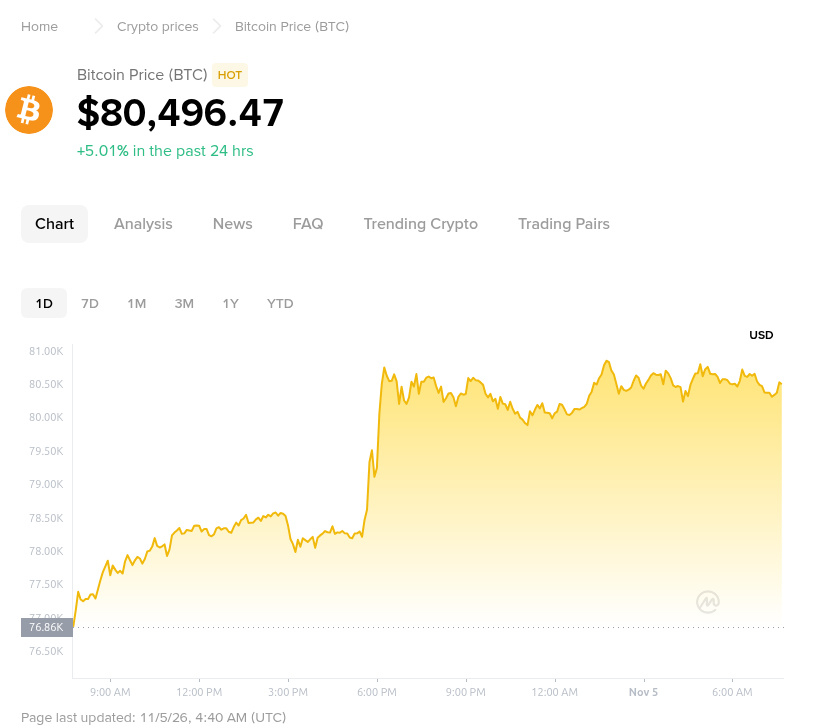
Tuesday evening, US Eastern time: Results started showing Democrats winning control of both the House and the Senate. On Coinbase hourly data, Bitcoin slid to about $75,600 in the 10 p.m. hour, a six-week low.
Overnight: Once the outcome looked settled, the selling dried up. The result had largely matched what markets were already pricing in, so the uncertainty premium faded fast.
Wednesday morning: Bitcoin reached about $81,130 on Coinbase in the 10 a.m. hour, a climb of roughly 7% from low to high. Ether pushed back above $2,400.
Wednesday close: US stocks joined in. The Dow added 3.03%, the S&P 500 1.58% and the Nasdaq 1.44%.
On Binance Spot, the 24-hour range for BTC/USDT at the time of writing ran from about $76,690 to $81,196, with the price near $80,600.
Why would an election result lift Bitcoin
A Democratic Congress is not obviously good news for crypto policy, so the rally looks odd at first. The reason is that markets dislike not knowing more than they dislike most outcomes. Three forces lined up at once.
The unknown was gone: Before the vote, traders were hedged for several outcomes. Once one outcome was clear, those hedges came off and some of that money went back into risk.
Oil fell hard: Expectations of an early end to the US and Iran conflict sent December WTI crude down 8.29% to $88.12 a barrel, and Brent fell 8.67% to $94.62. Cheaper oil means less inflation pressure, lower bond yields and more room for risk assets.
Stocks rallied the same day: Bitcoin has traded closely with tech shares for most of this year. When the Nasdaq rises 1.44% in a session, crypto rarely sits still.
How much of the move was forced buying
A large part. Over the 24 hours to Wednesday, CoinGlass counted about $950 million of leveraged positions liquidated across the market. Shorts made up $560 million of that, or 58.9%. Bitcoin positions alone accounted for $403 million, 76% of them shorts, and Ether positions for $238 million.
The skew was sharper in the busiest hour. In one hour on Wednesday, short liquidations reached about $378 million, around four times the long liquidations in the same window.
Here is why that pushes the price. A short is closed by buying the coin back. When the exchange closes a short that has run out of margin, that buy goes into the market whether the trader wants it or not, which lifts the price and puts the next short at risk.
A rough illustration, ignoring fees and funding: say someone shorted $10,000 of BTC at $77,000 using 25x leverage, so about $400 of their own margin. A rise of roughly 3.5% to 3.6% wipes out most of that margin, which puts the liquidation price somewhere near $79,700 to $79,800. Bitcoin went straight through that zone on Wednesday. The same trade at 5x would have survived the whole move, just with a painful loss on paper.
The exact liquidation price depends on the mark price, the maintenance margin tier and funding, which are covered in this guide to Binance perpetual futures funding and mark price.
Liquidation totals measure positions being closed, not fresh buyers arriving. A rally built mostly on squeezed shorts can stall once there are no more shorts left to squeeze.
Why did Ether run faster than Bitcoin
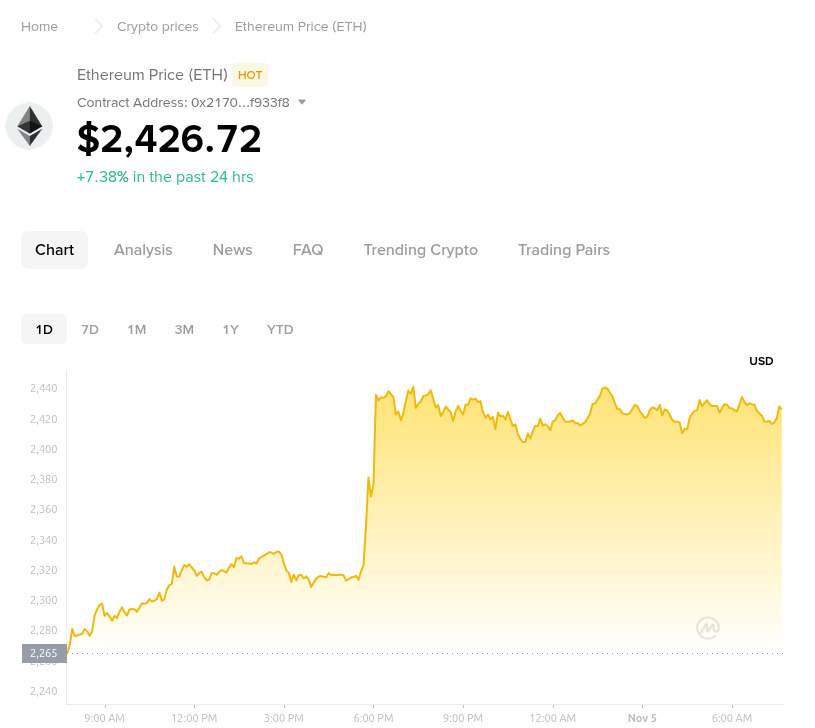
On Binance Spot, ETH/USDT was up about 7.5% over 24 hours at the time of writing, near $2,430, against roughly 5.1% for BTC. Solana gained about 5.5% to around $96.
Ether has been hit harder than Bitcoin through the recent sell-off, and US spot Ether ETFs had just logged seven straight sessions of outflows, including $85.35 million on Tuesday. When an asset has been sold that heavily, short positions pile up, and a sharp turn squeezes them harder. Ether positions made up $238 million of the day's liquidations, with 55.5% of that on the short side.
A faster rebound from a deeper hole is not strength on its own. Ether still needs real buyers, and the ETF data says they are not back yet.
What did not change
The rebound fixed the price chart. It did not fix the money flows or the policy picture.
ETF outflows: US spot Bitcoin ETFs lost $643.33 million on Friday, $398.62 million on Monday and $115.56 million on Tuesday, about $1.16 billion over three sessions. Tuesday was much smaller, so the selling is slowing, not reversing.
Sentiment: The Fear and Greed Index went from 26 to 34 to 50 in three days. Fifty is neutral, which is a long way from the panic of the weekend, but nowhere near euphoria either.
The CLARITY Act: The market structure bill passed the House, but a Senate procedural vote in September fell short at 49 to 50 when 60 were needed. If it does not pass before the new Congress starts on January 3, 2027, it has to be reintroduced, and the committees that handle crypto pass to Democrats.
Support in the Senate: A Bitwise analyst's count still puts about 51 pro-crypto senators in the incoming Senate, one fewer than before. Crypto policy has never split cleanly along party lines.
Which price levels are traders watching
Several market reports flagged the same zones:
Around $82,000: The first area of resistance above the current price, close to Wednesday's high.
$80,000: The round number the rally just reclaimed. Many traders treat a daily close below it as a sign the squeeze has run out.
$78,000 and $76,000: The next support areas, with $76,000 sitting just above the election-night low.
These are reference points, not forecasts. Price can go through any of them, especially with leverage rebuilding after a squeeze.
Four mistakes people make right after a short squeeze
Buying the top of the green candle: The fastest part of a squeeze is forced buying. Entering at the peak of it means your entry depends on more shorts getting wiped, and there are fewer left each hour.
Going high leverage because "it only goes up now": Wednesday showed what 25x does when the move goes against you. The same rule applies to longs if the price drops back under $80,000.
Trading without an exit: Decide where you are wrong before you enter. If you have never set one up, here is how to place a stop-loss on Binance, from a basic stop-limit to a trailing stop.
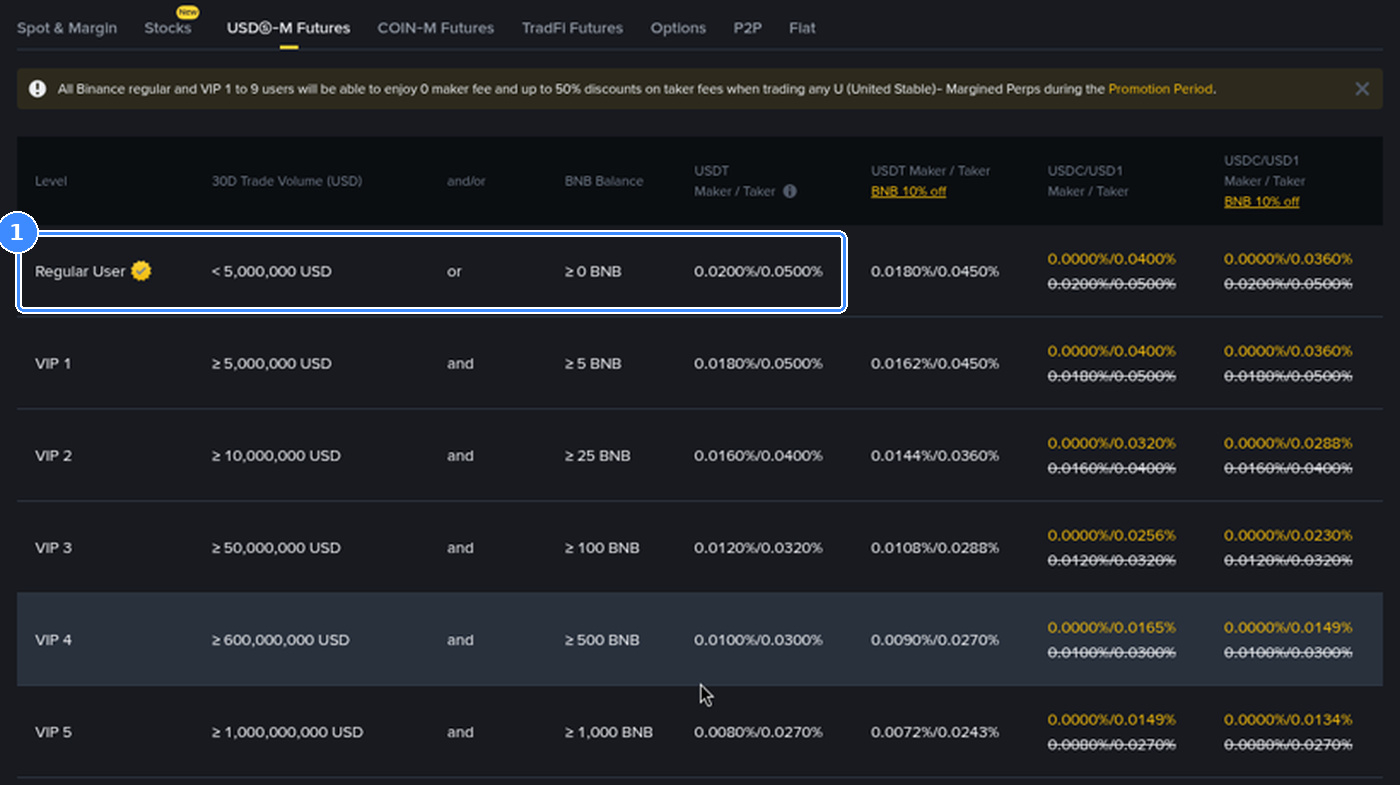
Forgetting what fees do to frequent trades: On USDT-margined futures, the regular taker rate is 0.05%. A $10,000 position costs about $5 to open and $5 to close, so $10 per round trip. Ten round trips a week is $100. On an account opened with 20LESSFEES, the fee is a flat 20% lower, so the same ten trades cost $80 and you keep $20 a week, or roughly $1,040 over a year at that pace.
What to watch over the next few days
A few signals will say more than the price alone:
ETF flows: A flat or positive day after three red ones would suggest real buyers are back, not just shorts covering.
Funding rates: If funding turns strongly positive, longs are crowding in, which sets up the opposite squeeze.
Oil and bond yields: Part of this rally rode on cheaper oil. A reversal there would take some support away.
Nothing here is financial advice. Crypto prices can fall as fast as they rose this week, and leverage makes both directions worse. Size positions so a bad day costs you money, not the account.
If you are setting up an account to trade around moves like this one, you can also check the current Binance welcome bonus campaign before your first deposit.
FAQ
Why did Bitcoin go up after the midterms?
The result removed uncertainty that markets had been hedging against, oil fell sharply on hopes of an early end to the US and Iran conflict, stocks rallied, and about $560 million of short positions were liquidated, which added forced buying.
Is the Bitcoin rebound a short squeeze?
Mostly, in its fastest phase. Shorts made up 58.9% of the $950 million liquidated over 24 hours, and about $378 million of shorts were closed in a single hour. Spot ETF flows were still negative, so new buying was limited.
What does a Democratic Congress mean for crypto rules?
The CLARITY Act is harder to pass this session and may have to be reintroduced after January 3, 2027. Existing stablecoin law and current guidance stay in place, and a cross-party group of pro-crypto senators remains.
Coins in this piece$BTC $ETH $SOL
#BTCRebounds80K #Bitcoin #Ethereum #CryptoMarket