𝗕𝗜𝗧𝗧𝗢𝗥𝗥𝗘𝗡𝗧: 𝗪𝗛𝗘𝗡 𝗥𝗘𝗔𝗟 𝗡𝗘𝗧𝗪𝗢𝗥𝗞 𝗥𝗘𝗩𝗘𝗡𝗨𝗘 𝗕𝗘𝗖𝗢𝗠𝗘𝗦 𝗣𝗔𝗥𝗧 𝗢𝗙 𝗧𝗢𝗞𝗘𝗡 𝗘𝗖𝗢𝗡𝗢𝗠𝗜𝗖𝗦
Token burns are not all created equal.
The more important question is not simply how many tokens are removed from circulation, but what economic activity supports the mechanism behind those reductions.
BitTorrent's first $BTT buyback and burn milestone introduces an interesting dimension to this conversation.
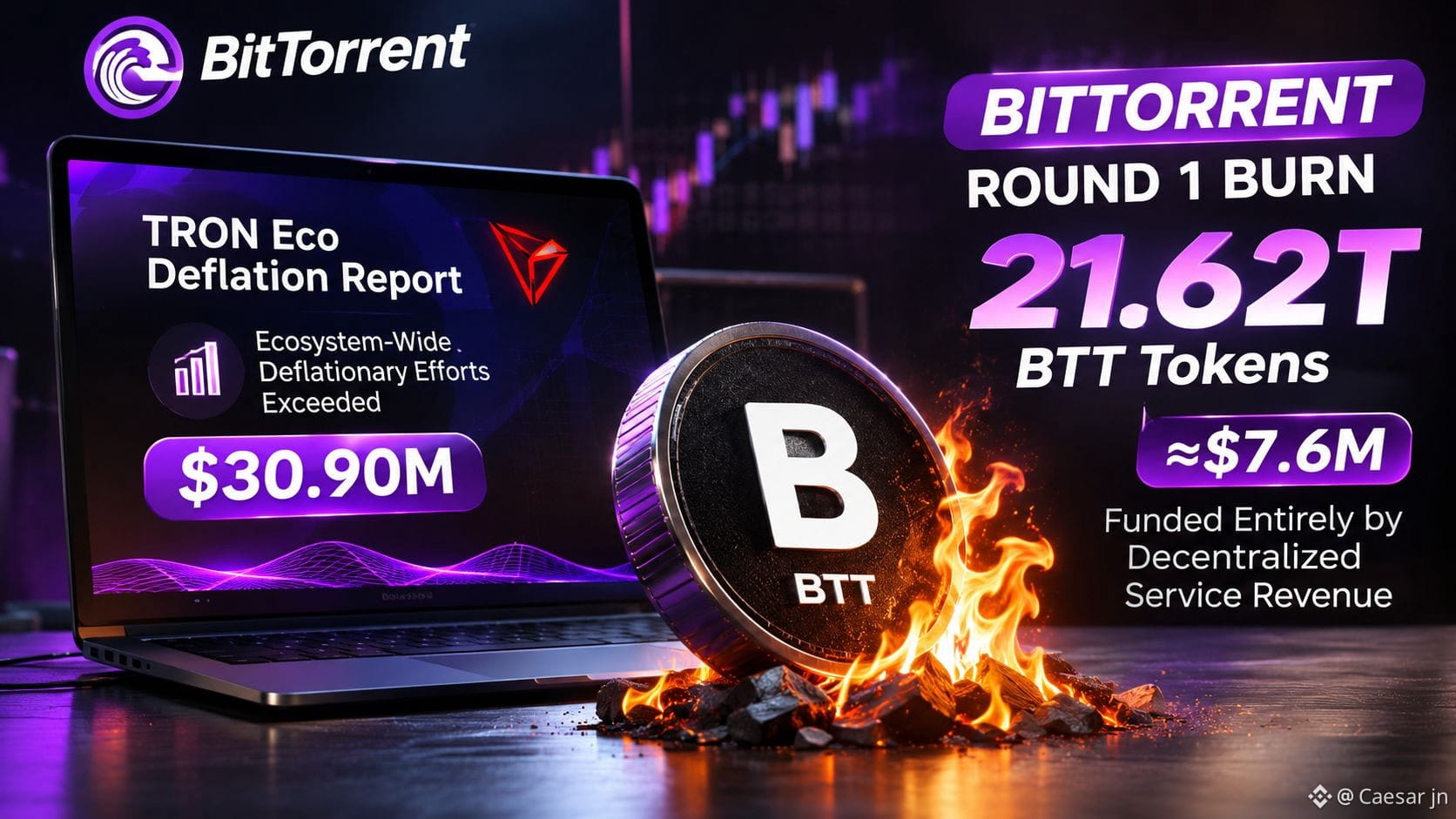
According to the TRON Eco Deflation Report, Round 1 has resulted in the burn of approximately 21.62 TRILLION BTT TOKENS, valued at around $7.6 MILLION.
What makes this particularly interesting is the reported funding source: revenue generated by decentralized services.
This creates a connection between network activity and token economics.
WHY DOES THIS MODEL DESERVE ATTENTION?
🔹 1. REVENUE-BACKED EXECUTION
Rather than relying solely on discretionary token allocations, the reported mechanism connects buybacks and burns to revenue generated by decentralized services.
🔹 2. VERIFIABLE ON-CHAIN ACTIVITY
Blockchain records allow participants to examine token movements and verify burn transactions, strengthening transparency around execution.
🔹 3. CONNECTION BETWEEN UTILITY AND TOKENOMICS
The model creates an important economic relationship: decentralized services generate revenue, and that revenue can support a predefined token reduction mechanism.
🔹 4. LONG-TERM ECONOMIC DISCIPLINE
A recurring mechanism funded by actual service revenue offers a framework worth monitoring as the ecosystem develops.
THE BIGGER PICTURE
The report places BTT's milestone within a wider TRON ecosystem deflationary effort that has exceeded $30.90 million in reported buyback and burn value.
This is significant because token economics should not exist independently of the products and services surrounding a blockchain ecosystem.
@BitTorrent_Official @Justin Sun孙宇晨 #TRONEcoStar