

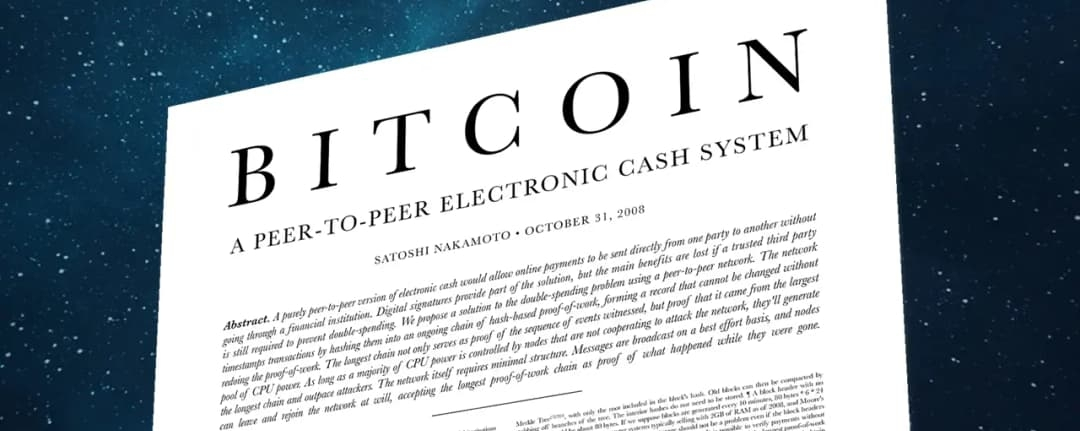

Eighteen years ago, on October 31, 2008, an unknown person or group using the name Satoshi Nakamoto published a nine-page document that would eventually change the global financial conversation.
Titled Bitcoin: A Peer-to-Peer Electronic Cash System, the white paper introduced an idea that seemed almost impossible at the time: a digital currency that could operate without banks, governments, or traditional financial institutions controlling every transaction.
Back then, Bitcoin was little more than an experiment discussed among cryptography enthusiasts. Today, it has become a major part of the financial industry, attracting individual investors, institutional players, major companies, and policymakers.
From an Internet Experiment to Wall Street
Bitcoin's journey has been anything but ordinary. In its early years, many people dismissed it as a niche technology with little real-world value. However, its decentralized design, limited supply of 21 million coins, and ability to transfer value without traditional intermediaries gradually attracted global attention.
Over time, Bitcoin moved beyond online communities and entered mainstream financial markets. The launch of spot Bitcoin exchange-traded funds (ETFs) in the United States in January 2024 marked an important milestone, giving investors access to Bitcoin through traditional brokerage accounts.
Large financial institutions also began exploring Bitcoin-related investment products and services, bringing digital assets closer to the traditional financial system.
Bitcoin Reaches Washington
Bitcoin's influence has also expanded into political and regulatory discussions in Washington. US lawmakers and regulators have increasingly focused on how digital assets should be regulated, how investors can be protected, and what role cryptocurrencies could play in the country's financial future.
Bitcoin is no longer simply a technology conversation. It has become part of broader discussions about financial innovation, investment, regulation, and the future of money.
The Original Vision Still Matters
Despite its growing connection with Wall Street, Bitcoin's original idea remains important: allowing people to transfer value directly without relying on a central financial authority.
However, Bitcoin's journey has also brought challenges, including extreme price volatility, security risks, regulatory uncertainty, and debates over its environmental impact.
Eighteen years after its white paper was published, Bitcoin stands in a very different position from where it started. What began as nine pages of technical ideas has grown into a global financial phenomenon.
Whether Bitcoin ultimately becomes a widely used form of money, a long-term store of value, or a combination of both remains an open question.
One thing is clear: the document published by Satoshi Nakamoto on Halloween 2008 started a conversation that the financial world can no longer ignore. #BinanceSAFUFundTransferCompleted7499BTC #YiHe:ProofOfReserves:10TokensAt100%Backing #BinanceSAFUFundTransferCompleted7499BTC