

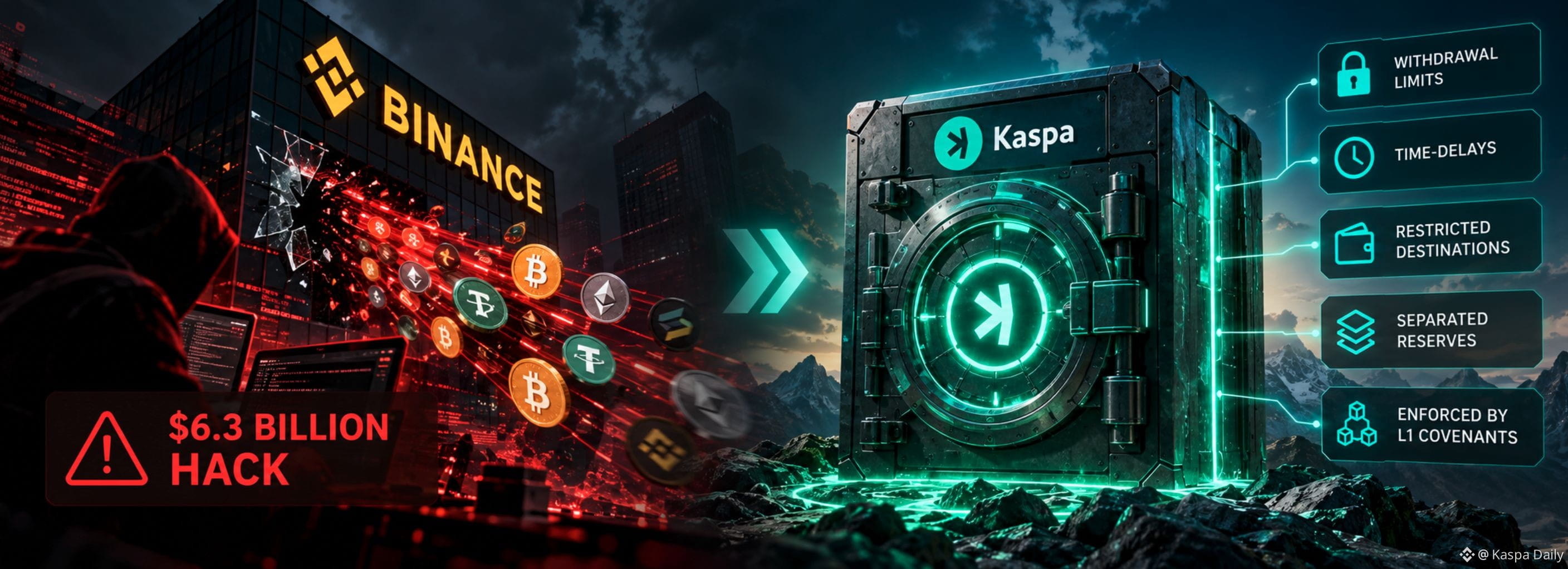
Binance Hack: How Kaspa Covenants Could Improve Security The reported $6.3 billion Binance hack exposed potential weaknesses in cryptocurrency custody. Attackers reportedly compromised internal infrastructure to initiate unauthorized transfers. Kaspa's Toccata upgrade introduced covenants that could help reduce such risks through spending restrictions enforced directly by the blockchain. How Kaspa Could Help Traditional wallets rely on private keys and signatures. If authorized systems are compromised, attackers may gain access to funds. Kaspa covenants provide additional protection through: *Withdrawal limits:* Restricting how much can be transferred within a given period. *Time delays:*Requiring large withdrawals to wait before execution, allowing time to detect suspicious activity. *Restricted destinations:* Allowing transfers only to approved addresses, even if signing systems are compromised. *Protected reserves:*Separating operational funds from larger reserves governed by stricter withdrawal rules. These restrictions are enforced by Kaspa's Layer 1 consensus rather than exchange-controlled software. Could Kaspa Have Prevented the Hack? Without complete technical details, this cannot be established. However, properly designed covenants could have limited unauthorized transfers and reduced potential losses. Covenants are not immune to vulnerabilities. Secure implementation, independent audits and reliable recovery mechanisms remain essential. What This Means for Kaspa Toccata enables developers to build vaults, institutional custody systems and treasury controls directly on Kaspa Layer 1. The key advantage is that compromising a private key or signing system does not necessarily grant unrestricted access to funds. Production-ready solutions still require development and testing, but Kaspa now provides the underlying technology for blockchain-enforced custody restrictions. $KAS #Kaspa #KAS

انضم إلى مُستخدمي العملات الرقمية حول العالم على Binance Square
⚡️ احصل على أحدث المعلومات المفيدة عن العملات الرقمية.
💬 موثوقة من قبل أكبر منصّة لتداول العملات الرقمية في العالم.
👍 اكتشف الرؤى الحقيقية من صنّاع المُحتوى الموثوقين.
البريد الإلكتروني / رقم الهاتف