
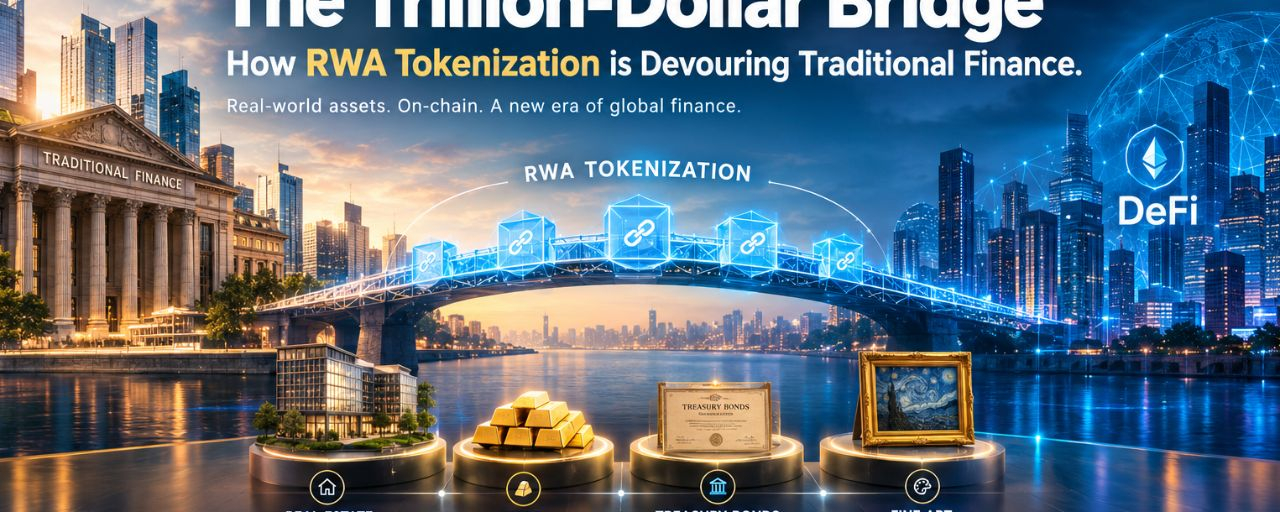

📊 The Trillion-Dollar Bridge: How RWA Tokenization is Devouring Traditional Finance.
For years, critics have argued that the crypto market is disconnected from reality—a digital casino backed by "thin air." But a massive architectural shift is currently underway. If you are tracking institutional liquidity, you have likely noticed the explosive growth of Real World Assets (RWA) Tokenization.
This is not just another crypto trend; this is the aggressive digitization of global physical wealth. Let’s dissect the mechanics from both a technological and economic perspective.
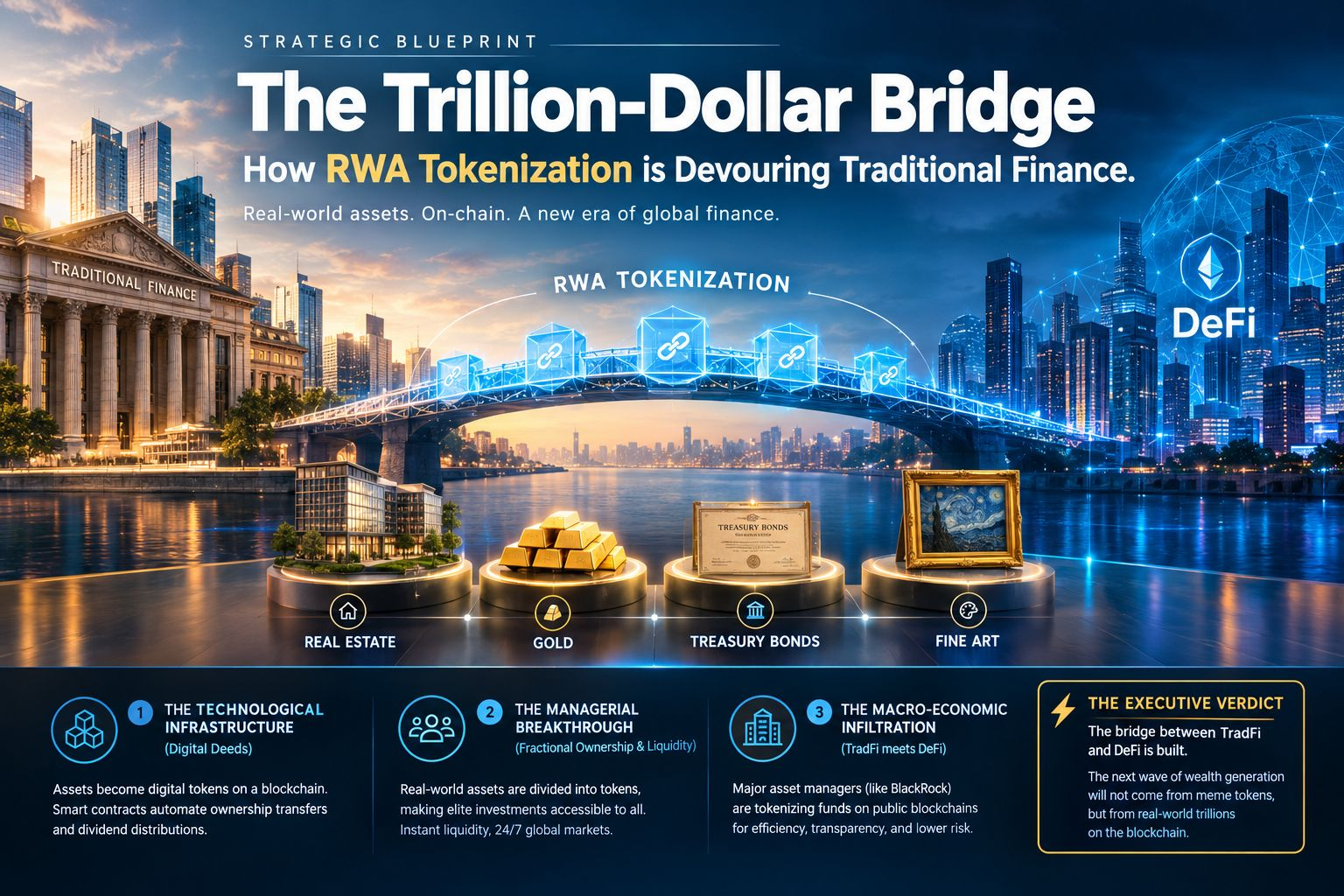
1. The Technological Infrastructure (Digital Deeds) From an IT and systems architecture standpoint, tokenization is the process of converting rights to a physical asset (real estate, gold, treasury bonds, or even fine art) into a digital token on a blockchain. By utilizing Smart Contracts, these tokens act as immutable, programmable deeds. There is no need for traditional brokers; the code executes ownership transfers and dividend distributions automatically.
2. The Managerial Breakthrough (Fractional Ownership & Liquidity) Through the lens of Management Sciences, traditional assets like real estate suffer from a critical flaw: Illiquidity. It takes months and massive capital to buy or sell a building. RWA tokenization shatters this barrier through Fractional Ownership. A $10 million commercial property can be divided into 100,000 tokens priced at $100 each.
For the Investor: It democratizes access to elite asset classes previously restricted to billionaires.
For the Market: It injects instant liquidity into historically frozen markets. You can now trade a fraction of an office building in Tokyo at 3:00 AM on a Sunday, instantly, with near-zero settlement friction.
3. The Macro-Economic Infiltration (TradFi meets DeFi) The world's largest asset managers (like BlackRock) are already deploying tokenized funds on public blockchains. They are not doing this for decentralization; they are doing it for operational efficiency. Blockchain infrastructure reduces administrative overhead, eliminates counterparty risk, and creates a transparent ledger for auditors.
💡 The Executive Verdict: The bridge between Traditional Finance (TradFi) and Decentralized Finance (DeFi) is officially built. The next wave of wealth generation will not come from meme tokens, but from the protocols that successfully migrate real-world trillions onto the blockchain.
👇 System Query for the Community: Do you believe traditional banks will eventually be forced to adopt blockchain infrastructure entirely to survive, or will they attempt to build their own private, centralized networks? Drop your analysis below!