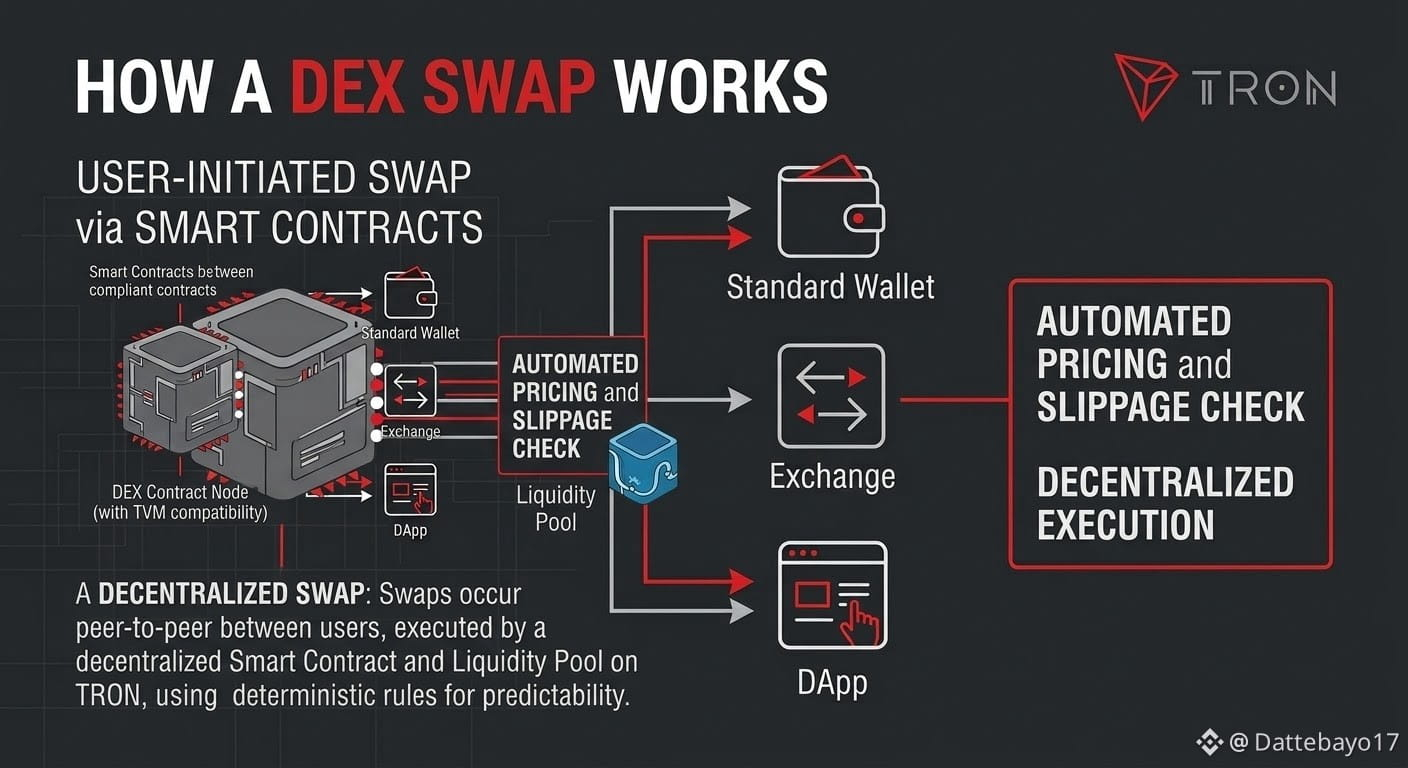
What makes a decentralized exchange different? A decentralized exchange (DEX) lets users trade through smart contracts rather than relying on a centralized company to custody every trade in the same way as a traditional exchange.
Many DEXs use automated market makers (AMMs). In an AMM, users supply assets to liquidity pools and a pricing formula helps determine the exchange rate for swaps. Other DEX designs may use different mechanisms, so not every platform works identically. Using a DEX can preserve wallet-based control over the transaction process, but it does not remove risk. A user may face price impact, slippage, low liquidity, malicious tokens, or contract vulnerabilities. A wallet may also ask for a token approval that grants a contract permission to spend a specified amount.
Before swapping, verify the token contract and the DEX’s official address, inspect the expected output and slippage settings, and understand any approval being requested. A decentralized interface is not proof that every asset or contract is safe.
@justinsuntron #TRONEcoStar #TRON