


Imagine opening your crypto wallet and finding a token you never bought.
It has an unfamiliar name, an attractive logo, and maybe a message promising free rewards.
Should you claim it?
Not so fast. Receiving an unknown token doesn't mean it's safe to interact with.
Here's how to protect yourself.
1. Why Do Unknown Tokens Appear?
Public blockchains can allow anyone to send tokens to a wallet address without the recipient's permission.
Some are harmless spam. Others may be connected to phishing, impersonation, or malicious websites.
Receiving one doesn't automatically mean your wallet is hacked—but curiosity can expose you to risk.
2. Watch for These Red Flags
🚩 Suspicious links: A token directs you to an unfamiliar website to claim rewards.
🚩 Recovery phrase requests: No legitimate token claim should require you to reveal your seed phrase or private keys.
🚩 Unexpected signing requests: A website asks you to approve a transaction you don't understand.
🚩 Fake branding: The token copies a legitimate project's name or logo.
Remember: connecting your wallet and signing a transaction are different actions. Read every request carefully.
3. How to Investigate an Unknown Token
Before interacting with it: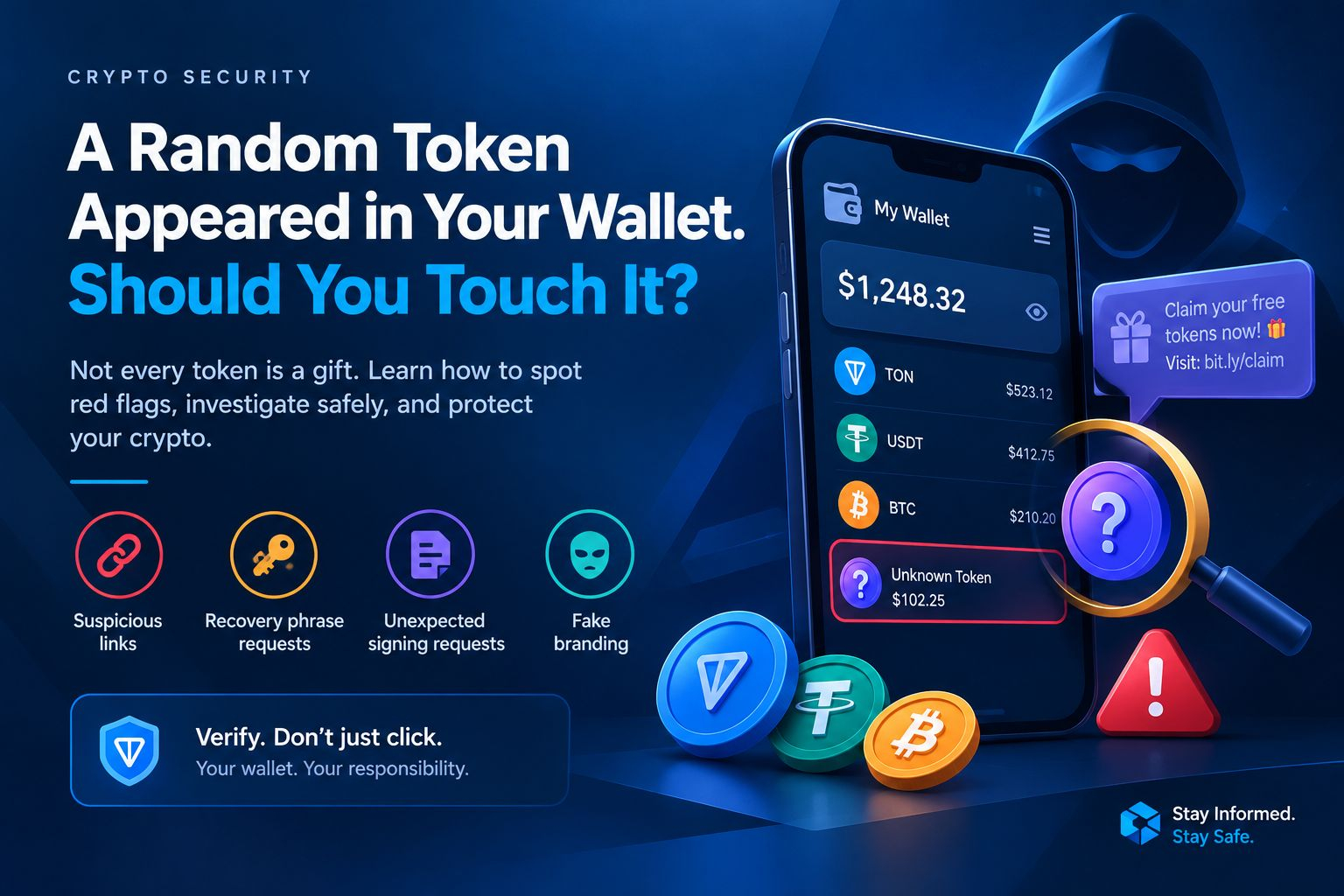
- Verify the contract address using reliable, official project sources.
- Check the project's identity through its official website and communication channels.
- Review available market information, including liquidity and trading activity, without assuming these prove legitimacy.
- Take security warnings seriously. No warning doesn't mean a token is safe.
- Avoid unnecessary interaction. If you cannot verify the asset, leave it alone.
You don't need to claim, swap, or sell every token that appears in your wallet.
4. What About STON.fi?
When exploring tokens on a decentralized exchange like STON.fi, verify the asset and review transaction details before signing.
You can also explore "STONVerse CyberSecGame" (https://stonverse.com/cybersecgame/) to learn more about common Web3 security threats.
Educational tools can improve your awareness, but they cannot guarantee that a particular token is safe.
Final Thoughts
A random token appearing in your wallet doesn't automatically mean you've been hacked. But it doesn't mean you've received a legitimate reward either.
Verify first. Avoid suspicious links. Protect your recovery phrase. Never sign transactions you don't understand.
In Web3, sometimes the smartest move is knowing when not to click.