

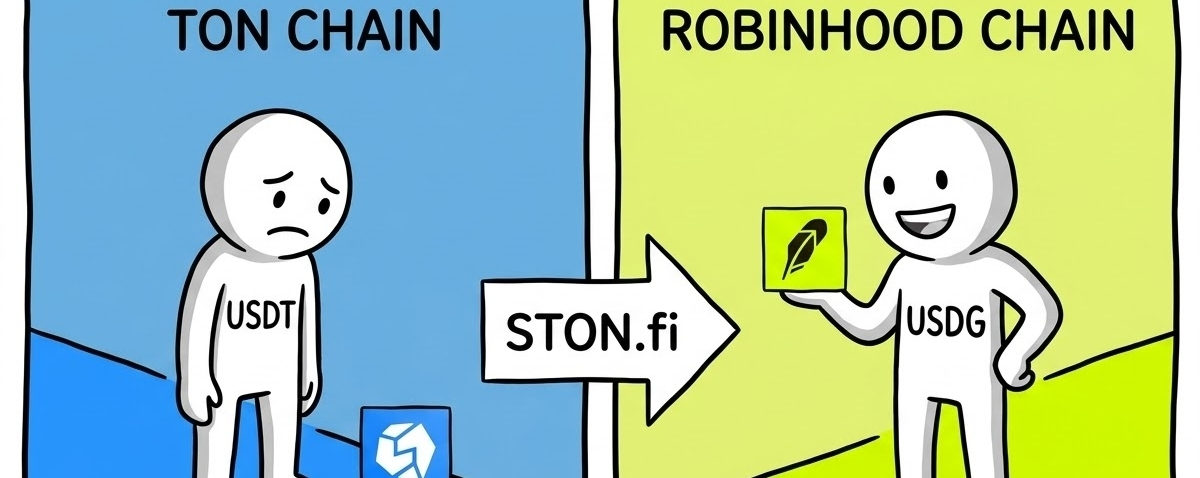

Blockchain networks operate as separate ecosystems each with its own assets applications and infrastructure.
Although these networks offer different opportunities moving assets between them can introduce additional complexity for users.
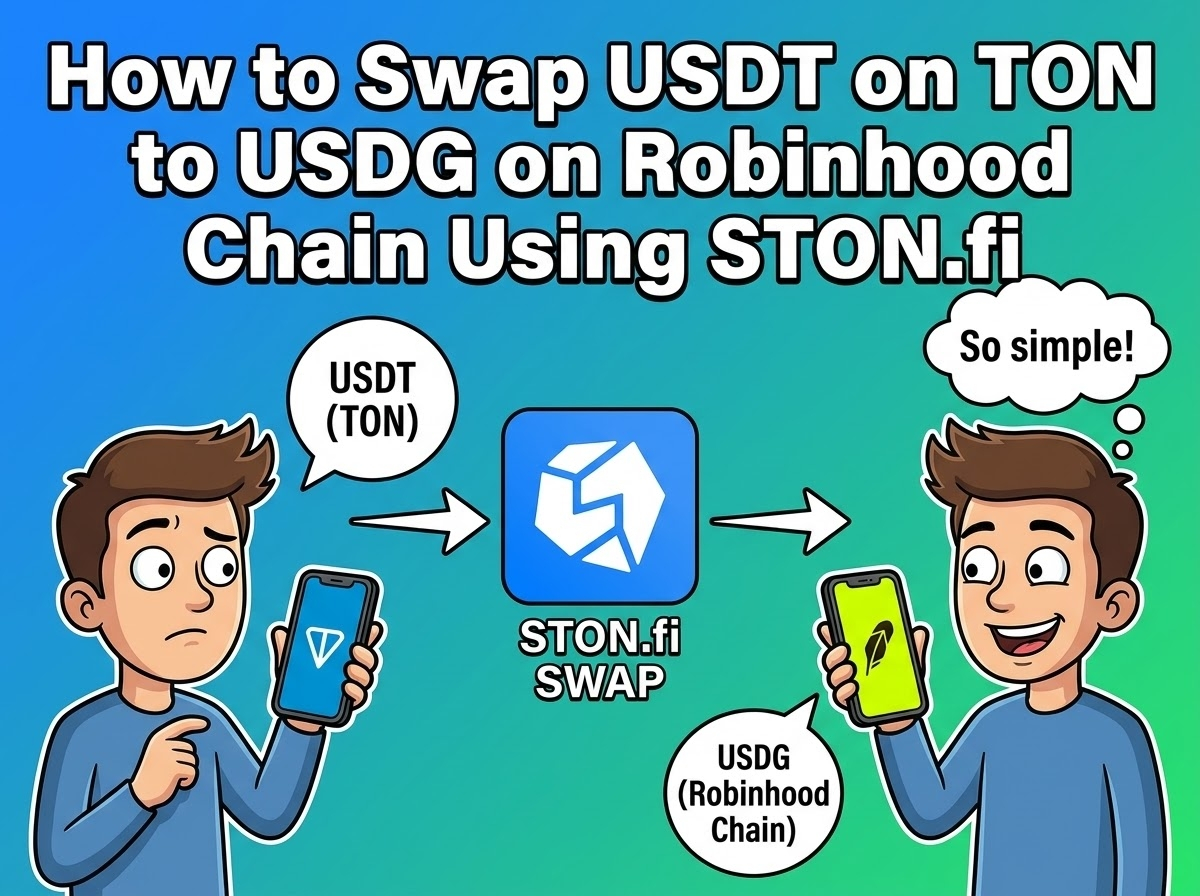
Cross-chain technology aims to reduce this friction by connecting supported blockchain networks and enabling users to exchange assets across ecosystems.
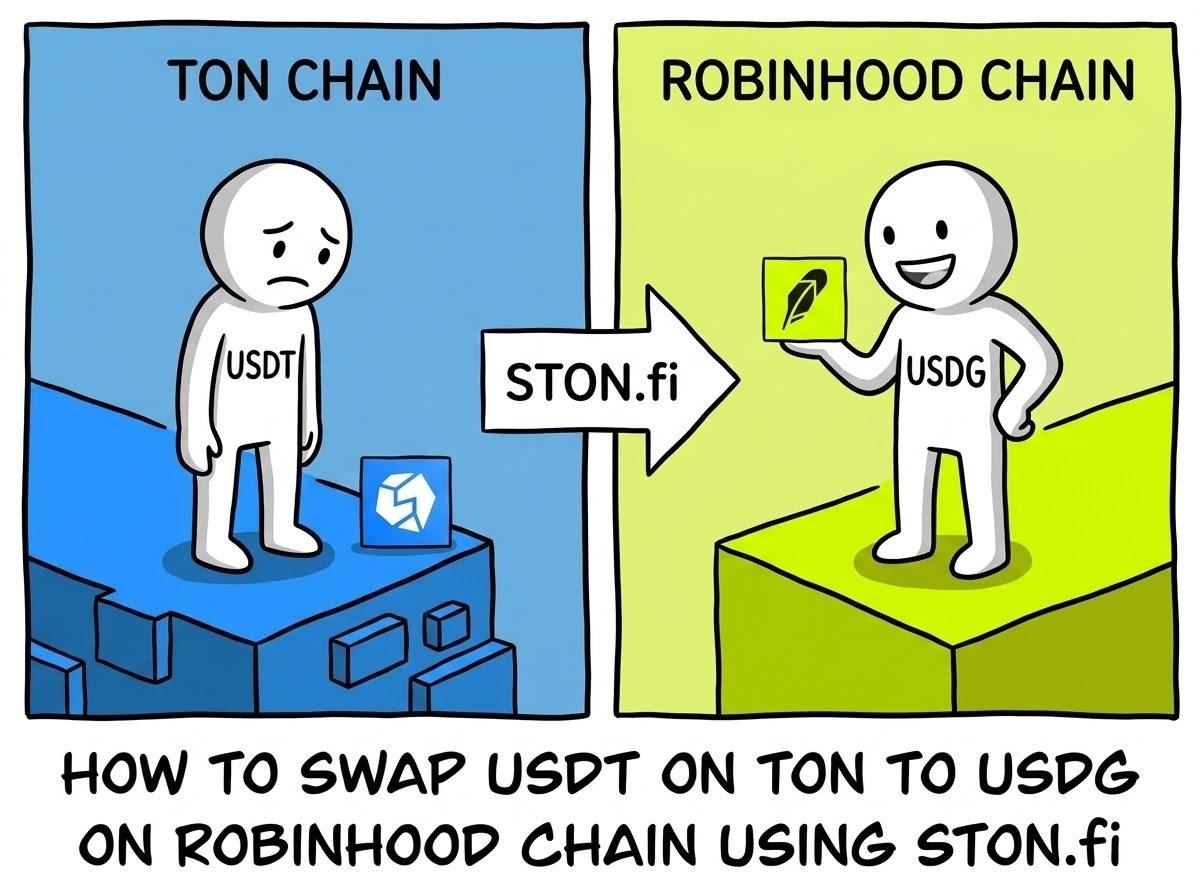
One example is the route from USDT on The Open Network (TON) to USDG on Robinhood Chain through STON.fi.
Understanding how this process works requires looking beyond the swap itself We need to examine the source asset, destination network, underlying technology, practical applications and risks users should consider before initiating a transaction.
1. Understanding the Source: USDT on TON
The process begins with USDT on TON.
TON short for The Open Network is a blockchain ecosystem that supports digital assets and decentralized applications.
USDT is a stablecoin designed to maintain a value close to one US dollar. However its value and usability depend on factors such as its issuer, market conditions and the network on which it is issued for this transaction the important detail is that the user holds USDT on TON and wants to exchange it for an asset on another blockchain.
Selecting the correct token and source network is essential Assets that share the same ticker across different networks are not automatically interchangeable.
2. Understanding the Destination: USDG on Robinhood Chain
The intended destination is USDG on Robinhood Chain.
USDG also known as Global Dollar is a US dollar-pegged stablecoin issued by Paxos. Its purpose is to provide a digital asset designed to maintain a value close to the US dollar.
Robinhood Chain is an Ethereum-compatible Layer 2 blockchain designed to support onchain financial applications and tokenized assets.
The distinction between the network and the asset matters Robinhood Chain is the blockchain infrastructure while USDG is the stablecoin the user intends to receive for this specific STON.fi route USDG is the destination asset under discussion this does not establish that every token available on Robinhood Chain is supported by STON.fi.
Users should confirm the current destination token and network through the live interface before proceeding.
3. How STON.fi and Omniston Fit Into the Process
STON.fi provides a decentralized exchange interface within the TON ecosystem and supports cross-chain functionality through its Omniston infrastructure.
Omniston is designed to help identify available swap routes across supported liquidity sources and networks.
In a cross-chain swap several operations may need to be coordinated. The system must identify a viable route, present the transaction details and facilitate the process of exchanging the source asset for the intended destination asset for a user exploring the USDT-to-USDG route the intended flow is:
USDT on TON → Cross-chain routing through STON.fi and Omniston → USDG on Robinhood Chain
The exact route execution process, fees and transaction requirements depend on what the live interface currently supports.
It is important not to assume that every cross-chain swap follows the same technical mechanism. Users should rely on the transaction details presented by the interface rather than making assumptions about how the underlying route executes.
4. How to Explore the USDT-to-USDG Swap
Users can investigate the route through the STON.fi swap interface.
Step 1: Open STON.fi
Visit the official STON.fi application and navigate to its swap interface.
Before connecting a wallet verify that you are using the legitimate application.
Step 2: Select USDT on TON
Choose USDT as the source asset and confirm that TON is the selected source network.
Check that the token corresponds to the intended asset Do not select a token based only on its ticker or displayed name.
Step 3: Select USDG on Robinhood Chain
Choose USDG as the destination asset and verify that Robinhood Chain is the receiving network.
If the destination asset or route is unavailable do not assume that another asset on the network can be substituted without changing the transaction's purpose.
Step 4: Review the Transaction
Before confirming, examine the available transaction information including:
- The estimated amount of USDG to receive.
- Applicable fees and other transaction costs.
- The source and destination networks.
- Any price impact, slippage or minimum-receive information displayed.
- The expected transaction process and any additional requirements.
The estimated amount is not necessarily the final amount received.
Step 5: Confirm and Monitor
If the route is available and the transaction details are acceptable follow the application's instructions to authorize the transaction.
Monitor its status and verify receipt of USDG on Robinhood Chain.
Do not assume that a transaction is complete simply because the source-side transaction has been submitted.
Confirm its final status and check the destination wallet.
Important: These are general instructions for exploring the route not confirmation that it is currently available. Check the live STON.fi interface before publishing or initiating a swap.
5. A Practical Use Case: Accessing Another Blockchain Ecosystem
Consider a user who holds USDT on TON but wants to access an application that accepts USDG on Robinhood Chain.
Without a supported cross-chain route the user might need to investigate separate services, understand different transaction requirements and manage the movement of assets between networks.
If the required route is available through STON.fi the user can explore exchanging USDT on TON for USDG on Robinhood Chain through a coordinated interface.
This can reduce the operational complexity of accessing assets across different ecosystems.
However a successful swap does not automatically guarantee access to every application on Robinhood Chain. The receiving asset must be compatible with the intended application and the user must meet any additional requirements.
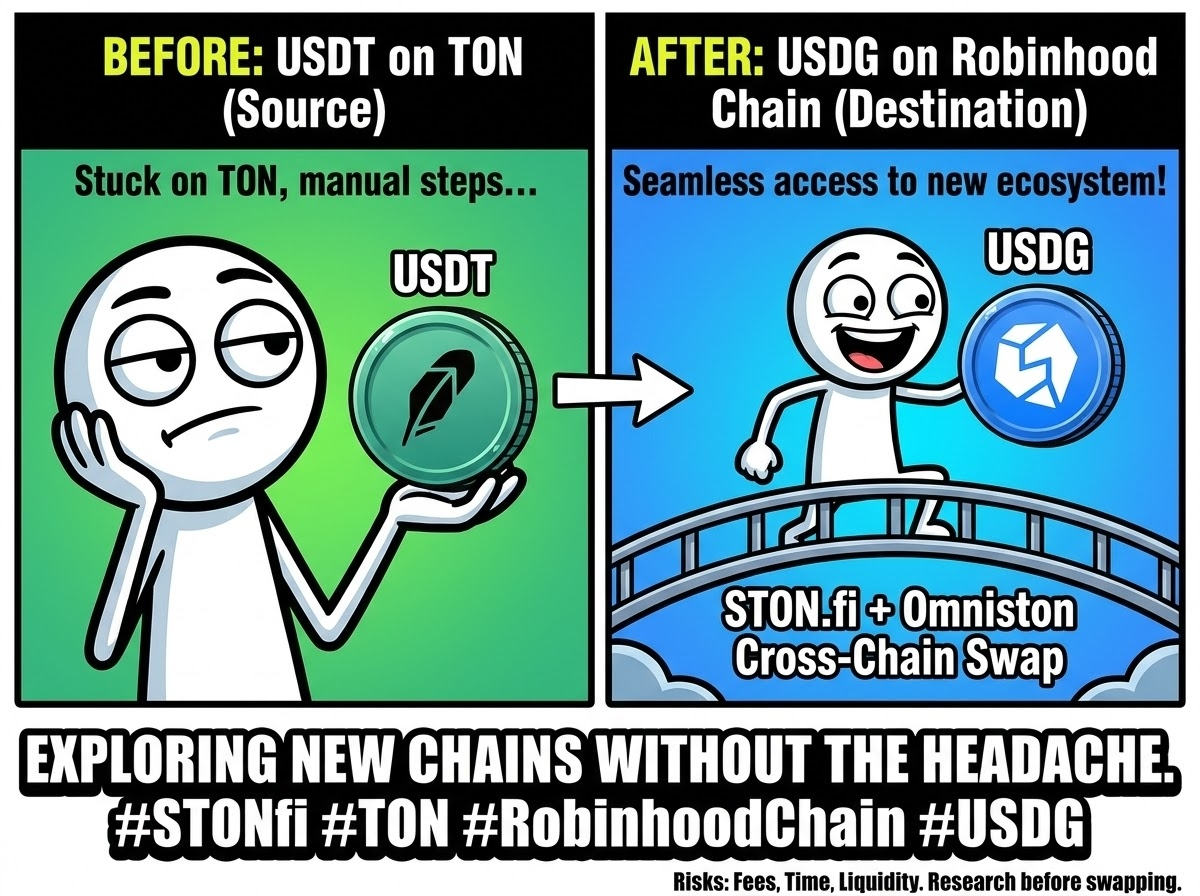
The practical value therefore depends on the user's objective the availability of the route and the utility of USDG within the destination ecosystem.
6. Risks Users Should Understand
Cross-chain infrastructure can simplify transactions but it does not eliminate risk.
Transaction Fees
Network fees and swap-related costs can reduce the amount ultimately received. Review the available quote and transaction costs before confirming.
Route Availability and Liquidity
A route that is available today may become unavailable or offer different execution conditions later.
Liquidity market conditions and supported integrations can affect the estimated receiving amount.
Transaction Delays
Cross-chain transactions may require multiple operations to complete Network congestion or other technical issues can delay execution.
Users should understand the displayed transaction process and avoid assuming that all swaps settle instantly.
Smart-Contract and Protocol Risk
Cross-chain systems can involve multiple smart contracts and technical components. Vulnerabilities, failures or unexpected behavior may result in financial losses.
Stablecoin Risk
USDG is designed to maintain a value close to one US dollar, but a dollar peg is not a guarantee of risk-free value.
Stablecoins can experience deviations from their intended peg and carry issuer, reserve, regulatory and operational risks.
Incorrect Network or Token Selection
Selecting the wrong asset or destination network can lead to failed transactions or loss of access to funds always verify the token, network and receiving address or wallet details presented by the application.
7. Why This Cross-Chain Connection Matters
The broader significance of cross-chain technology is its potential to make assets more accessible across blockchain ecosystems.
TON and Robinhood Chain serve different purposes within the wider blockchain landscape. A supported route between them can help users move from an asset held in one ecosystem to an asset used in another.
STON.fi provides the user-facing swap experience while Omniston helps identify available routes across supported liquidity sources and networks.
USDG is the intended destination asset in this particular example.
These components serve distinct roles:
TON: The source blockchain network.
USDT: The source stablecoin.
STON.fi: The swap interface.
Omniston: The routing infrastructure.
Robinhood Chain: The destination blockchain network.
USDG: The intended destination stablecoin.
Understanding these roles helps users evaluate what a cross-chain swap actually accomplishes rather than treating it as a simple token exchange.
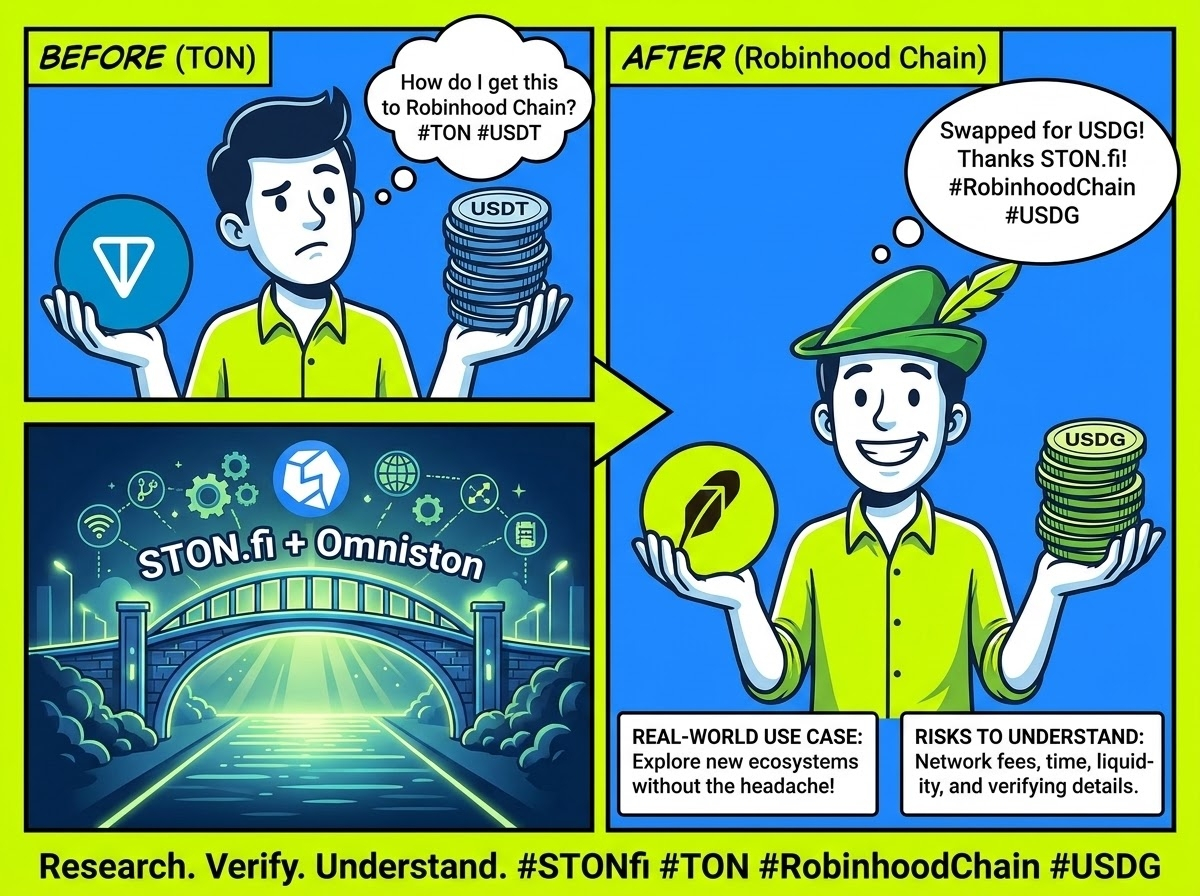
Swapping USDT on TON to USDG on Robinhood Chain illustrates how cross-chain infrastructure can connect assets across separate blockchain ecosystems.
The process begins with identifying the correct source asset, selecting a supported destination route, reviewing transaction details and confirming that the intended asset arrives on the destination network.
But the technology alone is not the complete story. Users must also understand transaction costs, route availability, settlement requirements, smart-contract risks and stablecoin limitations.
The most important lesson is straightforward understand the route before using it.
Verify the supported assets.
Review the transaction.
Understand the risks.
Cross-chain technology becomes more useful when access to assets is accompanied by clear information and informed decisions.
Research the route.
Verify the details.
Understand the risks before you swap.
Explore the "STON.fi application" https://app.ston.fi/swap and consult the "dedicated Robinhood Chain guide" https://ston.fi/cross-chain-swap-from-ton-to-base for further information.