



The artificial intelligence boom is reshaping the American job market at an incredible speed. For years, the main concern around technology was how many roles it might eliminate. The actual data tells a completely different story. As companies rush to build physical infrastructure and train advanced models, the demand for specialized human labor is hitting record highs.
❍ Where the New AI Jobs Are Concentrated
The expansion of artificial intelligence roles is adding hundreds of thousands of high paying positions to the economy.
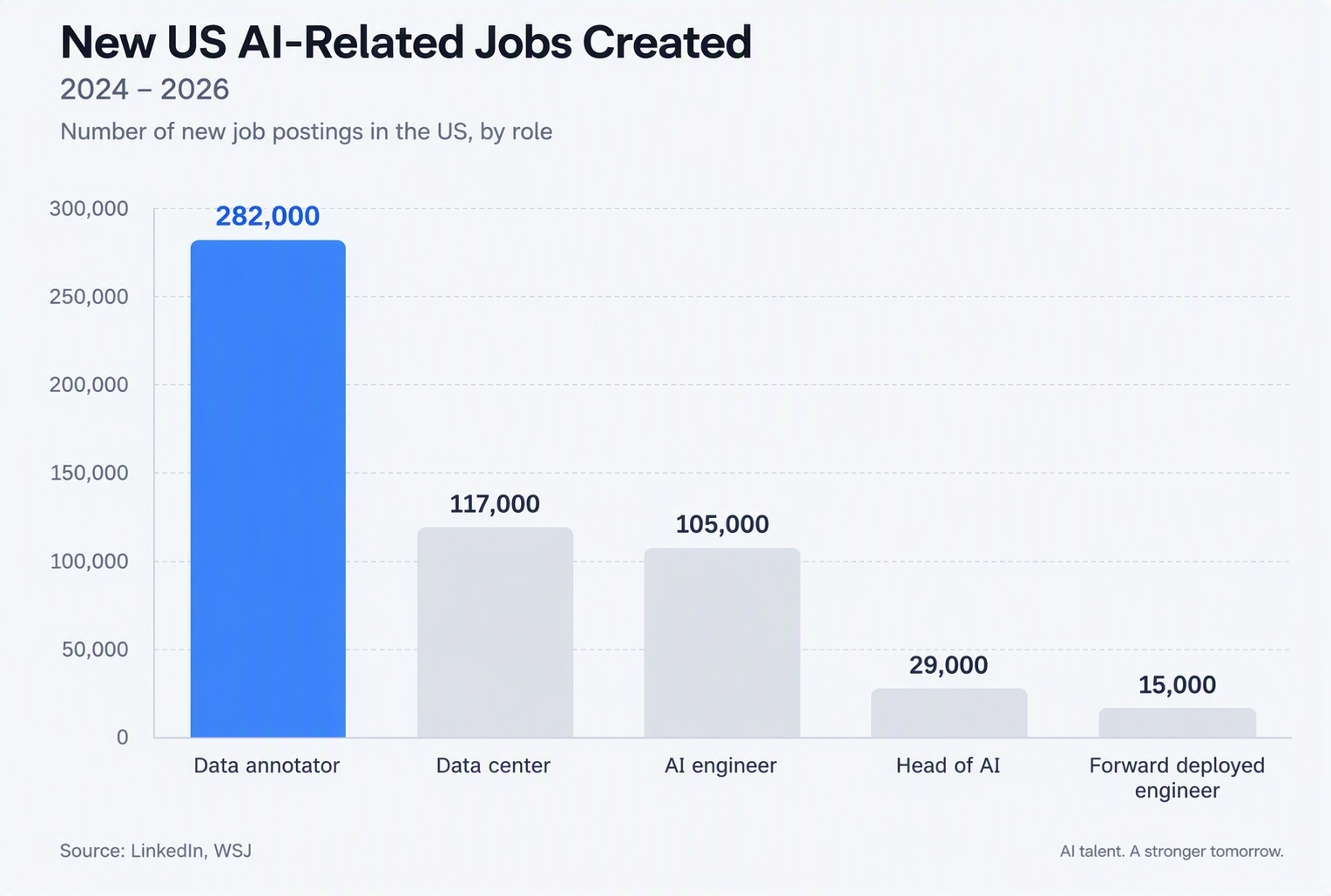
AI linked roles have accounted for more than 750,000 new jobs created across the United States since 2023, according to recent estimates.
This hiring wave is led by data annotators with 282,000 new positions, followed closely by data center jobs at 117,000 and AI engineers at 105,000.
Together, these three specific categories account for 504,000 of the total new jobs created during this tech cycle.
❍ Premium Salaries in the Tech Sector
The financial incentive for workers entering the artificial intelligence space stands far above the traditional labor market.
AI related positions offer significantly higher compensation, boasting a median salary of roughly 180,000 dollars on LinkedIn.
By comparison, the median salary across all traditional jobs sits at about 80,000 dollars.
This massive wage gap is driven by the rapid expansion of physical AI infrastructure and the intense corporate demand for specialized engineering talent.
Some Random Thoughts 💬
Every major technological revolution creates an entirely new class of high value employment while forcing traditional industries to adapt. When people worry about automation taking over, they often forget that building and maintaining artificial intelligence requires massive amounts of human labor, from managing physical data centers to annotating complex datasets.
In the tech and crypto sectors, we see this exact same dynamic where cutting edge infrastructure demands specialized talent that commands top tier pay. The companies spending billions on hardware and software realize that talent is the ultimate bottleneck. If you want to future proof your career, understanding how to work alongside these new intelligence systems is quickly becoming the most valuable skill in the modern economy.