

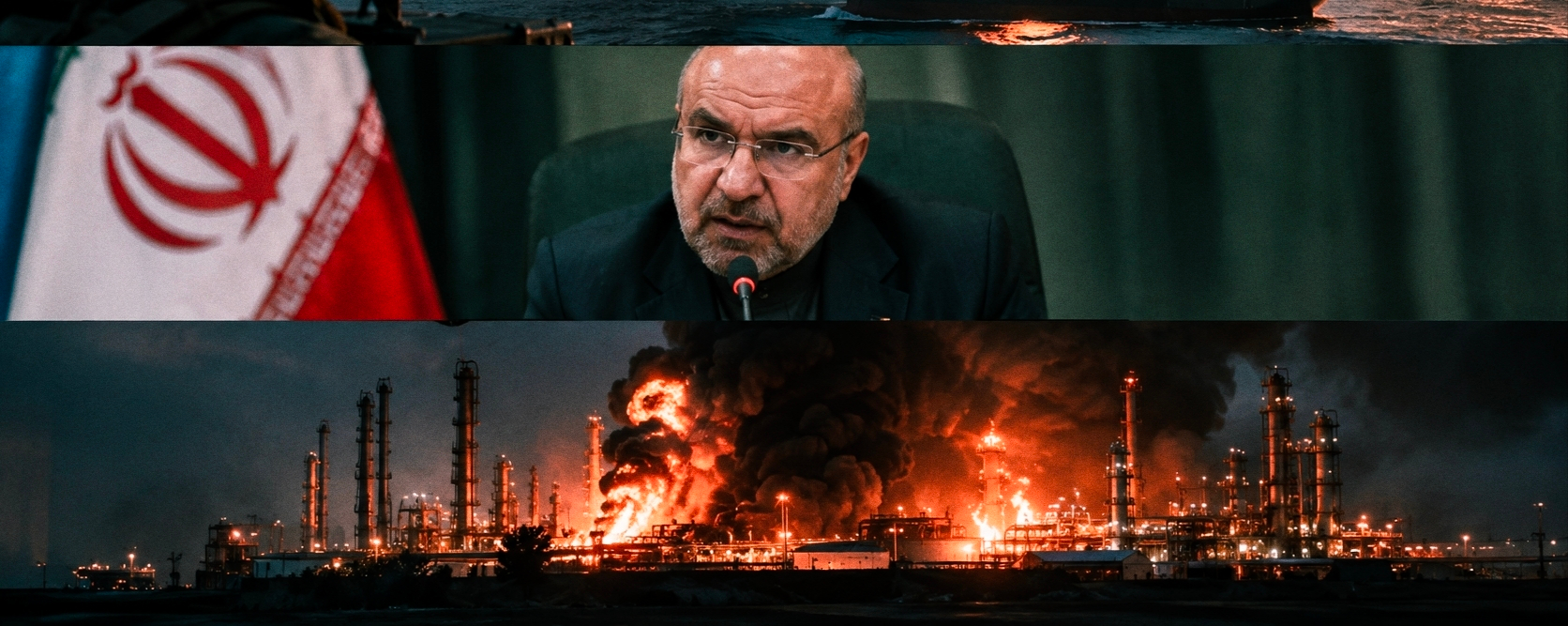

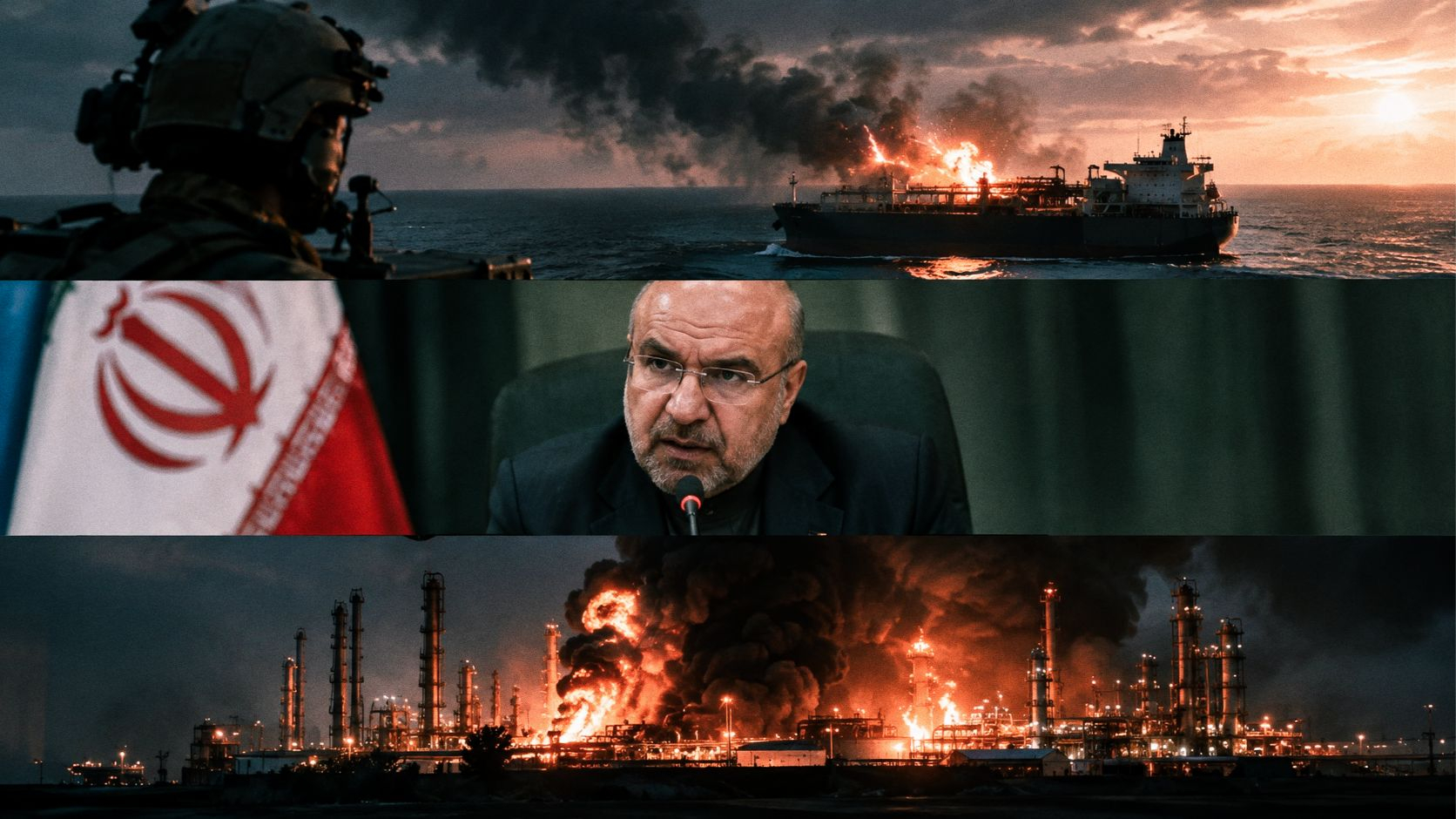
Two more tankers were reportedly hit this weekend near Oman and Iran.
And Iran is making its position brutally clear:
THE STRAIT OF HORMUZ WILL NOT REOPEN ON AMERICAN ORDERS.
Iranian Parliament Speaker Mohammad Bagher Ghalibaf said the strait will remain closed until Tehran’s conditions for ending the war are met.
Those conditions reportedly include an end to U.S. military “aggression,” the removal of the naval blockade, an end to economic warfare, and the release of Iranian assets.
Washington, meanwhile, wants Iran to dismantle its nuclear weapons program.
That is not a minor disagreement.
That is a geopolitical deadlock sitting on top of one of the most important energy chokepoints on Earth.
Before the war began on February 28, roughly ONE-FIFTH OF THE WORLD’S OIL SUPPLY moved through the Strait of Hormuz.
Now tankers are being hit.
Saudi Arabia’s energy infrastructure is reportedly being targeted again.
The Houthis, aligned with Iran, claimed responsibility for missile and drone attacks against Saudi Aramco facilities in Riyadh.
And the United States is reportedly preparing to send a THIRD carrier strike group into the region, alongside an amphibious force carrying around 2,000 Marines.
This is no longer just a Middle Eastern conflict.
It is a GLOBAL SUPPLY-CHAIN PROBLEM.
Oil has already surged above $100 per barrel.
Brent: around $102.25.
WTI: around $91.11.
And the consequences do not stop at the gas station.
Higher oil prices mean higher transportation costs.
Higher transportation costs mean higher production costs.
Higher production costs feed inflation.
Higher inflation puts pressure on central banks.
Higher inflation can keep interest rates higher for longer.
And higher borrowing costs hit governments, companies, consumers and financial markets.
THIS IS HOW A WAR TURNS INTO AN ECONOMIC SHOCK.
The terrifying part?
Investors are increasingly talking about WHEN the conflict returns to full-scale warfare—not IF.
Every tanker hit adds another layer of risk.
Every military deployment increases the probability of escalation.
Every disruption through Hormuz increases the risk premium embedded in global energy prices.
And if the Strait remains restricted for long enough, the world does not simply lose oil.
THE WORLD LOSES PREDICTABILITY.
Governments are forced to release strategic reserves.
Industries pay more for energy.
Consumers pay more for fuel and goods.
Central banks face a nightmare:
FIGHT INFLATION WHILE WAR IS DESTROYING THE SUPPLY SIDE OF THE ECONOMY.
That is the real danger.
The market does not need a complete shutdown of Hormuz to panic.
It only needs to believe that the next tanker could be hit, the next facility could be attacked, and the next military deployment could trigger a wider war.
This is how geopolitical risk becomes financial risk.
And financial risk eventually becomes YOUR problem.
The Strait of Hormuz is not just a line on a map.
IT IS A PRESSURE POINT CONNECTED DIRECTLY TO THE GLOBAL ECONOMY.
If this thing explodes again, the question will not be:
“Will oil go higher?”
The real question will be:
“HOW MUCH OF THE GLOBAL ECONOMY CAN ABSORB IT?”
The Middle East is playing with fire.
And the global economy is standing in the fucking gasoline.
#Hormuz #Iran #MiddleEast #Oil #Geopolitics #GlobalEconomy #Inflation #EnergyCrisis #SaudiArabia #UnitedStates #Brent #WTI