



━━━━━━━━━━━━━━━━━━━━
Most people imagine trading success as a single life-changing moment:
The perfect entry.
The lucky prediction.
The trade that turns a small account into a big one overnight.
It's an exciting story.
But it's rarely the truth.
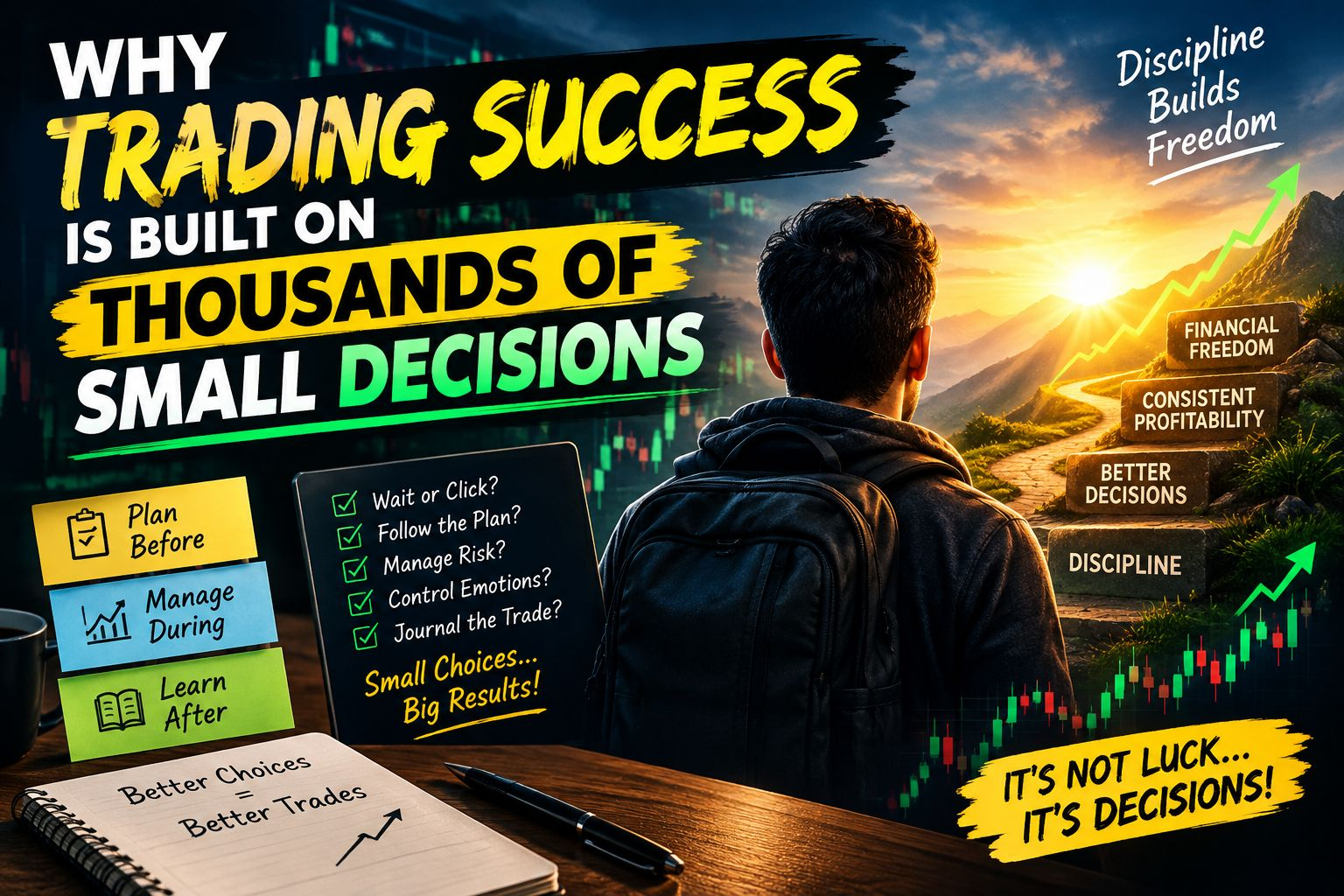
Behind every consistently profitable trader is something far less dramatic: thousands of small decisions made correctly over time.
The decision to wait instead of forcing a trade.
The decision to follow a plan instead of following emotions.
The decision to accept a loss instead of fighting the market.
Individually, these choices seem insignificant.
Collectively, they shape an entire trading career.
Let's explore why.
━━━━━━━━━━━━━━━━━━━━
◆ THE MYTH OF THE "BIG TRADE"
Many beginners spend their time searching for the trade that will change everything.
Experienced traders know better.
Long-term success isn't built on a single winning position. It's built on a process that produces good decisions repeatedly.
Think about constructing a house.
No single brick makes the building strong.
Yet thousands of carefully placed bricks create a structure that can stand for decades.
Trading works the same way.
A great trade won't make a career.
A series of disciplined decisions might.
Likewise, one mistake won't destroy an account.
But one bad habit repeated hundreds of times eventually can.
━━━━━━━━━━━━━━━━━━━━
◆ THE SMALL DECISIONS THAT SHAPE EVERY TRADER
① Before the Trade
➤ Did I define my setup before opening the chart?
➤ Do I know exactly where my idea becomes invalid?
➤ Am I following my strategy—or simply looking for action?
➤ Is this a high-quality opportunity or a boredom trade?
② During the Trade
➤ Am I managing risk or managing emotions?
➤ Am I moving my stop-loss because the market changed—or because I'm uncomfortable?
➤ Am I allowing my plan to play out?
➤ Am I reacting emotionally to every candle?
③ After the Trade
➤ Did I journal the trade honestly?
➤ Did I learn something useful?
➤ Am I evaluating the process rather than the outcome?
➤ Am I treating this trade as one sample within a larger series?
✔︎ Notice what's missing?
None of these questions require predicting the market.
They require managing yourself.
And that's where the real edge often comes from.
━━━━━━━━━━━━━━━━━━━━
◆ WHY SMALL DECISIONS COMPOUND
One of the most powerful concepts in trading is compounding.
Not just financial compounding.
Behavioral compounding.
Small habits grow stronger every time they're repeated.
➜ Skip one stop-loss and it feels harmless.
Repeat it often enough and it becomes your standard behavior.
➜ Take one revenge trade and it feels justified.
Repeat it regularly and it becomes part of your identity.
➜ Stay patient and wait for one quality setup.
Do it consistently and patience becomes your competitive advantage.
Your future results are often hidden inside today's habits.
The market doesn't reward your best day.
It rewards what you repeatedly do on ordinary days when nobody is watching.
━━━━━━━━━━━━━━━━━━━━
◆ THE 3-PART FRAMEWORK FOR BETTER DECISIONS
① Simplify the Process
The fewer decisions you must make under pressure, the better.
Create rules before the trade begins:
✔︎ Entry conditions
✔︎ Risk per trade
✔︎ Position size
✔︎ Exit criteria
✔︎ Situations to avoid
A clear plan reduces emotional decision-making.
② Slow Down Emotional Moments
Strong emotions often lead to expensive mistakes.
Fear.
Greed.
Frustration.
Overconfidence.
When emotions spike, slow down.
A short pause can prevent a long regret.
Sometimes the best trade decision is choosing not to trade.
③ Review Without Judging
Many traders judge themselves only by profit and loss.
That's a dangerous habit.
A good trade can lose money.
A bad trade can make money.
Instead, ask:
🔍 Did I follow my process?
🔍 Did I manage risk correctly?
🔍 Did I execute my plan as intended?
Over time, strong processes tend to produce stronger outcomes.
━━━━━━━━━━━━━━━━━━━━
◆ A SIMPLE DAILY CHECKLIST
Before ending your trading day, ask yourself:
✔︎ I knew my risk before entering.
✔︎ I respected my trading plan.
✔︎ I avoided emotional or boredom-driven trades.
✔︎ I stepped away when my mindset wasn't clear.
✔︎ I documented what I did and why.
Small checkmarks.
Massive long-term impact.
━━━━━━━━━━━━━━━━━━━━
◆ THE REAL TAKEAWAY
Successful traders are rarely defined by one spectacular trade.
They're defined by thousands of disciplined decisions that nobody notices.
One chart.
One setup.
One journal entry.
One risk-managed trade.
One patient decision after another.
You cannot control the market.
You cannot control the next candle.
You cannot control the next headline.
But you can control the next decision.
Then the one after that.
And the one after that.
Do that consistently, and the results often become a byproduct of the process.
━━━━━━━━━━━━━━━━━━━━
◆ YOUR TURN
➤ What small habit has improved your trading the most?
➤ Have you ever noticed a tiny decision that made a huge difference over time?
➤ Share your experience in the comments and help other traders learn from it.
Follow for more practical insights on trading psychology, discipline, and risk management.
━━━━━━━━━━━━━━━━━━━━



#NFPWatch #BitcoinFundingRateTriplesTo10% #BitcoinSurpasses$86KUp2.99% #ZcashFalls21%FromSeptemberPeak #XRPPostsFirstThreeGreenMonthsInQ3