Most crypto on-ramps fail at the seams.
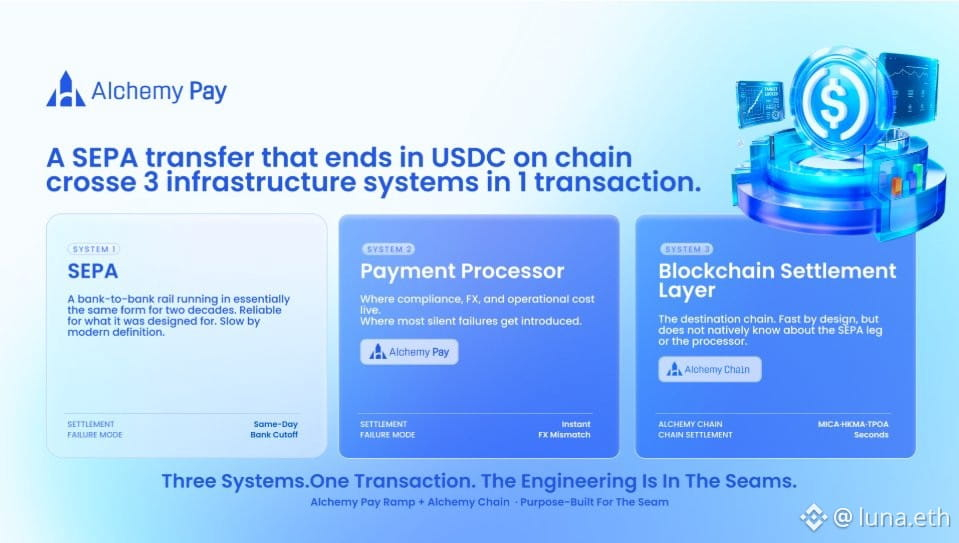
You want SEPA → $USDC on-chain? That's 3 completely different systems fighting each other:
1. Bank rails (20+ years old, slow AF)
2. Payment processor (where compliance, FX spreads, and silent failures live)
3. Public chain (fast, but blind to everything before it)
The product isn't any single piece. It's crossing all three without breaking.
Most projects die here because they optimize one layer and ignore the seams. AlchemyPay built the routing layer that actually works:
→ 173+ countries
→ SEPA, Visa, Mastercard, Apple Pay, Google Pay + 50+ local rails
→ Smart routing based on country, user behavior, and real-time failure modes
AlchemyChain handles the on-chain side with Trusted PoA for instant finality, predictable fees, and dual compliance (MiCA + HKMA). It's wired directly into bank rails and wallets from day one.
Users don't see the infrastructure. They just see a transfer that works—or doesn't. The ones that work? Someone engineered all three seams at once.
That's the alpha.
$ACH
You want SEPA → $USDC on-chain? That's 3 completely different systems fighting each other:
1. Bank rails (20+ years old, slow AF)
2. Payment processor (where compliance, FX spreads, and silent failures live)
3. Public chain (fast, but blind to everything before it)
The product isn't any single piece. It's crossing all three without breaking.
Most projects die here because they optimize one layer and ignore the seams. AlchemyPay built the routing layer that actually works:
→ 173+ countries
→ SEPA, Visa, Mastercard, Apple Pay, Google Pay + 50+ local rails
→ Smart routing based on country, user behavior, and real-time failure modes
AlchemyChain handles the on-chain side with Trusted PoA for instant finality, predictable fees, and dual compliance (MiCA + HKMA). It's wired directly into bank rails and wallets from day one.
Users don't see the infrastructure. They just see a transfer that works—or doesn't. The ones that work? Someone engineered all three seams at once.
That's the alpha.
$ACH