

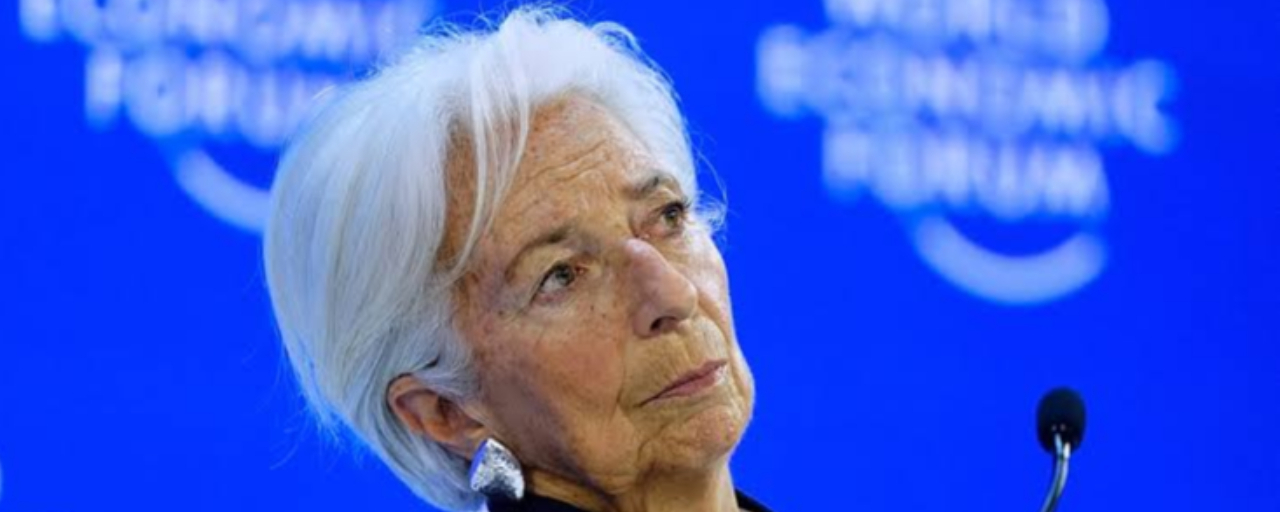

ECB President Christine Lagarde told the European Parliament's Committee on Economic and Monetary Affairs in Brussels on Monday that the central bank raised its three key interest rates by 25 basis points earlier this month because the energy shock is too big to look through. She called the move measured, not aggressive.
Headline inflation climbed to 3.2% in August from 2.9% in July, and energy inflation jumped to 14.3%, driven largely by refining margins on liquid fuels. Yet she sees no sign the surge is seeping into wages. Pay growth per employee slowed to 3.3% in the second quarter from 3.6% in the first, and most longer-term inflation expectations still sit near 2%. Staff now project headline inflation averaging 3.0% this year, easing to 2.5% in 2027 and 2.1% in 2028.
Rising long-term interest rates should also cool growth by more than the September forecasts assume. That matters because the euro area held up better than expected, with solid second-quarter GDP growth and unemployment at 6.4% in July.
Lagarde then turned to artificial intelligence, which she called a force that could lift productivity and eventually ease price pressures, but only if firms adopt it widely. So far, 38% of euro area firms report at least moderate use, while just 7% report significant use. On jobs, she said more than half of workers already use AI and firms are still hiring.
Those using it for research and new products tend to add staff, while those using it mainly to cut labour costs are shedding jobs. She also flagged a market risk: a sharp reassessment of heavily indebted AI companies could trigger corrections that spill over to euro area investors. Her closing message was blunt. The effects of AI remain uncertain, but uncertainty is no excuse for standing still.
Key Quotes:
Monetary Policy
In line with our commitment to ensuring that inflation stabilises at our 2% target in the medium term, we decided to raise the three key ECB interest rates by 25 basis points at our monetary policy meeting earlier this month.
When facing energy shocks, the ECB has a very clear strategy: we do not react to energy prices; we react if we see risks of higher energy prices becoming embedded in inflation.
Looking at these three criteria today, we see higher inflation ahead but no signs yet that it is becoming embedded.
And while growth has been resilient, since our last meeting long-term interest rates have risen notably, which will slow growth and reduce pass-through by more than projected in our September exercise.
This means that while the shock is too large to look through, we view a measured response as appropriate to keep inflation in check.
Inflation
Headline inflation increased to 3.2% in August, from 2.9% in July. Energy inflation rose to 14.3%, after 10.3% in July.
This increase reflects, in particular, a strong contribution from refining margins on liquid fuels, as well as higher energy commodity prices.
Inflation excluding energy and food edged down to 2.4%, owing to a fall in services inflation, only partially offset by an increase in goods inflation.
The baseline of the September ECB staff projections sees headline inflation averaging 3.0% in 2026, 2.5% in 2027 and 2.1% in 2028.
Inflation expectations over shorter horizons remain at elevated levels, but most measures of longer-term inflation expectations stand at around 2 per cent, supporting the stabilisation of inflation around target in the medium term.
The outlook continues to be surrounded by high uncertainty, with upside risks for inflation and downside risks for economic growth.
Growth & Economy
Despite headwinds from the energy shock, the euro area economy proved resilient with solid real GDP growth in the second quarter of 2026.
The baseline of the September ECB staff projections expects the economy to grow by 0.9% in 2026, 1.4% in 2027 and 1.5% in 2028.
Manufacturing is performing solidly, supported by higher government spending on defence and infrastructure.
Labor Market
The labour market remains robust. Unemployment stood at 6.4% in July, although growth in employment and the labour force continue to slow.
So far, wages do not show a material response to the energy shock. Compensation per employee, which measures nominal wage growth, stood at 3.3% in the second quarter, down from 3.6% in the first quarter.
AI & Productivity
Firms are set to devote around 10% of total investment to AI in 2026, and AI-related borrowing already accounts for roughly a quarter of credit growth to firms.
AI has the potential to help firms produce more, and, over time, higher productivity could lower costs. All else equal, this should reduce inflationary pressures in the long term.
A recent ECB survey finds that by late 2025, 38% of euro area firms already reported at least moderate use of AI. Yet only 7% reported significant use.
AI-related investment is rising in Europe, and more is in the pipeline for firms, but still lags behind the United States.
AI & Labor Market
Over 50% of workers already use AI in their job. And so far, on balance, firms are continuing to hire.
Firms using AI to support research, innovation and new products tend to hire, while those using it primarily to cut labour costs are reducing employment.
Historically, major technological advancements have not reduced employment, but right now the verdict is still out on whether AI may prove different.
Financial Conditions
A sharp reassessment of AI companies' prospects and the sustainability of their debt could trigger market corrections and spill over to euro area investors and the wider economy.
Outlook & Uncertainty
For monetary policy, the task is clear: we must closely observe and study how AI affects productivity, investment, labour markets, financial conditions and inflation, so that we can continue to fulfil our mandate of maintaining price stability.
The precise effects of AI remain uncertain. But uncertainty is not a reason for inaction.