
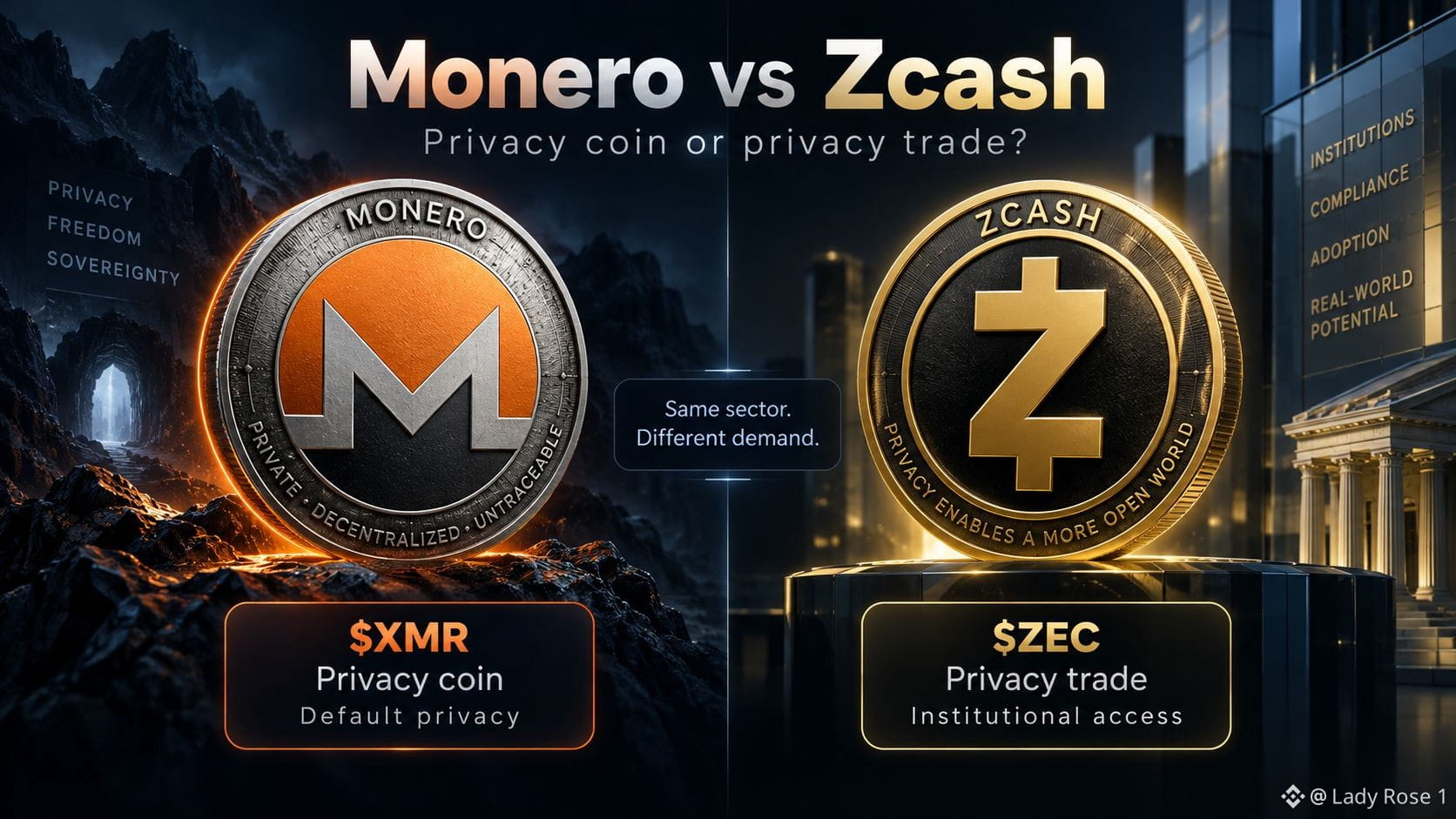
$XMR is the stronger privacy coin. $ZEC is the stronger privacy trade. That distinction explains a lot about the privacy sector in 2026. Monero makes privacy automatic. Every transaction hides the sender, receiver and amount. That gives XMR strong fungibility and makes it the natural choice for users who value private payments as the core product. Zcash takes a more flexible approach. Shielded transactions use zero-knowledge proofs, while transparent addresses and viewing keys make the asset easier to integrate with exchanges, wallets and regulated financial infrastructure. That flexibility gives ZEC a major advantage as a market trade. Zcash has deeper access to regulated liquidity, a 21M max supply, institutional backing, US-listed investment products and growing interest from large crypto investors. Capital can enter the ZEC trade much more easily when the privacy narrative heats up. Monero plays a different role. Its ecosystem leans heavily into P2P markets, swaps and privacy-focused infrastructure, while its user base keeps treating privacy as the main utility. So I see two clear demand profiles: - $XMR represents privacy as money. - $ZEC represents privacy as an investable narrative. That also explains why ZEC can move aggressively when institutional capital rotates into privacy coins, while XMR keeps its position as the stronger default-private payment network.

نشر
إخلاء مسؤولية: يتضمن آراء جهات خارجية. لا تُعدّ نصيحة. يُمكن استخدام Binance AI دون أي ضمان. اطلع على الشروط والأحكام.