

Imagine you have USDT on TON, but you need an asset on Ethereum.
The first thing you might think is: “I need to use a bridge.”
But there’s another approach: swap directly for the asset you want on the other chain.
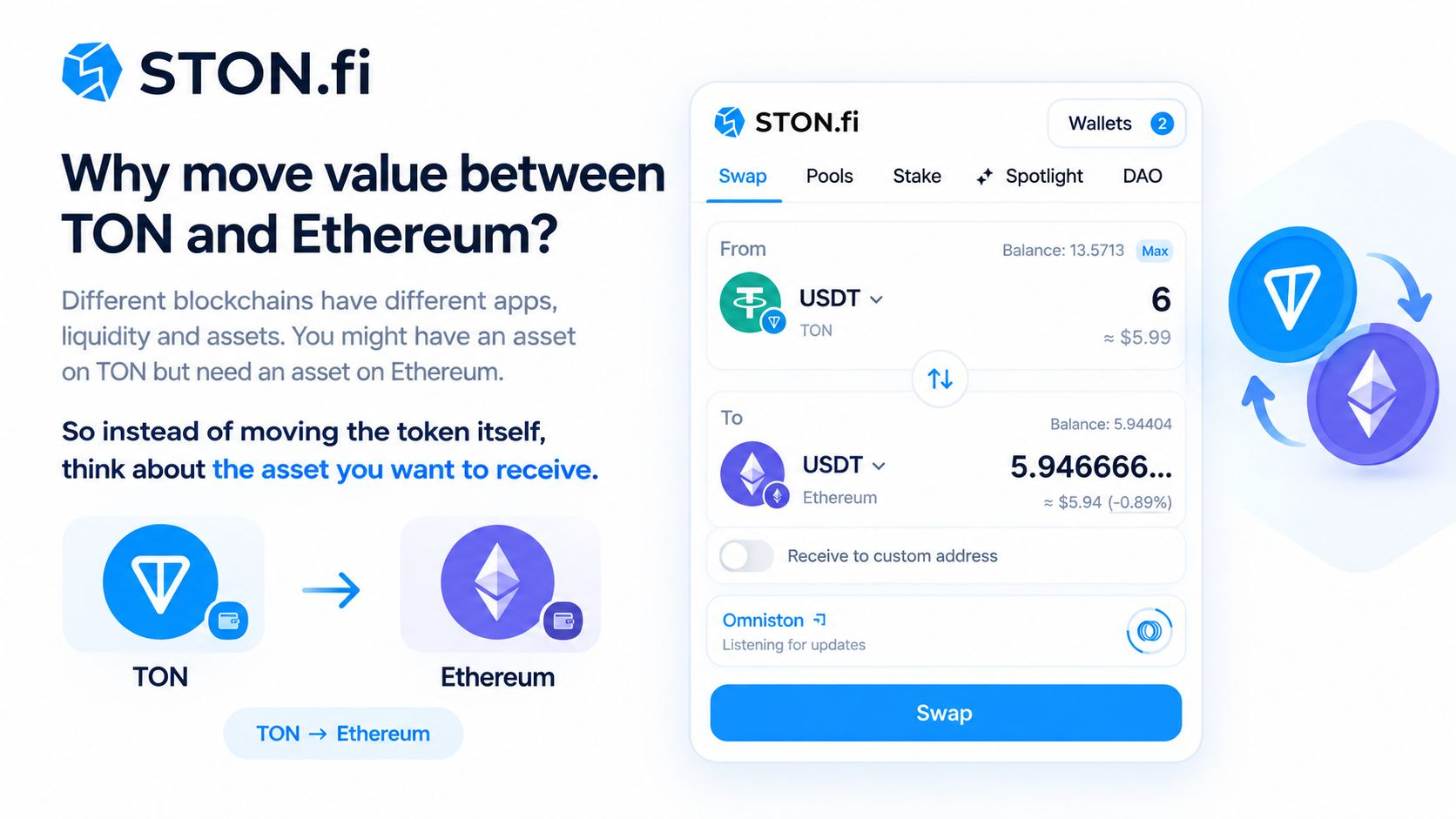
1. Why move between TON and Ethereum?
Different blockchains have different apps, liquidity, and assets.
You might have an asset on TON but need an asset on Ethereum.
So instead of thinking about moving the token itself, think about the asset you want to receive.
TON → Ethereum
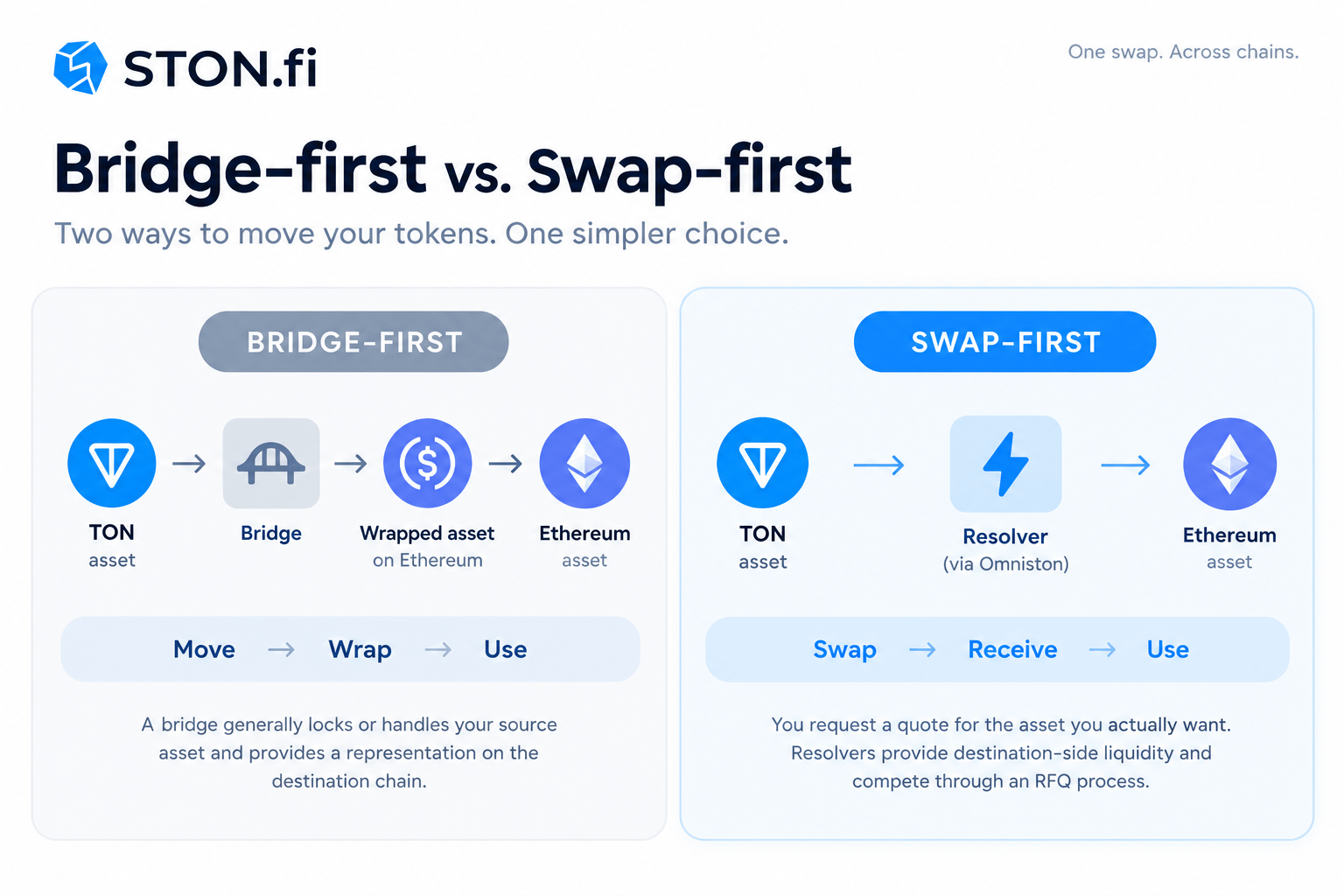
With a traditional bridge, the process can look like:
TON asset → Bridge → Wrapped asset → Ethereum
With a swap-first approach:
TON asset → Resolver → Ethereum asset
2. Bridge-first vs. swap-firs
The difference is simple:
Bridge: Move → Wrap → Use
Swap: Swap → Receive → Use
3. What do you receive?
With Omniston, the goal is to receive the native asset on the destination chain, rather than a wrapped version.
So you choose:
What I'm sending: TON asset
What I want: Ethereum asset
You don't have to manually bridge first and then swap afterward.
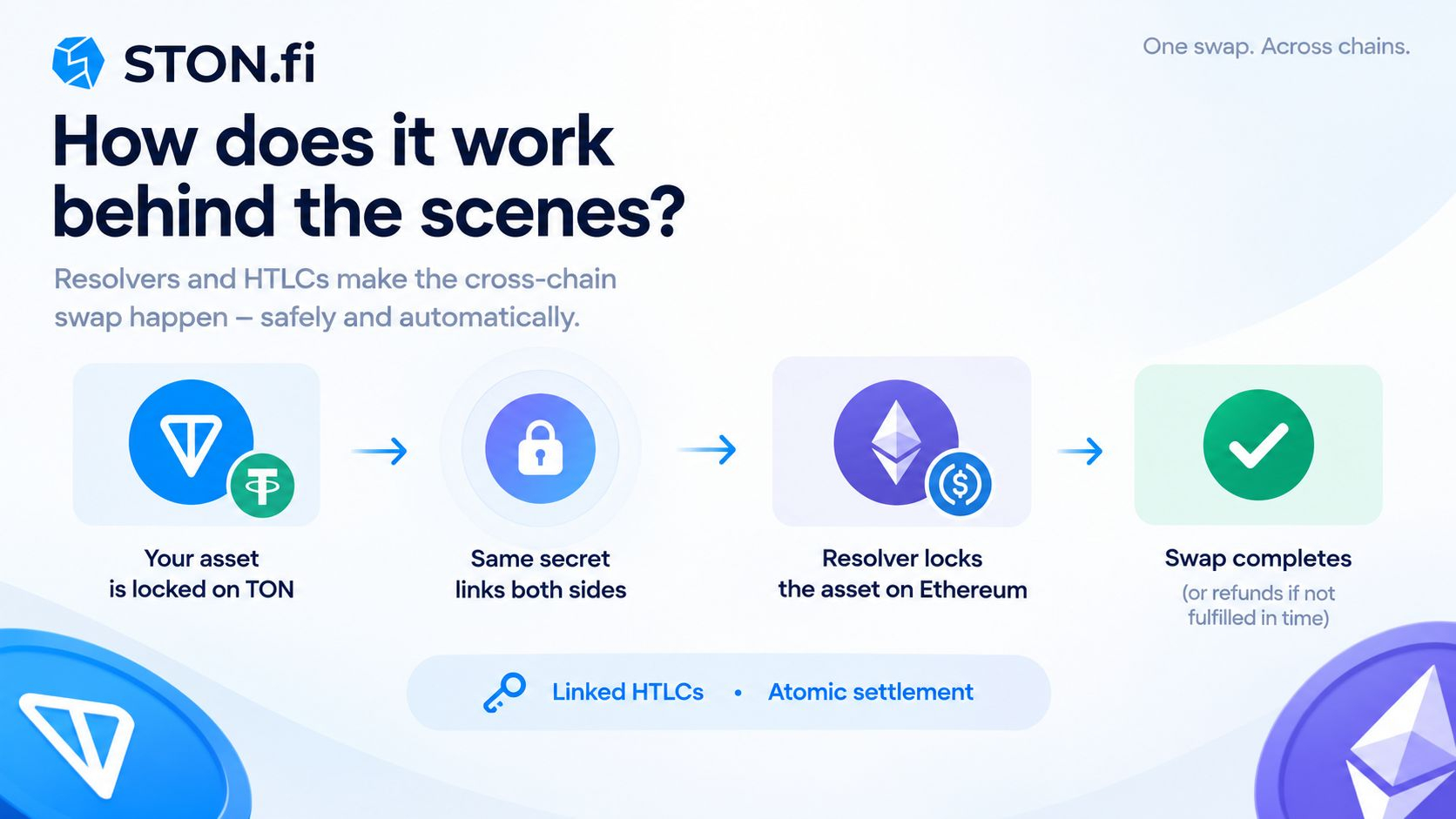
4. What happens behind the scenes?
This is where resolvers and HTLCs come in.
Very simply:
You request a quote → Resolver provides liquidity → Assets are locked → Swap is completed
The two chains use linked HTLCs to coordinate the transaction.
If everything is completed correctly, the swap settles.
If it isn't completed within the required time, the refund mechanism can be triggered.
TON 🔒 ↔ Ethereum 🔒
5. Where does Omniston fit?
Omniston is STON.fi's cross-chain execution layer.
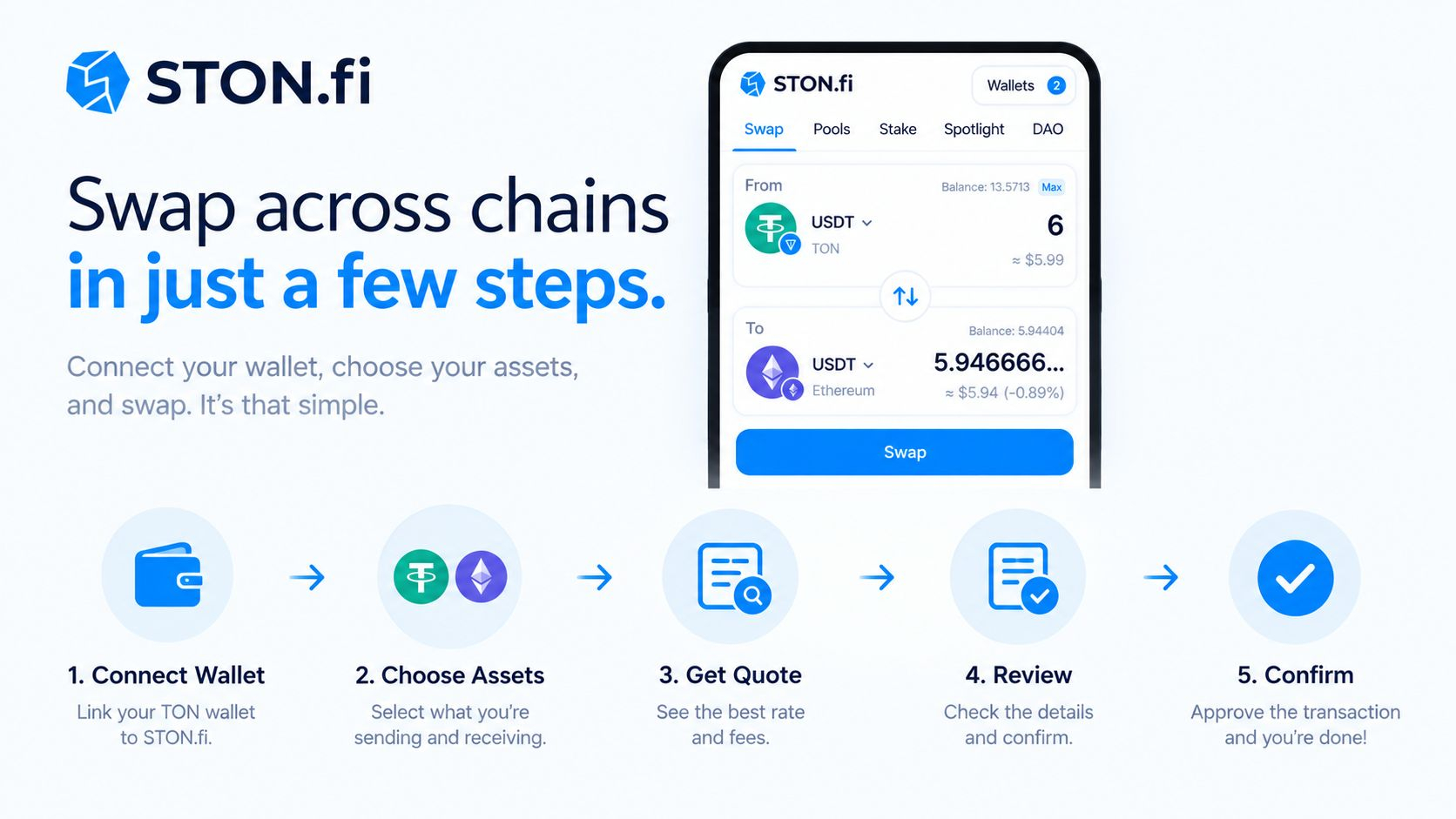
For the user, it can feel like a normal swap:
Connect wallet → Choose assets → Get quote → Review → Swap
The resolver, quote, routing, and HTLC mechanics happen underneath.
6. Before you confirm
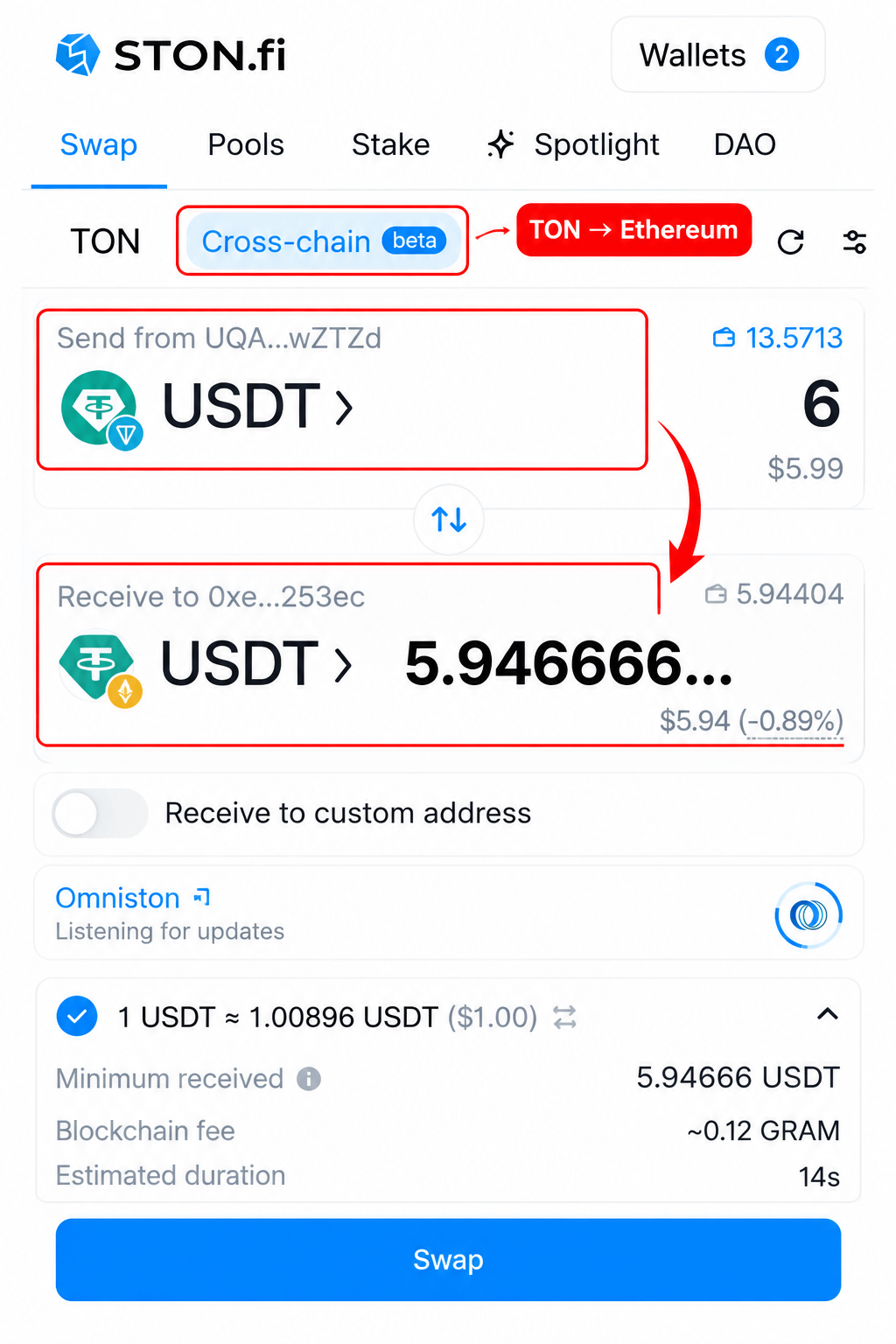
Before signing, simply check:
What you're sending
What you're receiving
Expected output
Minimum received
Fees
Destination network
Destination wallet
If everything is correct, confirm the transaction.
Final thought
Instead of asking:
“Which bridge do I use?”
Start with:
“What asset do I want on the other chain?”
That's the simple idea behind the swap-first approach with Omniston.