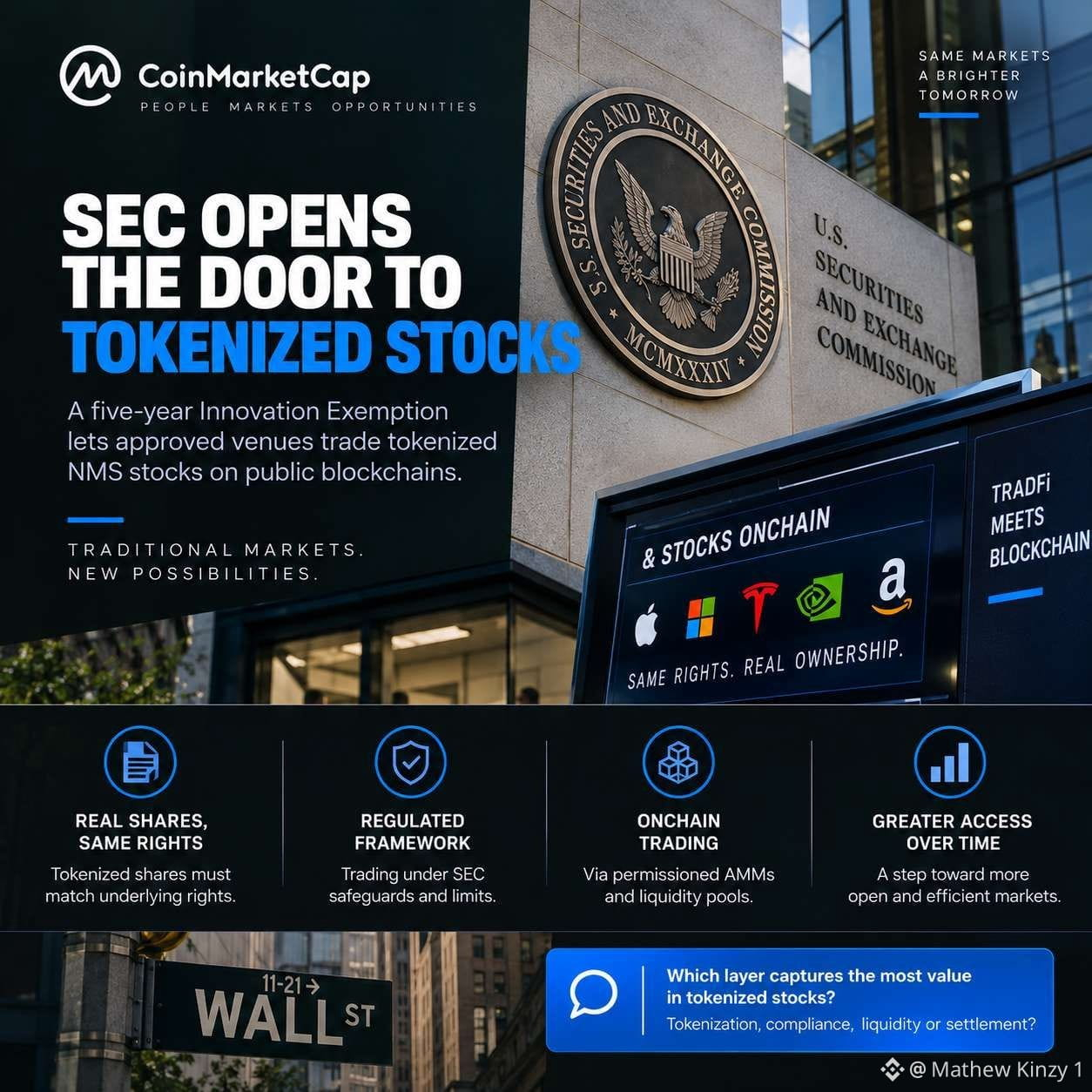
Tokenized stocks just moved from an experiment to something U.S. regulators are willing to test on public blockchains.
On September 17, the SEC introduced a five-year “Innovation Exemption” allowing qualifying Tokenized Securities Venues to facilitate trading of tokenized NMS stocks through permissioned AMMs and liquidity pools.
The detail I find most interesting is that this isn't simply about putting a stock ticker onchain.
Eligible tokenized shares must preserve the same rights and privileges as the corresponding traditional shares. Smart contracts must be public and auditable, trading must stop when the underlying stock is halted, and venues operate under symbol and volume limits. Synthetic products that only track a stock's price aren't covered by the framework.
That distinction matters for the entire RWA conversation.
We’ve spent years asking whether traditional assets can move onchain. The more interesting question may now be:
What infrastructure is needed when they actually do?
Tokenized equities still need compliance, liquidity, investor access, settlement, servicing and reliable lifecycle infrastructure.
To me, that’s where the opportunity around RWAs becomes much broader than simply issuing another token.
The SEC says the five-year framework is temporary and intended to generate data that can inform longer-term rulemaking.
If stocks increasingly move onchain, which layer captures the most value: tokenization, compliance, liquidity or settlement infrastructure?
#Macro Insights# #RWA #Tokenization
On September 17, the SEC introduced a five-year “Innovation Exemption” allowing qualifying Tokenized Securities Venues to facilitate trading of tokenized NMS stocks through permissioned AMMs and liquidity pools.
The detail I find most interesting is that this isn't simply about putting a stock ticker onchain.
Eligible tokenized shares must preserve the same rights and privileges as the corresponding traditional shares. Smart contracts must be public and auditable, trading must stop when the underlying stock is halted, and venues operate under symbol and volume limits. Synthetic products that only track a stock's price aren't covered by the framework.
That distinction matters for the entire RWA conversation.
We’ve spent years asking whether traditional assets can move onchain. The more interesting question may now be:
What infrastructure is needed when they actually do?
Tokenized equities still need compliance, liquidity, investor access, settlement, servicing and reliable lifecycle infrastructure.
To me, that’s where the opportunity around RWAs becomes much broader than simply issuing another token.
The SEC says the five-year framework is temporary and intended to generate data that can inform longer-term rulemaking.
If stocks increasingly move onchain, which layer captures the most value: tokenization, compliance, liquidity or settlement infrastructure?
#Macro Insights# #RWA #Tokenization