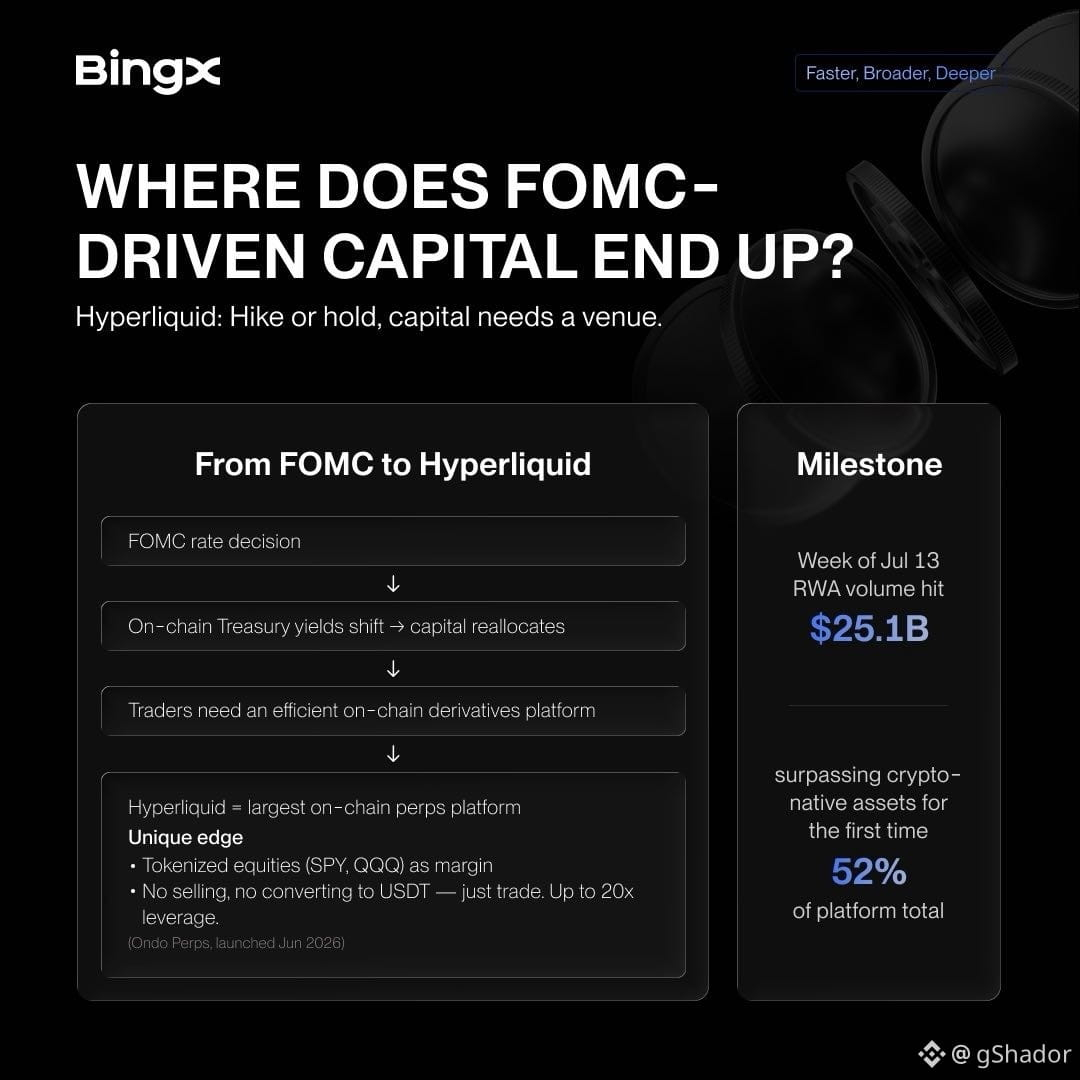
𝐑𝐖𝐀𝐬 𝐣𝐮𝐬𝐭 𝐨𝐮𝐭𝐯𝐨𝐥𝐮𝐦𝐞𝐝 𝐞𝐯𝐞𝐫𝐲𝐭𝐡𝐢𝐧𝐠 𝐞𝐥𝐬𝐞 𝐨𝐧 𝐇𝐲𝐩𝐞𝐫𝐥𝐢𝐪𝐮𝐢𝐝.
Not BTC.
Not ETH.
RWAs.
Between July 13–19, RWA markets did $25.1B in weekly volume.
Hyperliquid’s total was $48.2B.
So RWAs accounted for 52% of the entire week’s trading volume.
That was the first time RWA trading alone was larger than all the other asset categories combined.
And this is where it gets interesting.
Tokenized stocks and commodities are moving from “assets sitting on-chain” to actual trading markets.
That means the same things moving TradFi — rates, yields, liquidity and FOMC decisions — can increasingly matter to on-chain traders too.
The line between TradFi and DeFi is getting harder to draw.
$HYPE sits right in the middle of that Hyperliquid ecosystem, while I’m also watching how these TradFi markets are moving on BingX.
The bigger question for me is simple:
Is this just a big RWA week, or are we watching a bigger shift in where traditional assets get traded?
#BTC #BTC Price Analysis# #TradFi #RWA $BTC $ETH
Not BTC.
Not ETH.
RWAs.
Between July 13–19, RWA markets did $25.1B in weekly volume.
Hyperliquid’s total was $48.2B.
So RWAs accounted for 52% of the entire week’s trading volume.
That was the first time RWA trading alone was larger than all the other asset categories combined.
And this is where it gets interesting.
Tokenized stocks and commodities are moving from “assets sitting on-chain” to actual trading markets.
That means the same things moving TradFi — rates, yields, liquidity and FOMC decisions — can increasingly matter to on-chain traders too.
The line between TradFi and DeFi is getting harder to draw.
$HYPE sits right in the middle of that Hyperliquid ecosystem, while I’m also watching how these TradFi markets are moving on BingX.
The bigger question for me is simple:
Is this just a big RWA week, or are we watching a bigger shift in where traditional assets get traded?
#BTC #BTC Price Analysis# #TradFi #RWA $BTC $ETH