𝗧𝗥𝗢𝗡 𝗗𝗢𝗘𝗦𝗡’𝗧 𝗧𝗥𝗘𝗔𝗧 𝗘𝗩𝗘𝗥𝗬 𝗕𝗟𝗢𝗖𝗞𝗖𝗛𝗔𝗜𝗡 𝗔𝗖𝗧𝗜𝗢𝗡 𝗔𝗦 𝗧𝗛𝗘 𝗦𝗔𝗠𝗘 𝗞𝗜𝗡𝗗 𝗢𝗙 𝗪𝗢𝗥𝗞
␥ 𝗡𝗢𝗧 𝗔𝗟𝗟 𝗧𝗥𝗔𝗡𝗦𝗔𝗖𝗧𝗜𝗢𝗡𝗦 𝗗𝗢 𝗧𝗛𝗘 𝗦𝗔𝗠𝗘 𝗧𝗛𝗜𝗡𝗚
Sending TRX isn't the same as executing a complex smart contract.
One mainly involves transferring transaction data.
The other can require significantly more computation.
Treating both activities identically would ignore an important part of how blockchain networks actually operate.
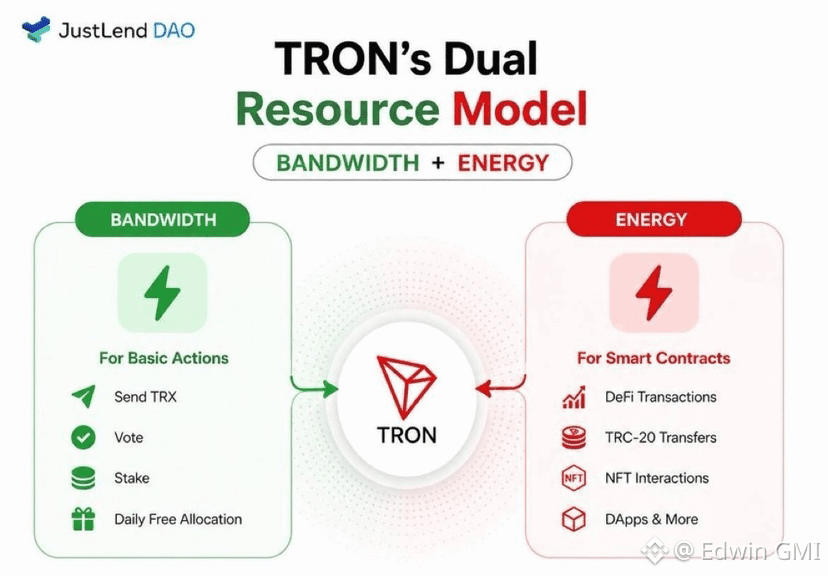
TRON addresses this through two core resources:
𝗕𝗔𝗡𝗗𝗪𝗜𝗗𝗧𝗛 + 𝗘𝗡𝗘𝗥𝗚𝗬
➢ 𝗕𝗔𝗡𝗗𝗪𝗜𝗗𝗧𝗛 𝗛𝗔𝗡𝗗𝗟𝗘𝗦 𝗧𝗥𝗔𝗡𝗦𝗔𝗖𝗧𝗜𝗢𝗡 𝗗𝗔𝗧𝗔
Bandwidth is primarily associated with the data required for transactions on the network.
This can include:
Sending TRX
Voting for Super Representatives
Staking related transactions
Basic wallet activity
TRON accounts receive a daily amount of free Bandwidth, with additional resources available through the network's resource mechanisms.
The underlying idea is simple:
𝗥𝗢𝗨𝗧𝗜𝗡𝗘 𝗡𝗘𝗧𝗪𝗢𝗥𝗞 𝗔𝗖𝗧𝗜𝗩𝗜𝗧𝗬 𝗗𝗢𝗘𝗦𝗡’𝗧 𝗡𝗘𝗘𝗗 𝗧𝗢 𝗕𝗘 𝗧𝗥𝗘𝗔𝗧𝗘𝗗 𝗟𝗜𝗞𝗘 𝗛𝗘𝗔𝗩𝗬 𝗖𝗢𝗠𝗣𝗨𝗧𝗔𝗧𝗜𝗢𝗡.
➜ 𝗘𝗡𝗘𝗥𝗚𝗬 𝗣𝗔𝗬𝗦 𝗙𝗢𝗥 𝗖𝗢𝗠𝗣𝗨𝗧𝗔𝗧𝗜𝗢𝗡
Smart contracts change the equation.
Swapping tokens.
Supplying liquidity.
Borrowing assets.
Interacting with DeFi protocols.
Minting NFTs.
Using decentralized applications.
These operations can require the network to execute contract instructions.
That's where Energy comes in.
@justinsuntron
#TRONEcoStar @TRON DAO
␥ 𝗡𝗢𝗧 𝗔𝗟𝗟 𝗧𝗥𝗔𝗡𝗦𝗔𝗖𝗧𝗜𝗢𝗡𝗦 𝗗𝗢 𝗧𝗛𝗘 𝗦𝗔𝗠𝗘 𝗧𝗛𝗜𝗡𝗚
Sending TRX isn't the same as executing a complex smart contract.
One mainly involves transferring transaction data.
The other can require significantly more computation.
Treating both activities identically would ignore an important part of how blockchain networks actually operate.
TRON addresses this through two core resources:
𝗕𝗔𝗡𝗗𝗪𝗜𝗗𝗧𝗛 + 𝗘𝗡𝗘𝗥𝗚𝗬
➢ 𝗕𝗔𝗡𝗗𝗪𝗜𝗗𝗧𝗛 𝗛𝗔𝗡𝗗𝗟𝗘𝗦 𝗧𝗥𝗔𝗡𝗦𝗔𝗖𝗧𝗜𝗢𝗡 𝗗𝗔𝗧𝗔
Bandwidth is primarily associated with the data required for transactions on the network.
This can include:
Sending TRX
Voting for Super Representatives
Staking related transactions
Basic wallet activity
TRON accounts receive a daily amount of free Bandwidth, with additional resources available through the network's resource mechanisms.
The underlying idea is simple:
𝗥𝗢𝗨𝗧𝗜𝗡𝗘 𝗡𝗘𝗧𝗪𝗢𝗥𝗞 𝗔𝗖𝗧𝗜𝗩𝗜𝗧𝗬 𝗗𝗢𝗘𝗦𝗡’𝗧 𝗡𝗘𝗘𝗗 𝗧𝗢 𝗕𝗘 𝗧𝗥𝗘𝗔𝗧𝗘𝗗 𝗟𝗜𝗞𝗘 𝗛𝗘𝗔𝗩𝗬 𝗖𝗢𝗠𝗣𝗨𝗧𝗔𝗧𝗜𝗢𝗡.
➜ 𝗘𝗡𝗘𝗥𝗚𝗬 𝗣𝗔𝗬𝗦 𝗙𝗢𝗥 𝗖𝗢𝗠𝗣𝗨𝗧𝗔𝗧𝗜𝗢𝗡
Smart contracts change the equation.
Swapping tokens.
Supplying liquidity.
Borrowing assets.
Interacting with DeFi protocols.
Minting NFTs.
Using decentralized applications.
These operations can require the network to execute contract instructions.
That's where Energy comes in.
@justinsuntron
#TRONEcoStar @TRON DAO