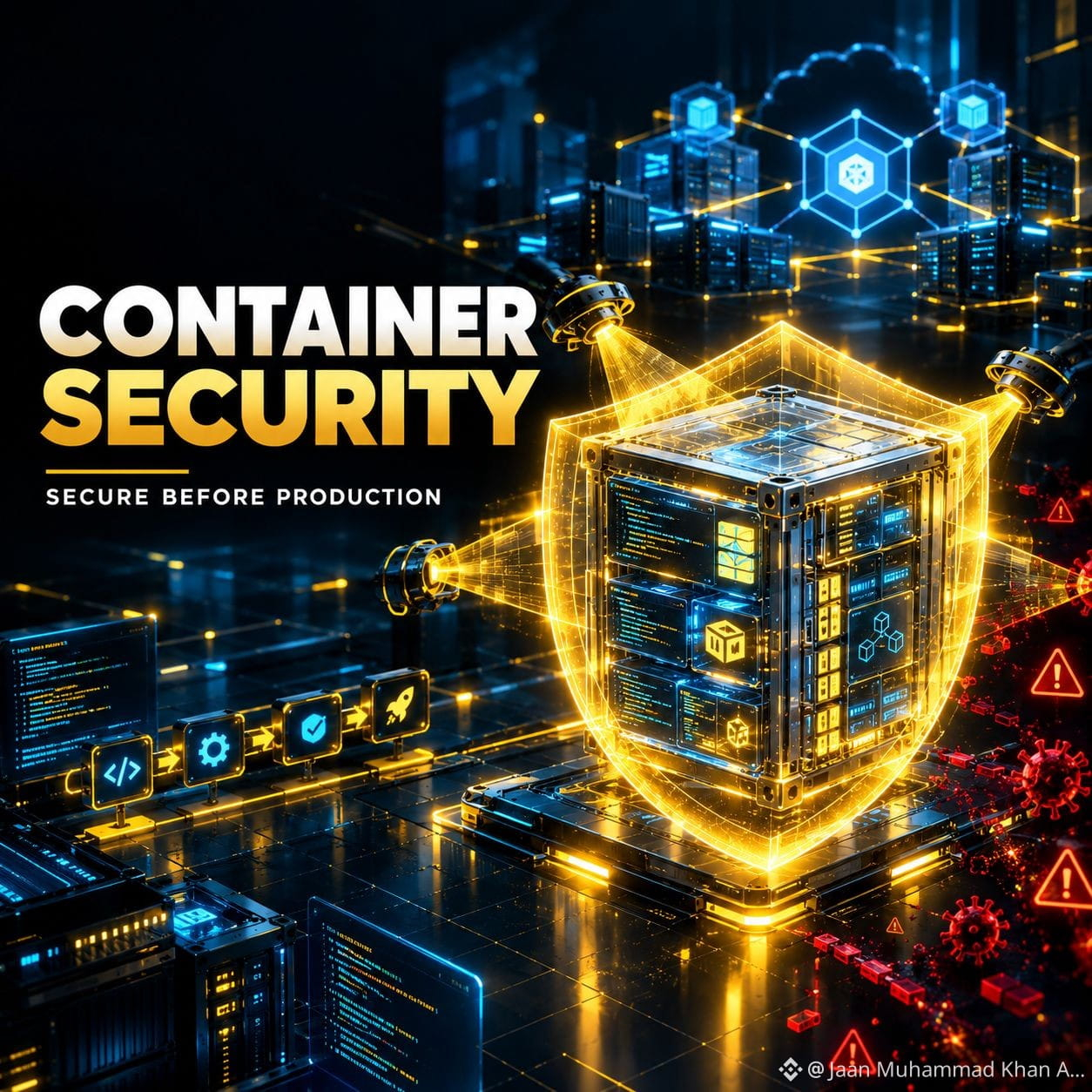
🐳 CONTAINER SECURITY: FROM IMAGE TO PRODUCTION 🔐
Containers make modern software delivery faster and more consistent—but they are not automatically secure.
A vulnerable image can carry security problems into production.
Security should therefore follow the entire lifecycle:
Code → Dependencies → Image → Registry → Deployment → Runtime
🔍 5 AREAS TO WATCH
1️⃣ Dependencies
Outdated or vulnerable packages can remain inside a container image. Scan dependencies during development and CI/CD.
2️⃣ Base Images
Use trusted, minimal, and regularly updated base images. Scan them for known vulnerabilities.
3️⃣ Secrets
Avoid putting API keys, passwords, tokens, or cloud credentials inside images. Manage sensitive credentials separately.
4️⃣ Privileges
Give containers only the permissions they need. Least privilege can reduce the impact of a compromised workload.
5️⃣ Image Sources
Don't blindly deploy untrusted images. Use controlled and trusted image sources and registries.
🛡️ SECURITY THROUGH THE PIPELINE
A practical workflow can be:
Code → SAST → Dependency Scan → Build → Image Scan → SBOM → Registry Controls → Deployment → Runtime Monitoring
This makes security a continuous process rather than a final checkpoint.
☁️ CONTAINERS + KUBERNETES
When containers run on Kubernetes, additional controls become important, including:
🔐 Identity & access
🌐 Network policies
🔑 Secrets management
⚙️ Workload security
📊 Runtime monitoring
💡 MY TAKEAWAY
Container security isn't just about scanning an image once.
It's about securing the complete lifecycle:
Build securely → Scan continuously → Deploy carefully → Monitor constantly.
Which area deserves the most attention?
🐳 Images
🔐 Secrets
👤 Privileges
📊 Runtime security
#container
Containers make modern software delivery faster and more consistent—but they are not automatically secure.
A vulnerable image can carry security problems into production.
Security should therefore follow the entire lifecycle:
Code → Dependencies → Image → Registry → Deployment → Runtime
🔍 5 AREAS TO WATCH
1️⃣ Dependencies
Outdated or vulnerable packages can remain inside a container image. Scan dependencies during development and CI/CD.
2️⃣ Base Images
Use trusted, minimal, and regularly updated base images. Scan them for known vulnerabilities.
3️⃣ Secrets
Avoid putting API keys, passwords, tokens, or cloud credentials inside images. Manage sensitive credentials separately.
4️⃣ Privileges
Give containers only the permissions they need. Least privilege can reduce the impact of a compromised workload.
5️⃣ Image Sources
Don't blindly deploy untrusted images. Use controlled and trusted image sources and registries.
🛡️ SECURITY THROUGH THE PIPELINE
A practical workflow can be:
Code → SAST → Dependency Scan → Build → Image Scan → SBOM → Registry Controls → Deployment → Runtime Monitoring
This makes security a continuous process rather than a final checkpoint.
☁️ CONTAINERS + KUBERNETES
When containers run on Kubernetes, additional controls become important, including:
🔐 Identity & access
🌐 Network policies
🔑 Secrets management
⚙️ Workload security
📊 Runtime monitoring
💡 MY TAKEAWAY
Container security isn't just about scanning an image once.
It's about securing the complete lifecycle:
Build securely → Scan continuously → Deploy carefully → Monitor constantly.
Which area deserves the most attention?
🐳 Images
🔐 Secrets
👤 Privileges
📊 Runtime security
#container