
Stocks closed higher on Friday, ending a four-day losing streak. Oil backed off. The inflation report matched forecasts. And investors, it turns out, are far more comfortable pricing in a Federal Reserve rate hike next week than they were a few days ago.
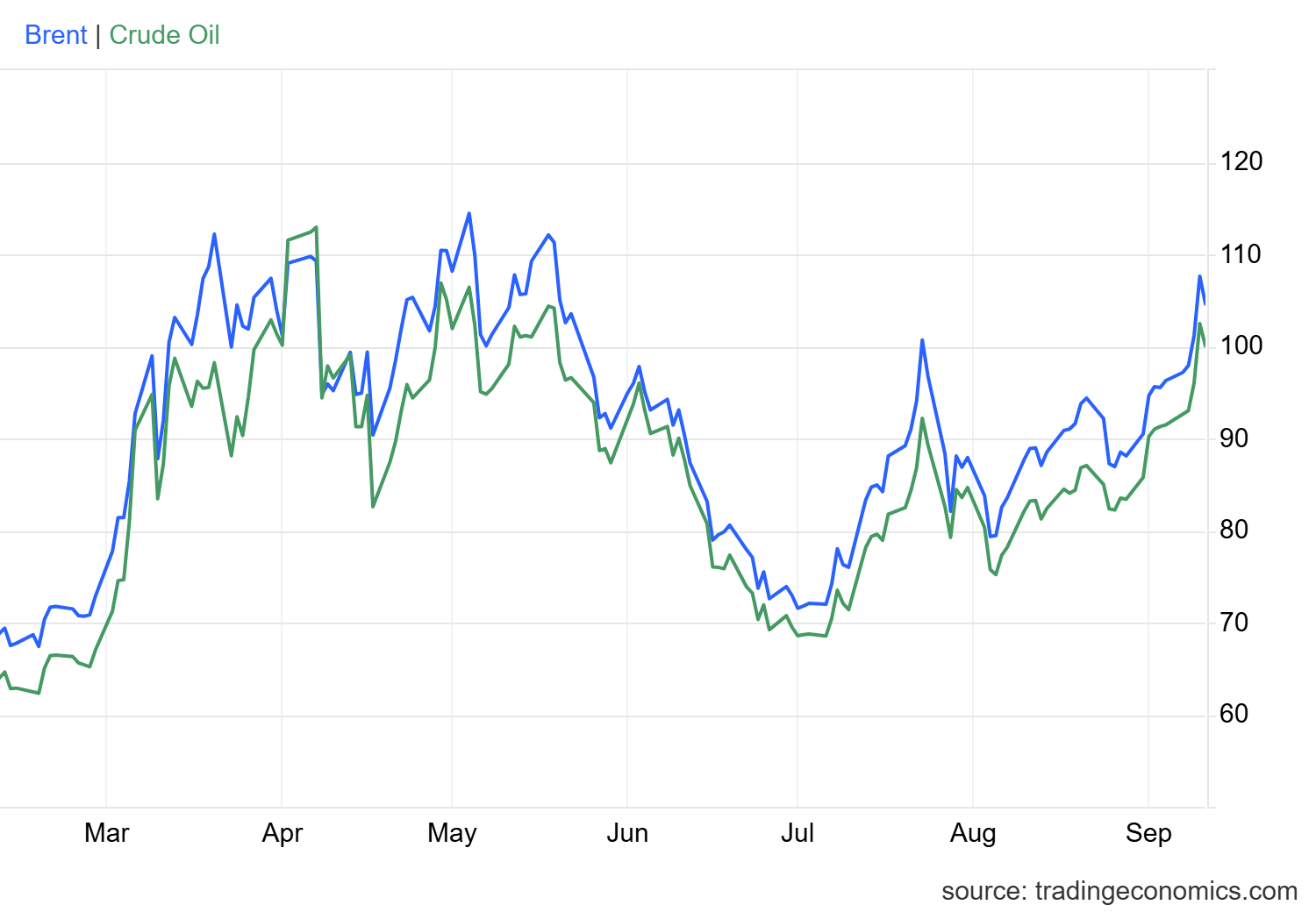
Start with crude. West Texas Intermediate fell 2.4% to settle at $100.05 a barrel. Brent dropped 2.8% to $104.61. Both had spiked hard over the previous several sessions as tensions in the Middle East escalated, so Friday's pullback gave the market some room to breathe.
Here's the thing about this Fed meeting: nobody's really arguing about it anymore. The question has shifted from whether policymakers hike to how confident traders are that they will. Friday's Consumer Price Index didn't change that. It rose 0.4% on the month and 3.4% on the year, right in line with forecasts. Core CPI, which strips out food and energy, came in at 0.3%, a touch hotter than expected. Treasury yields barely flinched at first. But the two-year note, which tends to move fastest on rate expectations, pushed above 4.60% during the session, its highest point since July 2024. By the close, the CME FedWatch Tool had the odds of a quarter-point hike next week at roughly 86%.
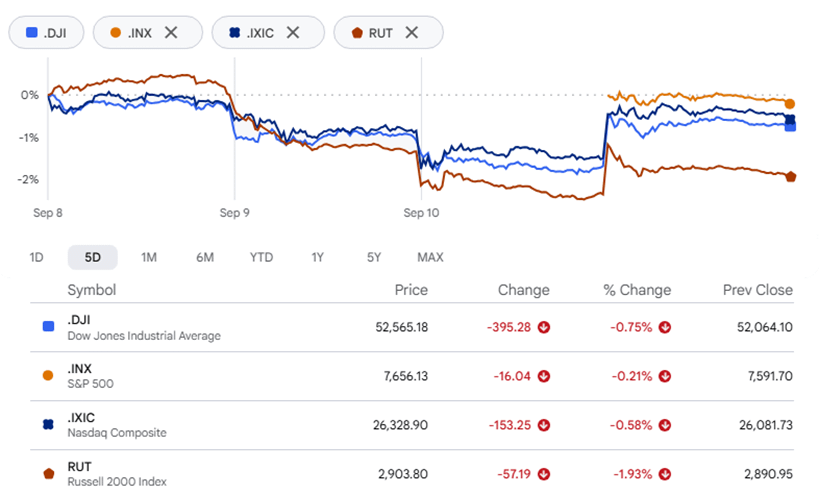
The major indexes did what you'd expect after four straight losing days. They bounced. The Dow Jones Industrial Average climbed 509.19 points, or 0.98%, to 52,573.29. The S&P 500 gained 0.86% to close at 7,656.98. The Nasdaq Composite rose 0.96% to 26,333.04. Even the small-cap Russell 2000 joined in, adding 0.45% to finish at 2,903.94.
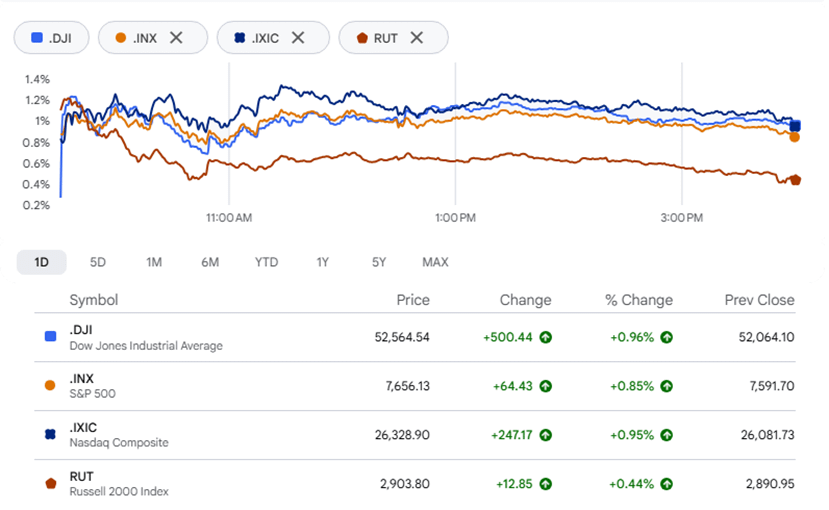
It was a much-needed bounce. For the week, though, the picture still looked rough: the Dow lost 1.6%, the S&P 500 slipped 0.8%, the Nasdaq gave back about 0.7%, and the Russell 2000 fell 2%, its first losing week in three.
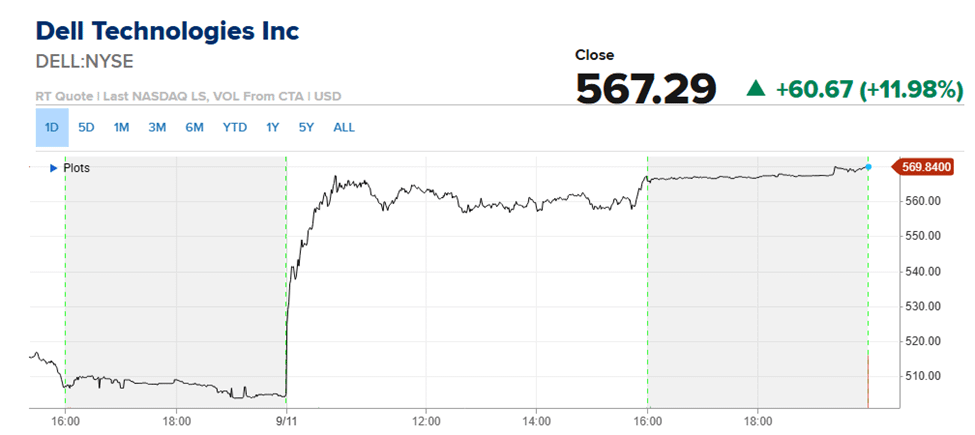
Tech carried most of the day. Dell Technologies jumped 12%, its sixth gain in the last seven sessions, after RBC Capital Markets initiated coverage with an outperform rating and a $640 price target. Analyst David Paige called Dell one of the clearest beneficiaries of the current AI spending wave, with enterprises, sovereign buyers and cloud providers all racing to put capital into infrastructure. He also flagged Dell's supply chain as a real advantage whenever hardware runs tight, which, these days, is often.
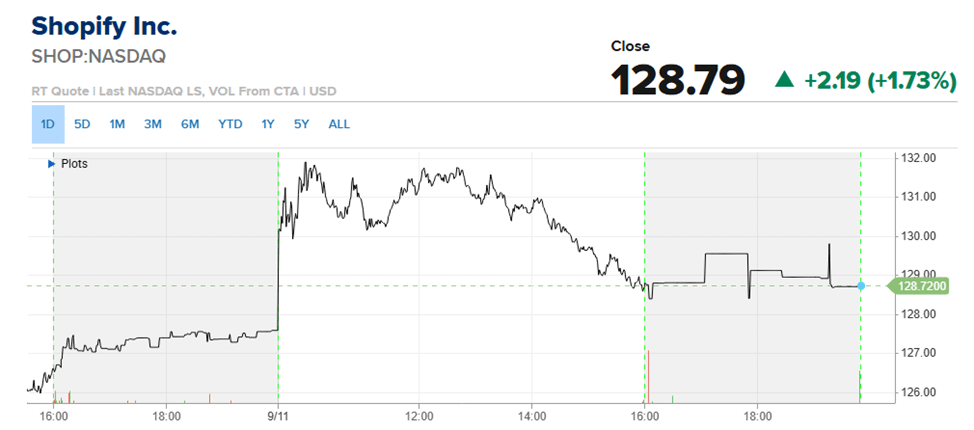
Shopify had a good day too, for a different reason entirely. Bernstein initiated coverage with an outperform rating and a $160 price target, implying 26% upside from Thursday's close. Shares climbed nearly 2% as the bank made the case that AI would expand Shopify's opportunity rather than threaten it.
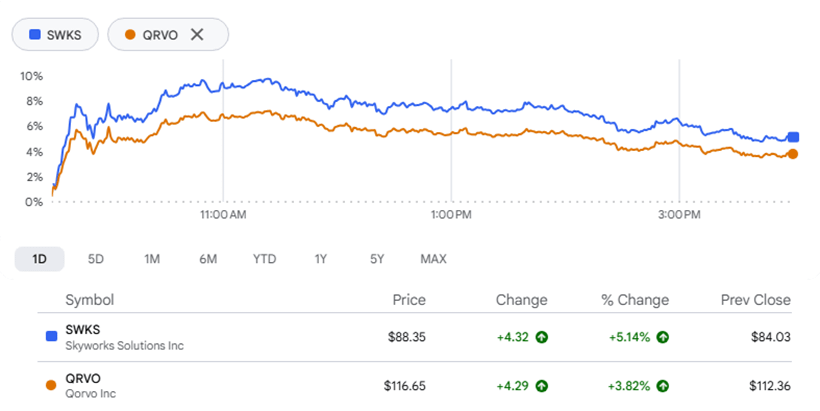
Then there's Skyworks Solutions, up more than 8% after chief executive Phil Brace told the Goldman Sachs Communacopia and Technology Conference that its acquisition of Qorvo remains on track to close before year end. Qorvo shares followed, adding 3.8%.
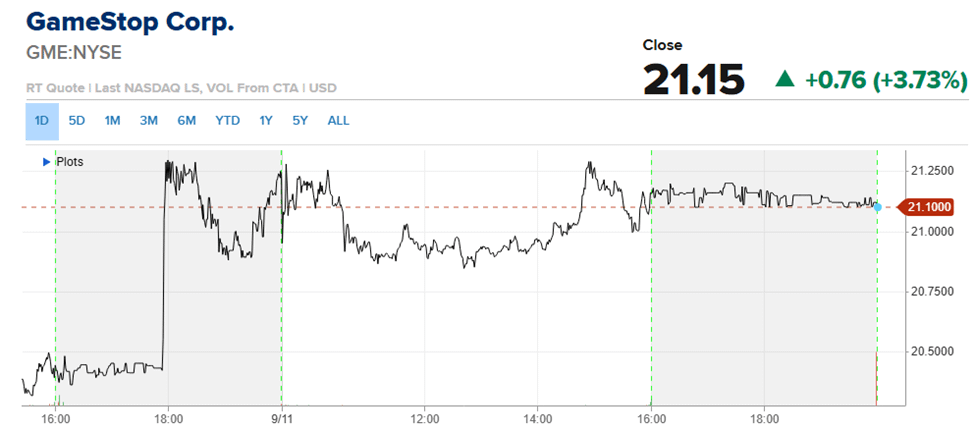
GameStop offered the more personal story of the day. Chief executive Ryan Cohen disclosed he had bought 1 million shares at an average price of $20.375, pushing his direct stake to 39.347 million shares. Based on Thursday's closing price, that stake is worth roughly $802.28 million. Shares climbed more than 3% on the news.
Not every stock had a good Friday.
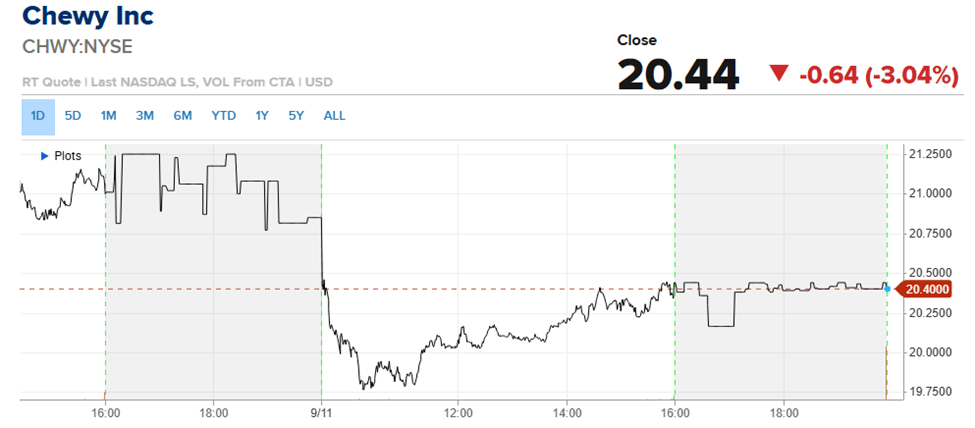
Chewy fell after JPMorgan cut it to neutral from overweight and trimmed its price target to $24 from $29. Analyst Doug Anmuth wasn't entirely bearish about it. He still likes Chewy's market share gains, its customer retention, and its engagement numbers, and he pointed out that the SmartPak and Modern Animal acquisitions both beat expectations in the second quarter. What worries him is organic growth, which keeps bumping up against broader macro headwinds. Chewy expects its AI initiatives to shave low tens of millions of dollars off costs this year, scaling to about $50 million annually by fiscal 2027. None of that helped much on Friday. Shares closed down roughly 5.6%, settling at $19.90.
Next Wednesday, the Fed makes its call. At this point, the market isn't really asking whether. It's asking what comes after.
Sector Analysis
Best-Performing Sectors
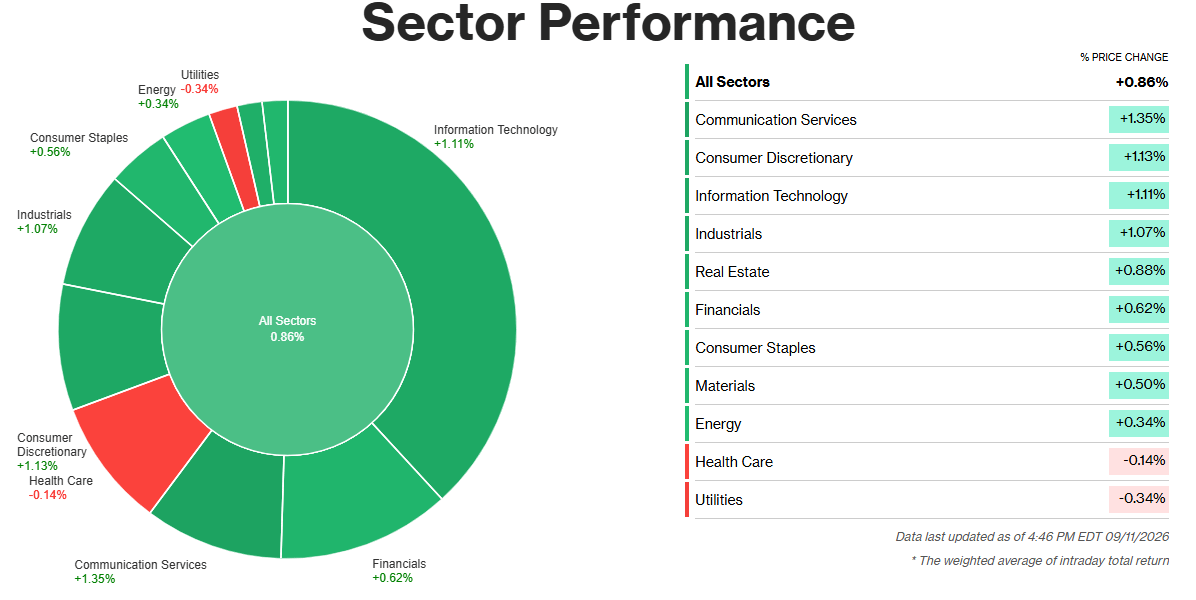
Nine of the S&P 500's eleven sectors advanced Friday, snapping a four-session losing streak — the longest for the Dow since late April.
Communication Services led with a 1.35% gain, lifted broadly across the sector, from telecom names T-Mobile and AT&T to streaming and search leaders Netflix and Alphabet.
Consumer Discretionary rose 1.13%, continuing a theme that's defined its year: Amazon's steady gains offsetting Tesla's drag.
Information Technology added 1.11% on an AI-infrastructure spark — Hewlett Packard Enterprise and Dell Technologies each jumped roughly 11%, Dell's move compounded by a fresh RBC outperform rating, while Oracle's stronger-than-expected earnings reinforced the broader case for continued AI and cloud spending, even as Oracle itself slipped on the news.
Worst-Performing Sectors
Health Care and Utilities were the only sectors in the red, down 0.14% and 0.34%. Neither was traced to a single Friday headline. Health Care is still absorbing worries over UnitedHealth's uneven Medicare Advantage recovery, part of a wider pullback across managed-care names as medical costs climb, layered on a biotech-wide selloff earlier in the week that hit Amgen alongside peers like Gilead Sciences and Vertex Pharmaceuticals.
Utilities simply lost the rotation battle: with the 10-year Treasury yield near 4.96%, the sector's dividends look less competitive, and its borrowing costs climb. Both losses read as capital rotating out of defensive ground, not sector-specific trouble.