

The real promise of agentic AI is not simply that machines can have better conversations. It is that AI systems can understand a goal, break it into smaller steps, interact with tools, execute tasks, monitor progress, and continue working toward an outcome.
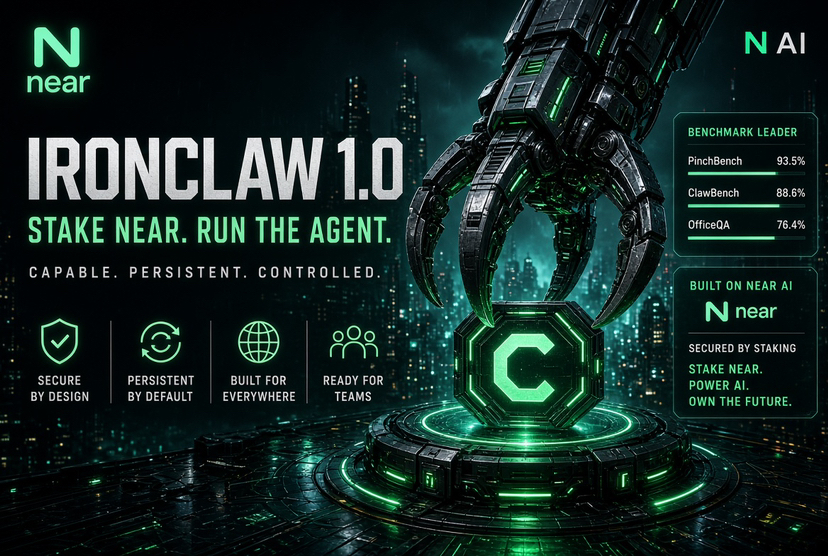
That shift from “AI that responds” to “AI that acts” creates enormous opportunities—but it also introduces an important challenge: how do we give AI agents useful autonomy without giving them uncontrolled power?
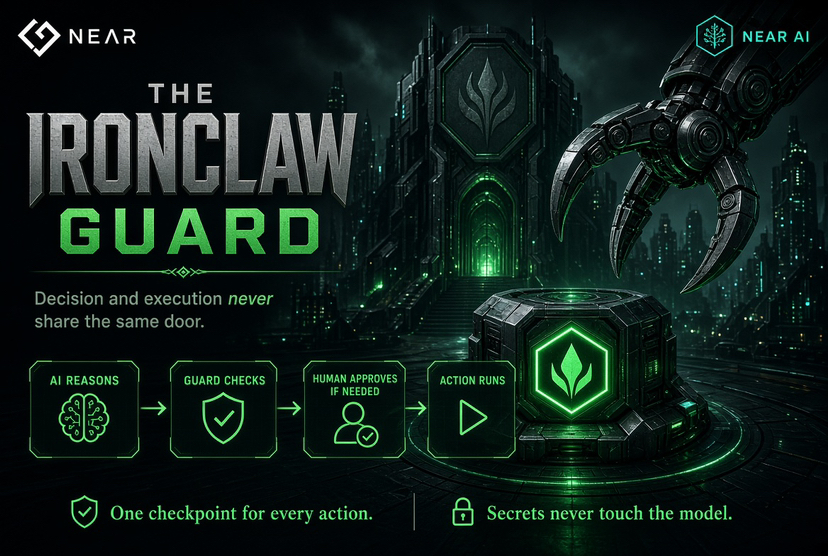
IronClaw approaches this challenge through a different architectural design. Instead of allowing the reasoning model to directly execute every action it proposes, it separates decision-making from execution using a dedicated guard layer.
Think of the guard as a security checkpoint between intelligence and action.
The AI reasons about what needs to happen. The guard then evaluates the proposed operation based on permissions and predefined policies. If an action is sensitive, explicit approval can be required before it proceeds.
In simple terms:
🧠 Reason → 🛡️ Guard → ⚙️ Act
This separation is important because an AI can be highly capable while still making incorrect assumptions. Adding a control layer creates an additional opportunity to verify actions before they affect external systems.
Another major concept is persistent state.
Imagine an agent working through a complicated, multi-step assignment when the process is interrupted. Without checkpoints, valuable progress could be lost. With continuous checkpointing, the system can preserve its state and resume the workflow instead of starting again from the beginning.
That makes autonomous agents more useful for long-running tasks where reliability matters as much as intelligence.
The broader decentralized AI conversation becomes particularly interesting here. NEARProtocol #NEARAI #IronClaw represent different pieces of an emerging technology stack: AI agents need capable reasoning, secure execution, persistent context, and dependable infrastructure.
NEAR AI focuses on building decentralized infrastructure for AI, with ideas around privacy, user control, and verifiable computation. But decentralized applications also require a secure underlying network.
This is where NEAR staking becomes important.
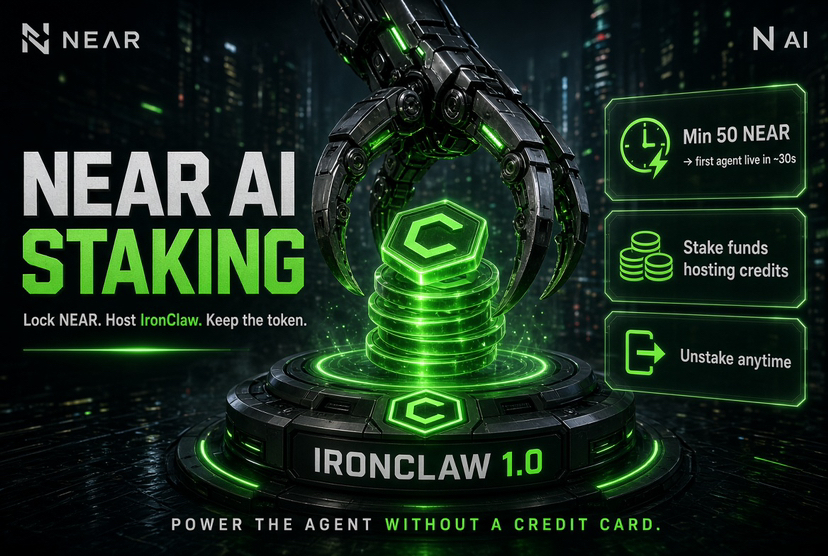
Staking should not be viewed only as a way to pursue rewards. In a proof-of-stake network, staking helps support network security by economically aligning participants with the continued operation and integrity of the blockchain.
As AI agents become increasingly autonomous, the infrastructure supporting them becomes just as important as the models themselves. Future systems such as the upcoming OpenClaw will need environments where computation, coordination, permissions, and trust can work together.
There is also an important role for communities. Through DAO Labs Social Mining, participants can contribute by researching emerging technologies, creating educational content, sharing insights, and helping others understand complex developments.
That turns community participation into a knowledge layer around the technology.
The bigger picture is therefore not simply AI + Web3.
It is the convergence of intelligence, guardrails, persistent execution, decentralized security, and community-driven education.
The future of AI agents won't be measured only by how much they can accomplish.
It will also depend on how safely they act, how reliably they recover, how transparently they operate, and how secure the infrastructure beneath them is.