



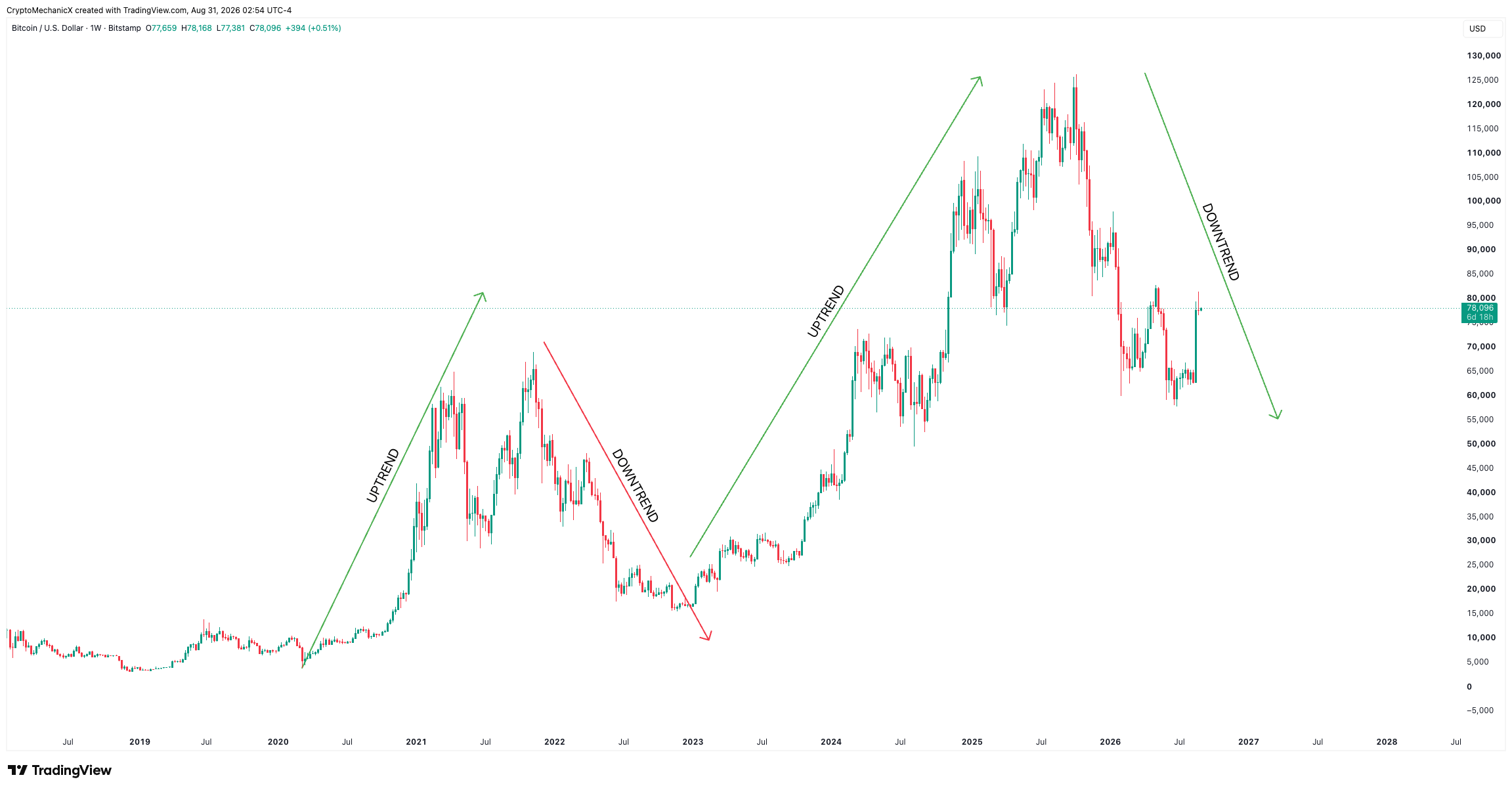
Crypto is a trending market, and one of the best ways to trade a trending market is Positional Trading.
You position yourself for a directional move, whether it is to the upside or downside.
Because when crypto starts moving in a direction, it usually doesn't move for just one day.
When crypto starts going up, it can keep going up for weeks or even months.
And when it starts going down, it can keep going down for weeks or months.
Being positioned for a direction can make you much more money than trying to find a new trade setup every single day.
What is Positional Trading?
Positional trading is basically taking a position based on the bigger trend and giving that position enough time to play out.
Instead of asking:
"What can I trade today?"
You ask:
"What is the market trying to do over the next few weeks or months, and how can I position myself for it?"
This is a completely different way of looking at the market.
You don't need to catch every move.
You don't need to trade every day.
You don't need to constantly find new setups.
Your job is to identify the bigger direction, position yourself, and then let the market do the work.
Of course, this doesn't mean blindly buying because you think crypto will go up.
The positioning should come after the market gives you evidence that the trend has actually shifted.
Start With The Weekly Chart
One of the best things about the crypto market is that it respects higher-timeframe trends surprisingly well.
And for positional trading, the weekly chart is extremely important.
If the weekly trend is bearish, there is a good chance the market will continue moving lower until the structure changes.
And if the weekly trend is bullish, there is a good chance the market will continue higher until that structure breaks.
This is why I don't like making a positional decision based only on a few hours or even a single day of price action.
The lower timeframes can give you entries.
But the weekly chart can give you the direction.
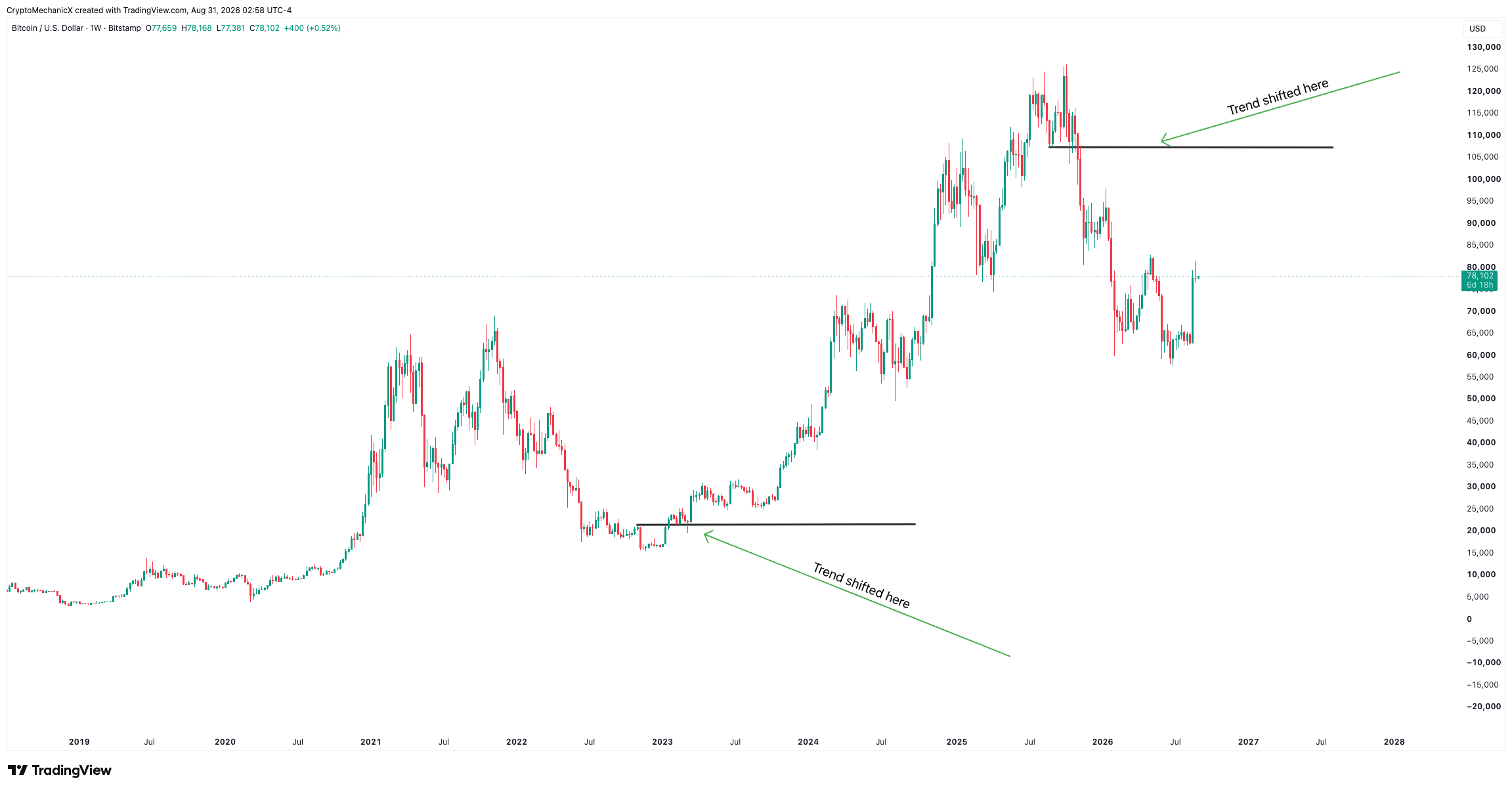
Think about it this way:
If the weekly structure is bullish, I would rather spend my time looking for opportunities to buy dips than trying to short every small pullback.
And if the weekly structure is bearish, I wouldn't want to keep buying every dip just because the price looks "cheap."
The bigger trend matters.
So How Do You Position Yourself?
Let's say the market has been bearish for a while, but now you're starting to see a proper shift in the weekly structure.
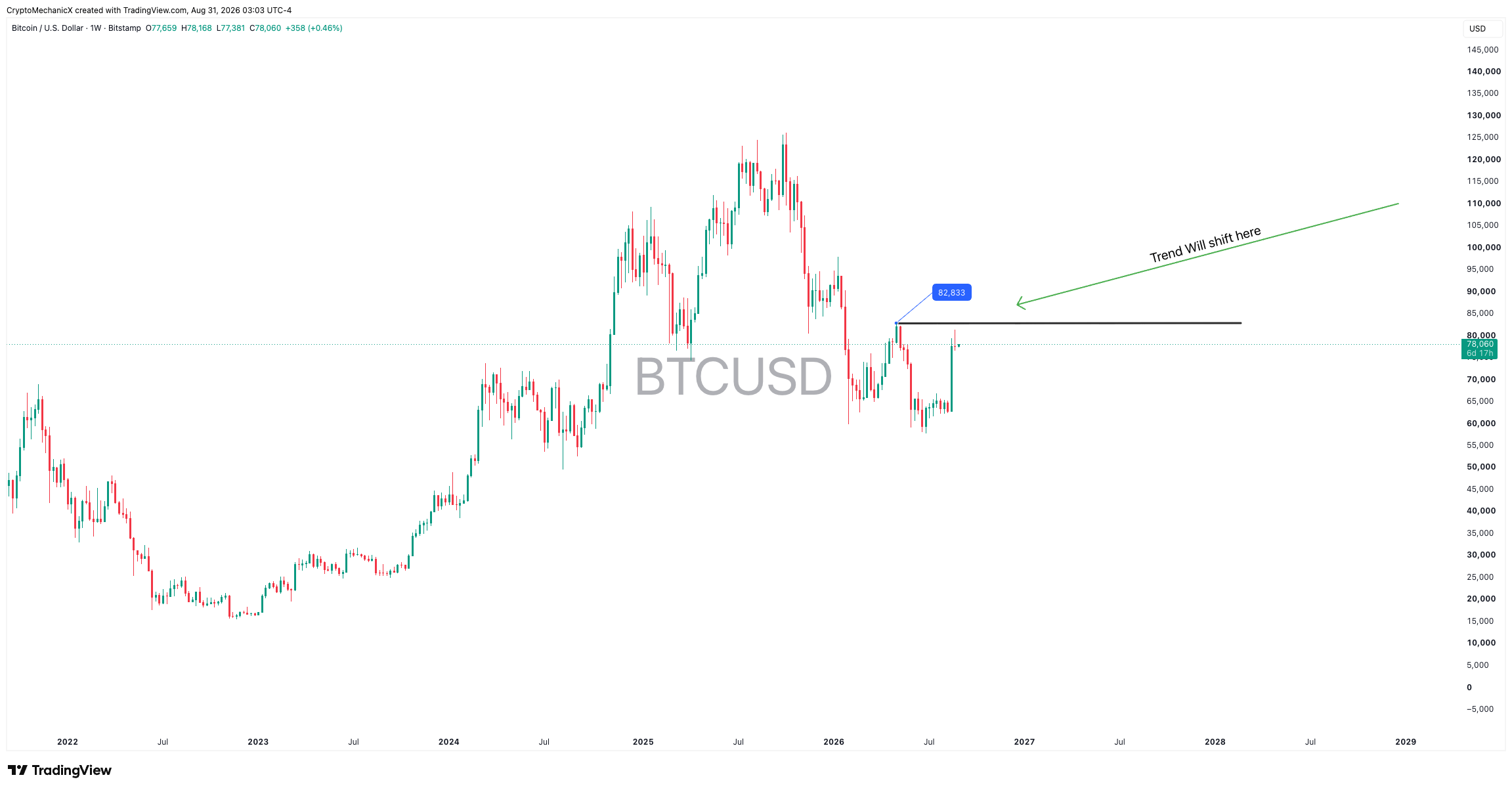
Bitcoin starts making higher highs and higher lows.
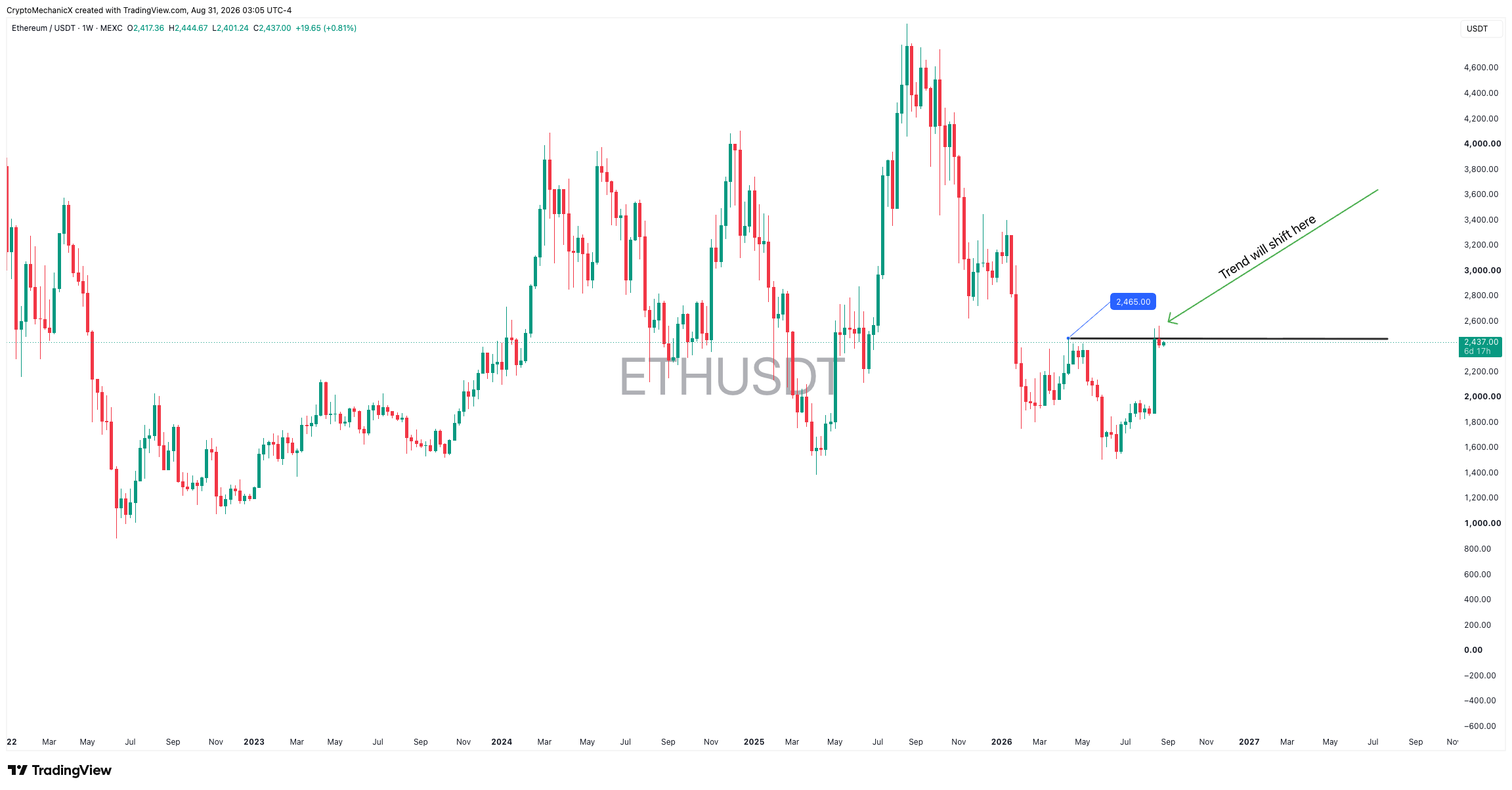
Ethereum starts reclaiming important levels.
Solana starts showing strength.
Or any coin in your watchlist
The market is giving you signs that the previous downtrend may be over.
This is where positional trading becomes interesting.
The first thing I want to do is wait for the weekly trend shift.
I don't want to be early just for the sake of being early.
Lets have a look at the weekly charts of these three so you get the idea where the market stands.
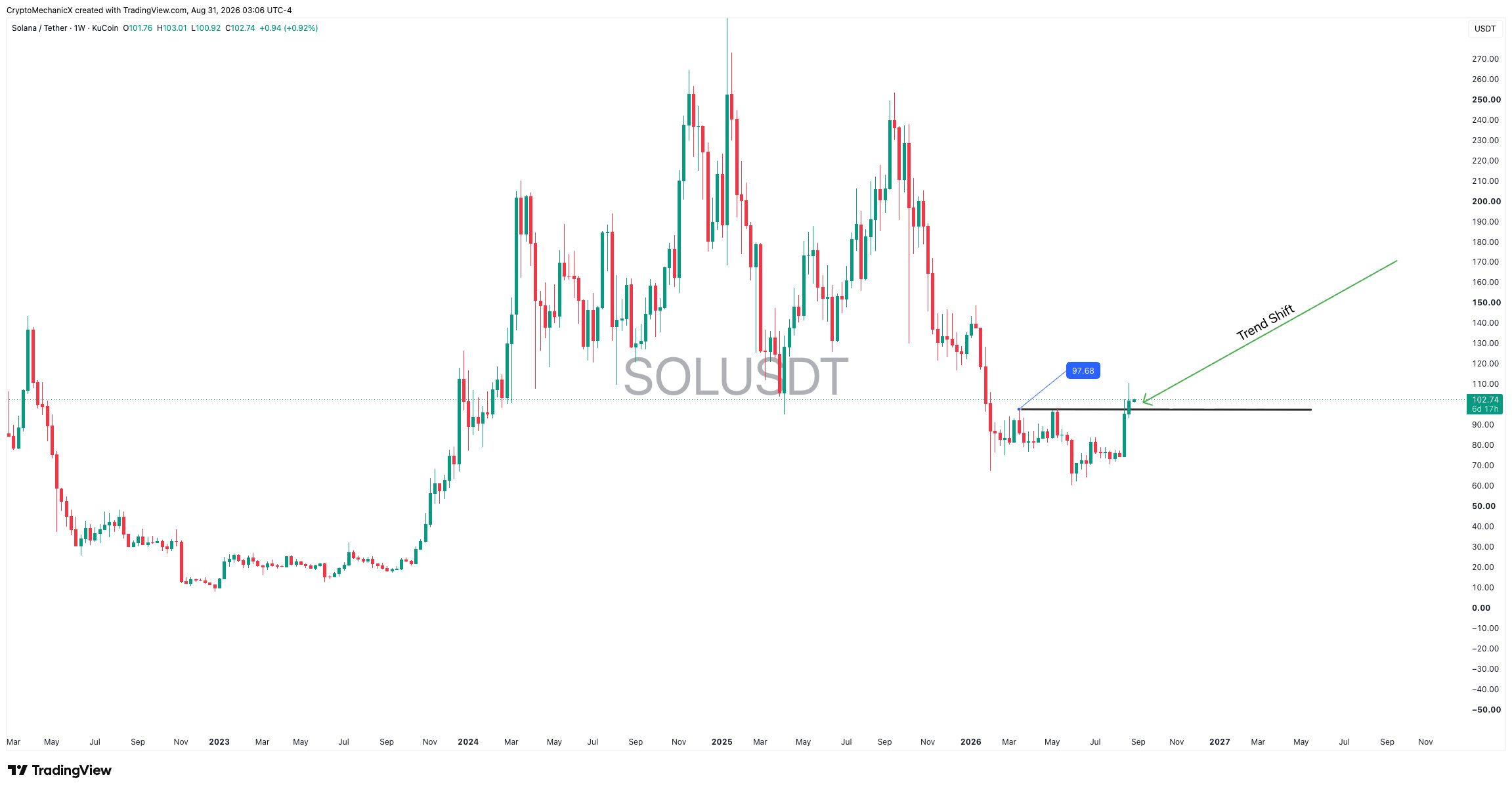
Once the market confirms the shift, I can start allocating capital slowly.
And this is important:
You don't have to deploy your entire capital on day one.
In fact, I usually prefer the opposite.
Start Allocating Slowly
Let's say you have $50,000 that you want to use for a positional BTC, ETH or SOL position or any other Altcoin.
You don't necessarily need to put $50,000 into the market immediately.
You can start with a smaller allocation and build the position as the trend develops.
There are several ways you can do this.
1. Buy a Fixed Amount Every Day
This is probably the simplest approach.
You decide how much you want to allocate every day and keep buying regardless of short-term price movements.
For example, if you want to deploy $30,000 over four months, you can divide that capital into smaller daily or weekly allocations.
The biggest advantage is that you don't have to worry about finding the perfect entry.
You're simply building your position over time.
2. Add More on Dips
Another approach is to keep some capital aside and use bigger pullbacks to increase your position.
For example:
You establish your initial position.
The market continues higher.
Then BTC drops 8–10% while the weekly structure remains bullish.
Instead of panicking, you can use that pullback to add.
This is where having cash available becomes very useful.
You don't want to be fully invested before the market gives you a good discount.
3. Keep a Reserve
This is probably the part people underestimate the most.
If you believe the market is going higher, it doesn't mean it will go straight up.
Crypto can give you a very strong bullish trend and still have some nasty pullbacks along the way.
So I always like the idea of keeping some capital in reserve.
You don't know when the market will give you a 5%, 10%, 15% or even bigger pullback.
Having cash available gives you flexibility.
Instead of watching a big dip and thinking:
"I wish I had money to buy this."
You actually have capital available to use.
Position Size Matters
Positional trading is not about putting everything into one trade.
Your position size should depend on your total capital and how much risk you are comfortable taking.
For example, if you have $100,000 or $10,000 available, there is no reason you have to deploy $100,000 immediately just because the weekly trend turned bullish.
You can start with 20–30%.
Then add gradually.
You can increase your exposure as the market confirms the trend.
And if the market gives you a deeper pullback, you still have capital available.
This gives you something very important:
Flexibility.
Don't Confuse Positioning With Random DCA
There is an important difference between positional trading and blindly DCAing.
If the market has already shifted into a bullish trend, you can use DCA as a method to build your position.
But the bigger decision should still come from the market structure.
I don't want to keep buying an asset simply because it has gone down 40-50%.
If the weekly trend is still bearish, a 40-50% drop doesn't automatically mean it's a good buy.
Sometimes the market can fall another 30–40%.
DCA works much better when you have a thesis for why you want to own the asset.
The strategy should be:
Identify the trend -> wait for confirmation -> start positioning -> add gradually -> keep reserves -> let the trend play out.
Not:
Price is down -> buy -> price is down again -> buy more -> hope.
There is a big difference.
You Don't Need To Catch The Exact Bottom
This is probably one of the biggest mental shifts you need for positional trading.
You don't need to buy the exact bottom.
If an Asset bottoms at $100 and you start positioning at $120, that's completely fine if your thesis is that the next major move is higher.
Trying to catch the exact bottom often keeps people waiting for a better price while the market starts moving without them.
I'd rather enter slightly late with confirmation than enter early without confirmation.
Missing the first 10-20% of a move is not a big deal if you can participate in the next 50–100%.
When crypto starts to move it moves for months
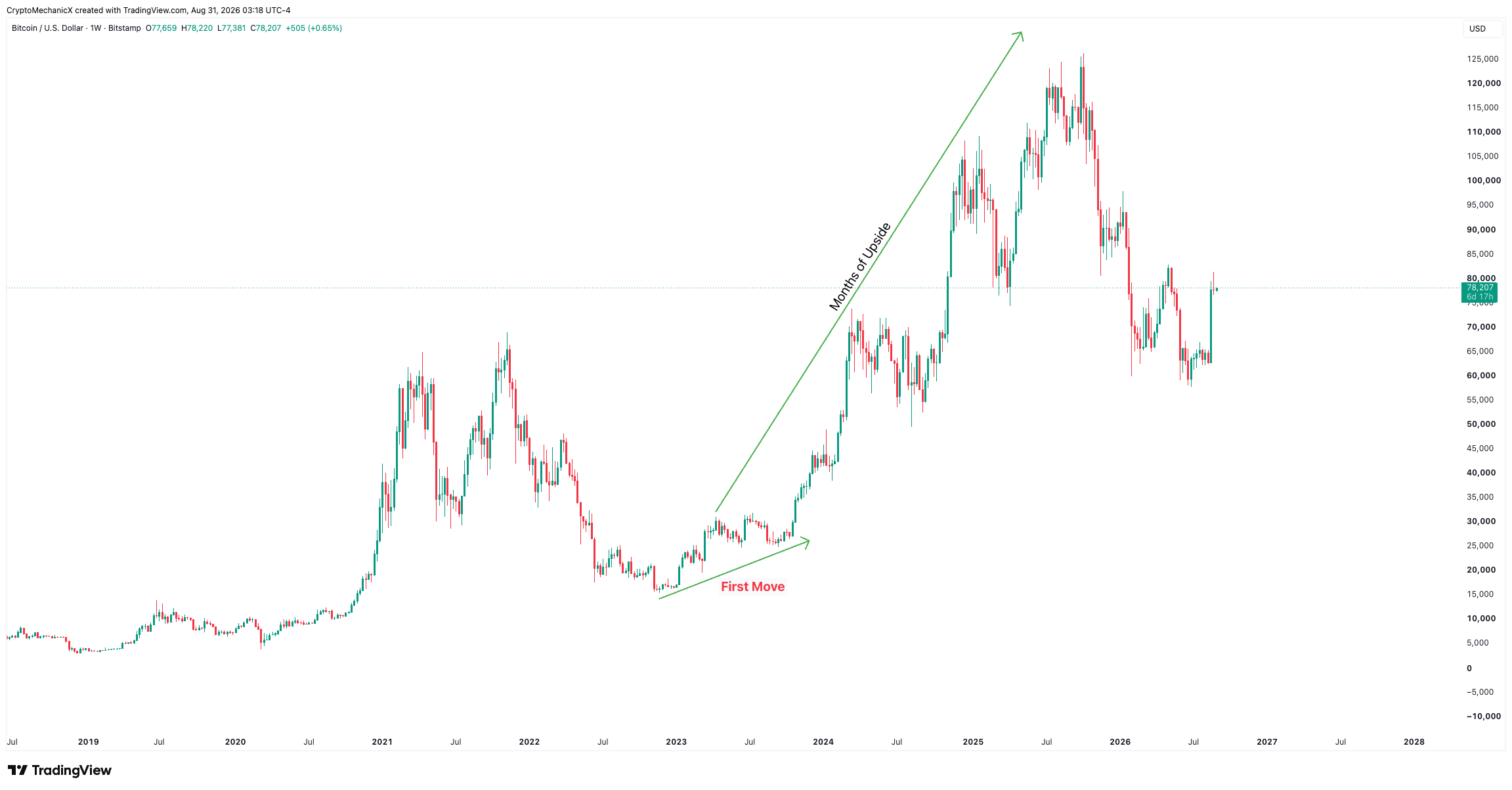
The goal isn't to buy the lowest possible price.
The goal is to be positioned for the bigger move.
Disclaimer: This article is not financial advice. The goal is simply to educate you about positional trading and how you can approach it.
Read it carefully, understand the concept, learn from it, and then decide how you want to apply it to your own trading.
Positional trading requires a lot of patience, discipline, and market experience. It is not about finding quick trades or making money every day.
Good luck