

ثقة تبادل العملات المشفرة: لماذا السؤال "من التالي؟" هو السؤال الخطأ
في كل مرة تتعثر فيها بورصة كريبتو، يبدأ نفس طاحونة الإشاعات في الدوران: من التالي؟ أي منصة تعاني بهدوء من الإفلاس؟ أي منها سيتجمد فيه سحب الأموال هذا الربع؟
إنها غريزة مفهومة بعد سنوات من الانفجارات. لكن السؤال المطروح هو أيضًا سؤال خاطئ يجب طرحه في عام 2026. لقد أنجزت لنا تباطؤات السوق وتنظيمات أكثر إحكامًا عملية الفرز بالفعل — وتُظهر البيانات المستقلة بالضبط أي بورصات كريبتو تكسب الثقة وأيها تخسر المستخدمين. لا حاجة للشائعات. فقط الأرقام.
يشرح هذا المقال ما الذي تبلغه شركات البحث التابعة لجهات خارج البورصات — لا البورصات نفسها — حول شفافية بورصات العملات المشفرة، وإثبات الاحتياطيات، وسلوك المستخدمين المتغير. وإذا كنت تقرر أين تحتفظ بأموالك، أو تحاول فقط فهم لماذا يبدو السوق بالشكل الذي هو عليه، فهذا هو الإصدار المدعوم بالبيانات من تلك القصة.
لماذا أصبحت الثقة والشفافية الآن تحددان بقاء البورصة
لطالما كان معنى «الثقة» في تاريخ العملات المشفرة مجرد شعور. اسم كبير، تسويق لامع، إدراجات هجومية—وكان ذلك غالبًا كافيًا لجذب المستخدمين. لكن FTX غيّر ذلك بشكل دائم.
منذ ذلك الحين، أنشأت شركات بحث مستقلة أطر تقييم فعلية لما يمكن التحقق منه: بنية الحفظ، وتواتر إثباتات الاحتياطيات، والترخيص، وسجل الحوادث، وحمايات عمليات السحب. على سبيل المثال، تمنح «Crypto Almanac Daily» فهرس الثقة اليومي لعام 2026 وزنًا لـ "مخاطر الطرف المقابل والحفظ" كأكبر عامل منفرد في نموذجها، متقدمًا على الرسوم أو حجم التداول. وتتبع «Coin Bureau» في «Exchange Safety Score» لعام 2026 منطقًا مشابهًا، إذ تسجل المنصات على مقياس من 100 نقطة عبر الحفظ، وشفافية الاحتياطيات، والتنظيم، وسجل الأمان—بدل الاعتماد على السمعة وحدها.
تهم هذه النقلة لأنها تغيّر سلوك البورصات. عندما يمكن قياس الشفافية وأن تكون عامة، تتنافس البورصات على البرهان لا على الوعود فقط. وهذه ديناميكية أكثر صحة بشكل ملموس لصالح الصناعة كلها—وهي الخلفية لكل ما سيأتي في هذا المقال.
الضغط التنظيمي عجّل بالترتيب
لم تؤدِّ ضغوط الامتثال التنظيمي حتى 2025 وامتدادًا إلى 2026 إلى مزيد من الأوراق فقط. بل دفعت فعليًا البورصات الأضعف أو الأقل وضوحًا إلى الخروج من الأسواق الرئيسية، بينما استوعبت المنصات الأفضل تنظيمًا والأكثر شفافية المستخدمين الذين تركوها. وتدعم بيانات حصة السوق المستقلة ذلك مباشرة: انخفض إجمالي حجم تداول البورصات المركزية الفوري بنحو 39% ربعًا مقابل ربع في الربع الأول من 2026، ومع ذلك حافظت المنصات ذات أقوى سجلات الامتثال والإفصاح على حصتها أو زادت حصتها حتى مع انكماش إجمالي «الكيك».
بعبارات بسيطة: صار السوق أصغر، لكنه صار أيضًا أكثر انتقائية حول من تثق به ضمن هذه الكتلة الأصغر من رأس المال.
ماذا تُظهر بيانات حصة السوق فعليًا؟
إذا كانت الثقة مجرد نقطة كلام، فلن ترى انعكاسها في حجم التداول. لكنك تراها.
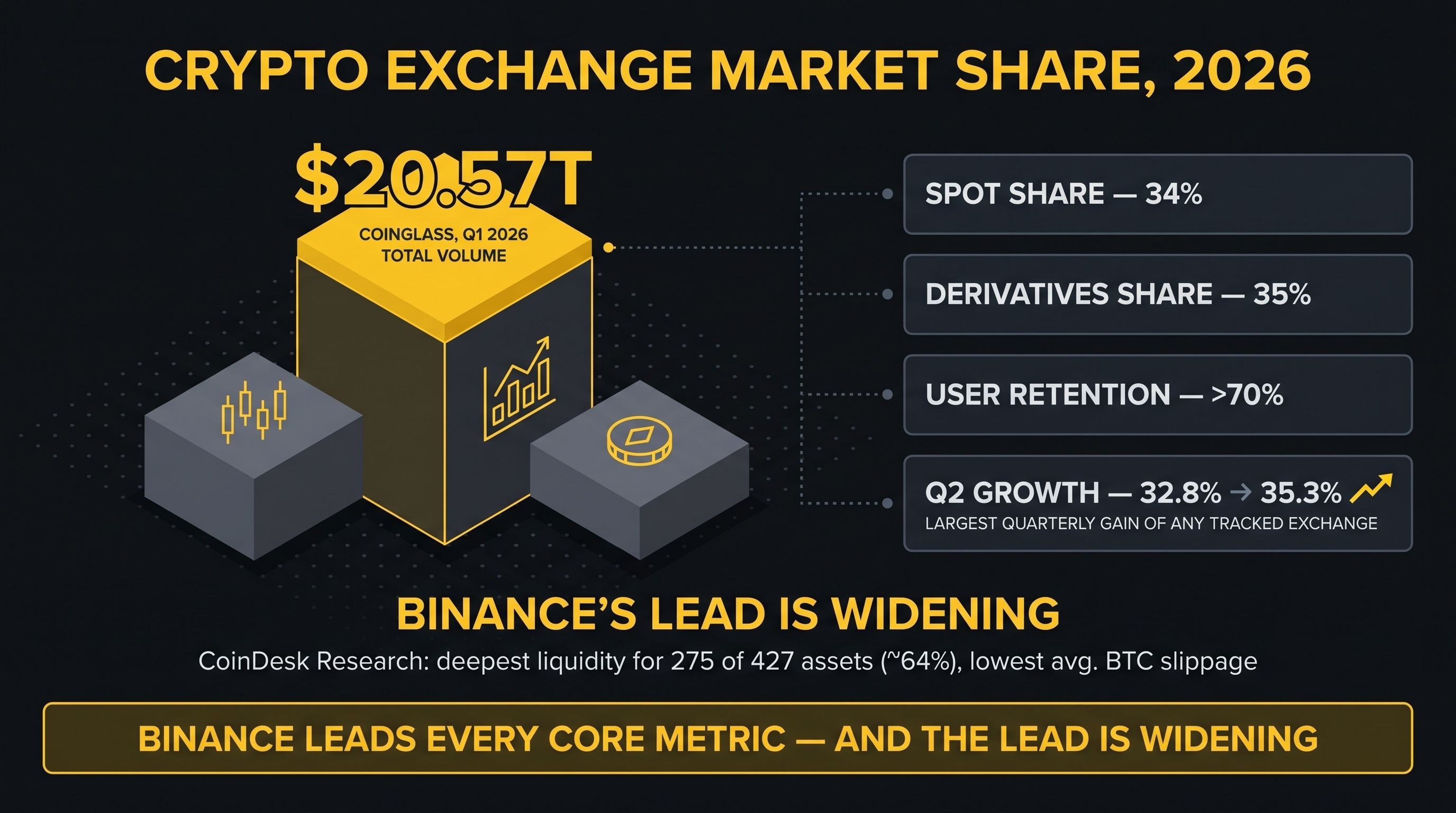
وضعت بيانات CoinGlass للربع الأول من 2026 إجمالي حجم التداول في العملات المشفرة (فوري + مشتقات) عند نحو 20.57 تريليون دولار. ضمن ذلك، كانت بورصة واحدة تحافظ على صدارة ثابتة تقريبًا عبر كل مؤشّر أساسي تقريبًا—حصة الفوري حوالي 34%، وحصة المشتقات حوالي 35%، والاحتفاظ بأصول المستخدمين فوق 70% لدى معظم البورصات المركزية الكبرى. كانت تلك البورصة هي Binance، ولم يكن الأمر قريبًا: حجم مشتقاتها في الربع الأول وحده تجاوز إجمالي المنصتين صاحبتَي المرتبتين الثانية والثالثة.
بحلول الربع الثاني من 2026، أظهر تقرير بورصات TokenInsight أن فجوة الصدارة اتسعت أكثر، مع ارتفاع إجمالي حصة السوق من نحو 32.8% إلى 35.3%—وهو أكبر مكسب فصلي لأي بورصة ضمن ما تمت متابعته، وذلك رغم أن المنصة كانت أصلًا تمتلك أكبر حصة في الصناعة. كما توصل تحليل CoinDesk Research المستقل، باستخدام بيانات عمق دفتر الأوامر عبر 427 أصلًا مُدرجة، إلى أن Binance كانت منصة السيولة الأعمق بالنسبة لما يقرب من 275 أصلًا منها، أي حوالي 64% من مجموعة المقارنة، وسجلت أدنى متوسط لانزلاق BTC بين البورصات الرئيسية للأحجام التي تتراوح من 10,000 دولار إلى مليون دولار.
لا يحدث هذا كله بالصدفة. يحدث لأن السوق عندما يتقلص، لا يتوزع رأس المال بالتساوي—بل يتركز حول منصات تستطيع إثبات أنها مُعسِرة أقل، وسيولتها حقيقية، وثابتة تحت الضغط.
التداول الفوري متشعب. المشتقات لم تتشعب.
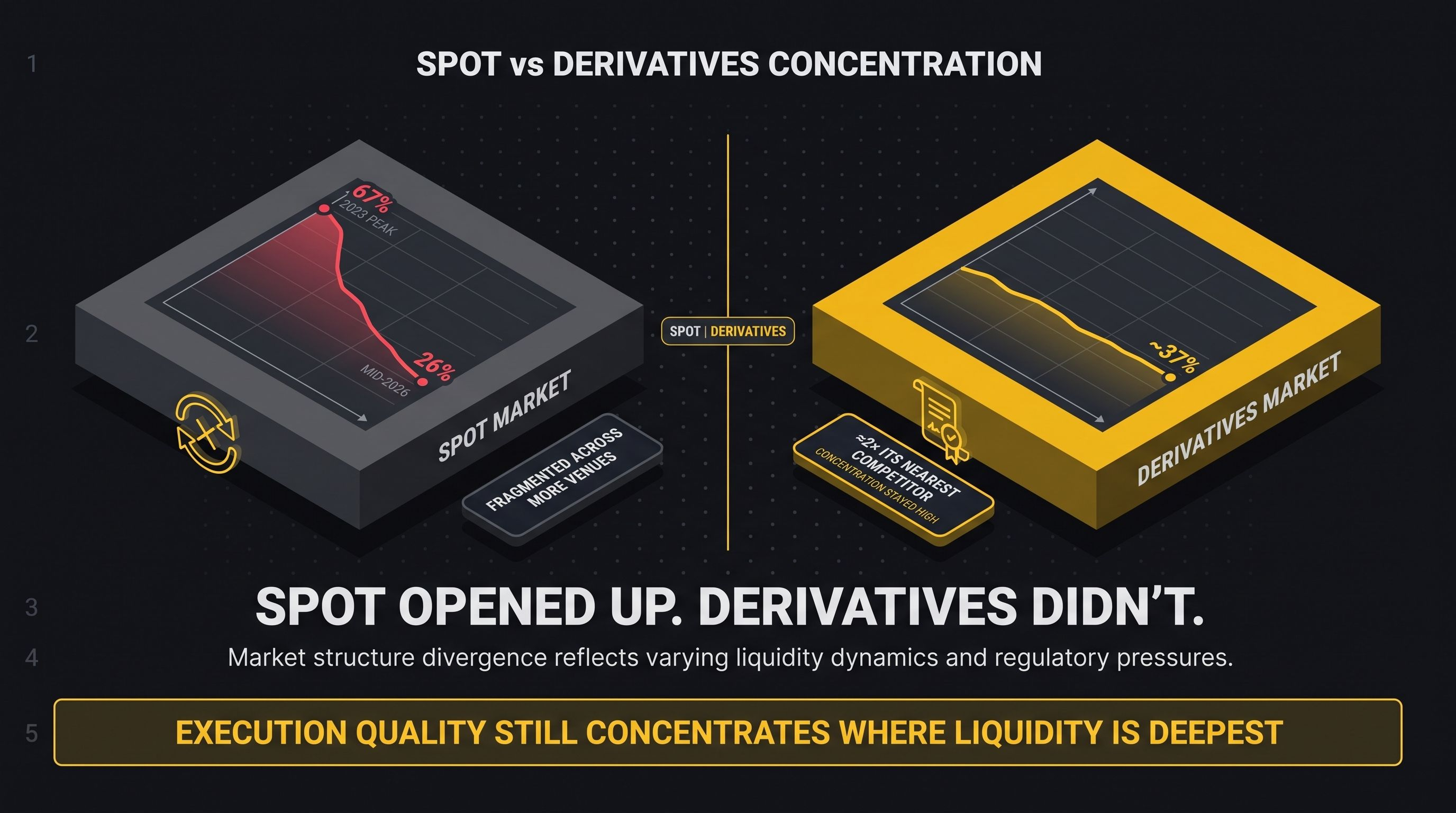
تفصيلة مهمة يجب فهمها: لقد أصبح التداول الفوري متشعبًا أكثر خلال السنوات القليلة الماضية، إذ انخفض من ذروة تركّز نحو 67% لدى أكبر منصة في 2023 إلى قرابة 26% بحلول منتصف 2026. يعود ذلك لأن البورصات المنافسة والمنصات الإقليمية والسيولة اللامركزية امتصت جزءًا أكبر من تدفق الفوري. أما المشتقات فقد روت قصة مختلفة—إذ بقي التركّز مرتفعًا، مع امتلاك المنصة الرائدة لحصة تقارب 37%، أي حوالي ضعف أقرب منافس لها.
لهذا الانقسام أهمية لأي شخص يتداول بنشاط: أسواق الفوري تمنحك خيارات منصات أكثر، لكن سيولة المشتقات ما زالت مركّزة في حفنة من المنصات—وهي بالضبط المكان الذي تميل فيه جودة التنفيذ (فروق أضيق، انزلاق أقل) لأن تكون الأكثر أهمية.
إثبات الاحتياطيات: المقياس الذي يفصل بين الكلام والبرهان
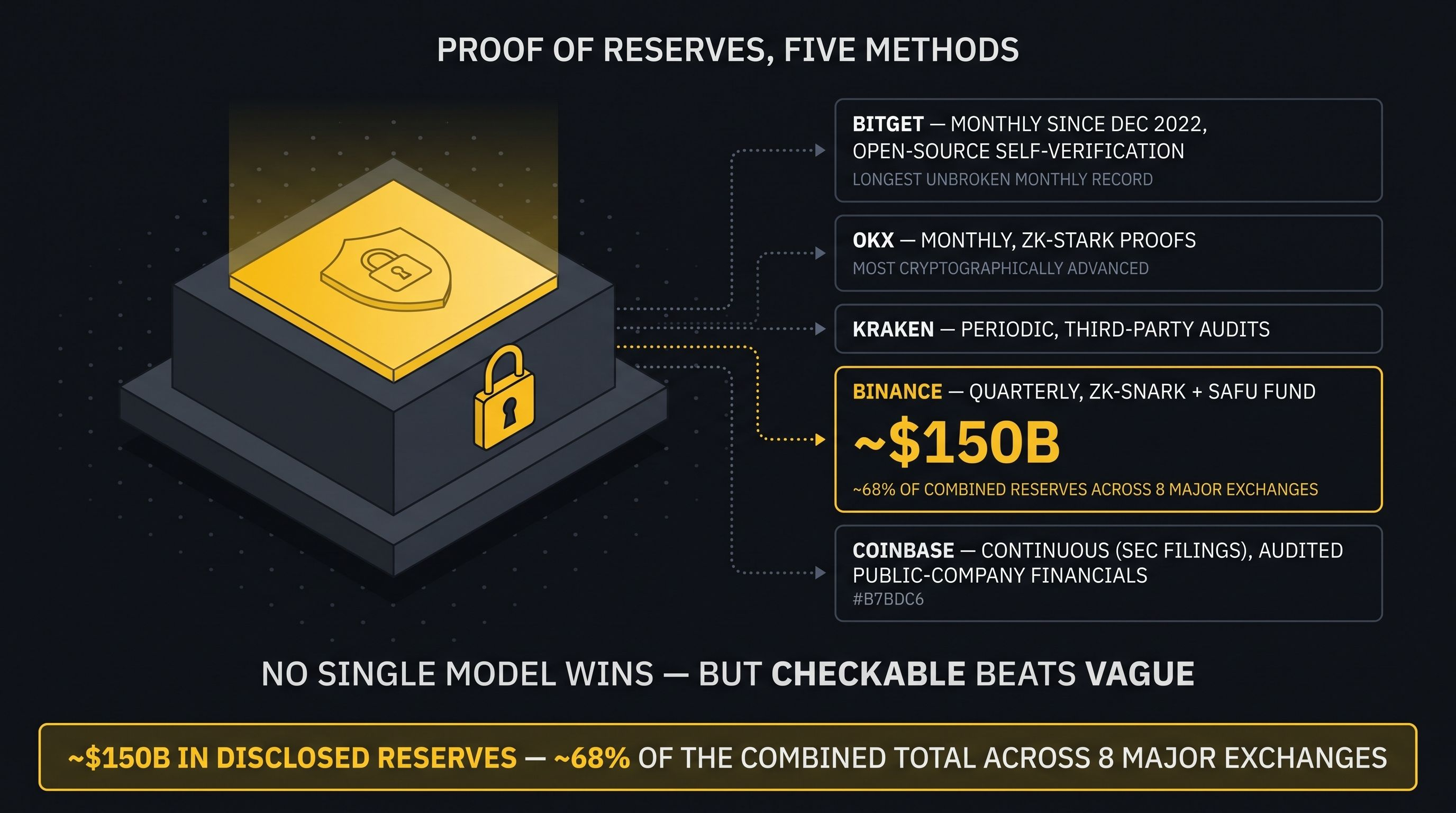
إذا كانت حصة السوق تخبرك إلى أين يتجه المستخدمون، فإن إثبات الاحتياطيات (PoR) يخبرك لماذا تثق بأنهم سيصلون إلى هناك.
يُعد PoR لقطة عامة يمكن التحقق منها لمعرفة ما إذا كانت البورصة تمتلك فعلًا الأصول التي تقول إنها تحتفظ بها نيابةً عن المستخدمين—وغالبًا ما تُعرض عبر إثباتات تشفيرية شبيهة بشجرة ميركل، أو إقرارات بإثباتات معرفة صفرية، أو تدقيقات من طرف ثالث. وتمنح الترتيبات المستقلة بدرجة متزايدة تقييمًا مباشرًا لذلك، باستخدام خمسة عوامل أساسية: وتيرة التقارير، وأدوات التحقق الذاتي، ومشاركة جهات تدقيق مستقلة، وتغطية كل أصل على حدة، وقابلية التحقق على السلسلة.
إليك كيف ينعكس ذلك عبر المنصات الكبرى، وفق مراجعات الشفافية المستقلة:
قامت Bitget بنشر تقارير PoR شهرية دون انقطاع منذ ديسمبر 2022، باستخدام أداة تحقق ذاتي مفتوحة المصدر—وهي أطول سلسلة شهرية متواصلة في الصناعة.
تُنشر OKX شهريًا باستخدام إثباتات المعرفة الصفرية (zk-STARK)، والتي تُعد أكثر الطرق تقدمًا تشفيريًا المستخدمة حاليًا.
تستخدم Kraken تدقيقات مستقلة دورية من طرف ثالث، ما يمنحها واحدًا من أنظف سجلات الأداء طويلة الأجل.
تُصدر Binance تقارير ربع سنوية، تجمع بين إثباتات zk-SNARK وصندوق تأمين SAFU، وتمتلك أكبر قاعدة احتياطيات مطلقة بين أي بورصة ضمن ما تمت متابعته—ويُقال إنها قرابة 150 مليار دولار من الاحتياطيات المعلنة في بعض لقطات 2026، أي حوالي 68% من إجمالي الاحتياطيات المجمعة عبر ثماني بورصات رئيسية.
تتبع Coinbase نهجًا مختلفًا تمامًا، بالاعتماد على قوائم مالية مدققة لشركة عامة بدل إثباتات PoR التشفيرية، لأنها شركة مدرجة تخضع لمتطلبات إعداد التقارير لدى هيئة الأوراق المالية والبورصات (SEC).
لا توجد أي طريقة واحدة تُعد «الأفضل» بشكل موضوعي—إذ يحل التواتر والعمق التشفيري واستقلالية التدقيق كلٌ منها مشكلة ثقة مختلفة قليلًا. لكن الاتجاه الأوسع واضح: البورصات التي تنشر شيئًا يمكن التحقق منه، وفق جدول منتظم يمكن التنبؤ به، هي التي يحصل—فيه—الباحثون المستقلون (وبالتالي المستخدمون) على أعلى المراتب.
ماذا يجب أن تتحقق منه فعليًا كمستخدم؟
إذا كنت تقيّم أين ستحتفظ بالأموال، فلا تبحث فقط عن عبارة «إثبات الاحتياطيات» على صفحة رئيسية. تحقق من:
كم مرة يتم تحديثه—هل هو شهري أم ربع سنوي؟ الشهرية أقوى من ربع السنوية، وربع السنوية أقوى من «أحيانًا».
هل يمكنك التحقق منه بنفسك، أم يعتمد بالكامل على تقارير البورصة الخاصة بها؟
هل يقوم طرف ثالث—شركة تدقيق أو مُتحقق مستقل—بالمصادقة عليه؟
هل يغطي الخصوم، وليس الأصول فقط؟ لقطة احتياطيات تتجاهل ما على البورصة من مستحقات للمستخدمين هي نصف الصورة فقط.
عمق السيولة وجودة التنفيذ كمؤشرات ثقة مخفية
الثقة ليست فقط مسألة ملاءة—بل أيضًا مسألة ما إذا كانت المنصة تتصرف بشكل موثوق عندما تحاول بالفعل إجراء التداول. هنا تصبح بيانات عمق السيولة والانزلاق إشارة ثقة أكثر هدوءًا لكنها في الوقت نفسه بنفس القدر من الأهمية.
قد تبدو البورصة ذات دفاتر أوامر رقيقة جيدة في يوم هادئ ثم تتحرك بعنف ضدك أثناء التقلبات—وهي تكلفة غير مرئية فعليًا لا تظهر في درجة الثقة على شكل عنوان. دراسات جودة التنفيذ المستقلة مهمة هنا تحديدًا لأنها تقيس ظروف التداول الفعلية بدلًا من ادعاءات التسويق. تعد بيانات Binance لعام 2026 حول عمق دفتر أوامر بنسبة 1% والانزلاق في BTC عبر أحجام أوامر كبيرة مثالًا مفيدًا على نوع الشفافية التي أصبحت تمييزًا تنافسيًا، لا مجرد «ميزة لطيفة». معظم تغطية التجزئة تركز على الرسوم، لكن عمق التنفيذ غالبًا ما يكون أهم من الرسوم لأي شخص يتداول أحجامًا ذات معنى.
التحول على السلسلة: الأصول المُرمّزة وRWAs كمقياس لدرجة الثقة
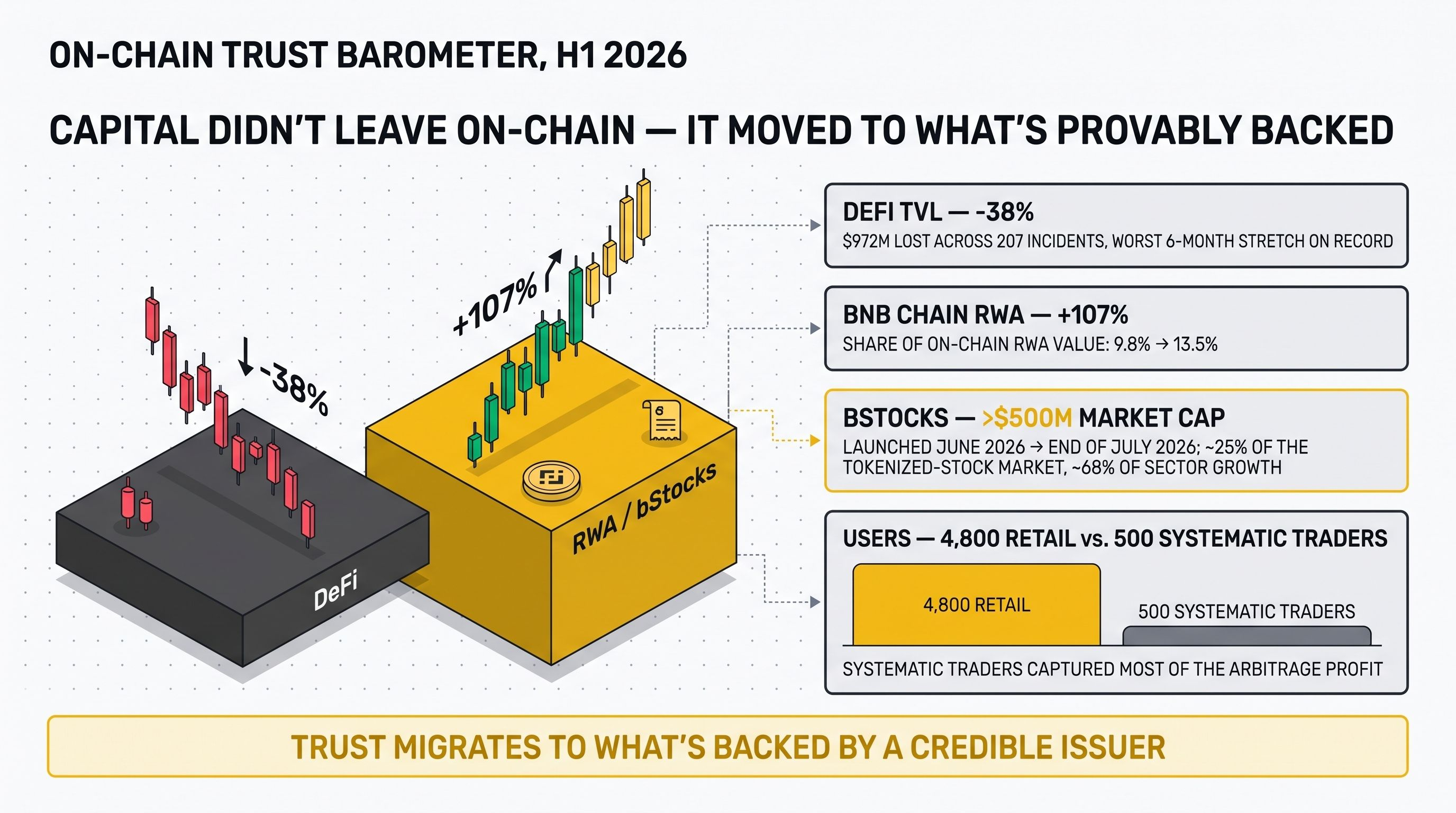
ليست ديناميكيات الثقة محصورة في البورصات المركزية. تُحكي بيانات السلسلة من النصف الأول من 2026 قصةً موازية حول أين يكون المستخدمون مستعدين لالتزام رأس المال.
شهدت DeFi عمومًا ستة أشهر صعبة: انخفض إجمالي القيمة المقفلة عبر السلاسل بنحو 38%، وسجلت الصناعة حوالي 972 مليون دولار من الخسائر عبر 207 حادثة أمنية—وهو أسوأ امتداد ستة أشهر للهجمات التي تم توثيقها على الإطلاق. هذا الأمر أضعف الثقة في توفير السيولة للبروتوكولات غير المدققة أو الأحدث.
لكن ليس كل شيء على السلسلة انكمش. فقد واصلت الأصول الحقيقية المُرمّزة (RWAs)—فكر في الأسهم المُرمّزة، والسندات الحكومية، وأدوات تقليدية أخرى ممثلة على السلسلة—النمو حتى مع انكماش DeFi المضاربي. على وجه الخصوص، أصبحت سلسلة BNB Chain المنصة الرائدة للأسهم المُرمّزة، إذ نما رأس مالها السوقي للأصول المُرمّزة بحوالي 107% في النصف الأول من 2026، وارتفعت حصتها من قيمة RWAs على السلسلة من نحو 9.8% إلى 13.5%.
يُعد منتج Binance المُرمّز للأسهم، bStocks، مثالًا ملموسًا على هذا الاتجاه: فقد نما من نقطة انطلاق متواضعة في أوائل يونيو 2026 إلى أكثر من 500 مليون دولار في القيمة السوقية بنهاية يوليو—أي حوالي ربع سوق الأسهم المُرمّزة بالكامل، ونحو 68% من إجمالي نمو القطاع خلال تلك النافذة. شكّل المستخدمون التجزئة أغلبية كبيرة من المشاركين (قرابة 4,800 مستخدم)، بينما التقطت مجموعة أصغر من حوالي 500 متداول منظّم معظم أرباح التحكيم—وهذا نمط شائع إلى حد ما عندما يُطلق منتج جديد لكنه مفيد بالفعل: يأتي التجزئة أولًا لاستخدامه، ثم يأتي رأس المال الاحترافي ثانيًا للكفاءة.
الخلاصة هنا ليست "RWAs رائجة". بل أن المستخدمين مستعدون لإيداع رأس المال في منتجات على السلسلة تحديدًا عندما يكون هناك أصل مُقنع خارج السلسلة وُمُصدِر موثوق وراءه—وذلك لا يعني سوى نفس منطق الثقة الخاص بإثباتات الاحتياطيات، لكن مطبَّق على الترميز بدلًا من الحفظ.
ماذا يعني ذلك بالنسبة لمكان إيداع المستخدمين لرأسمالهم؟
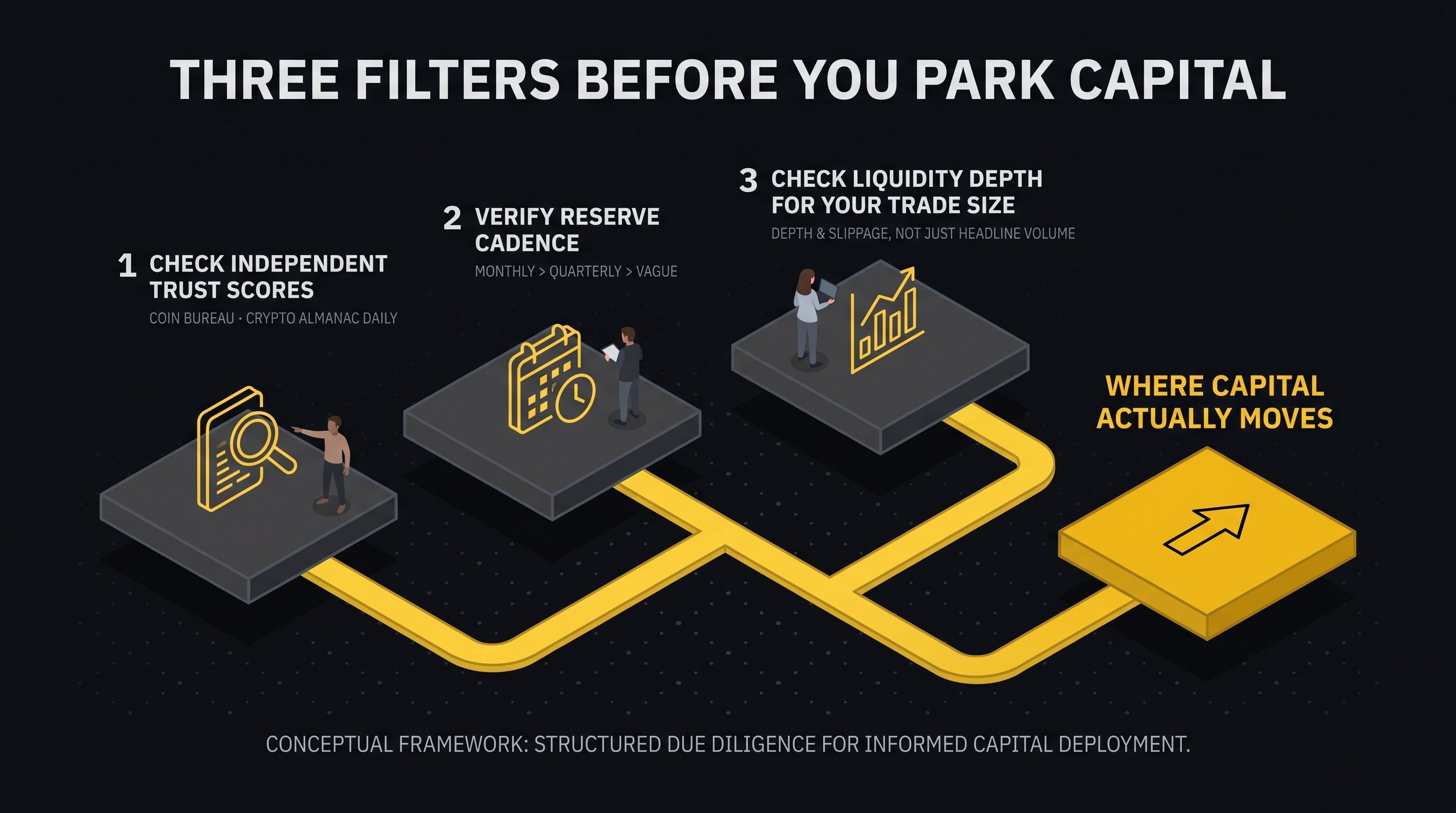
عند جمع كل ما سبق، تظهر ثلاثة فلاتر عملية لأي شخص يقرر أين يحتفظ أو يتداول بالعملات المشفرة في بيئتنا الحالية:
تحقق من درجات الثقة المستقلة، لا صفحات التسويق. تقييمات مثل «Coin Bureau Exchange Safety Score» أو «Crypto Almanac Daily» لدرجات الثقة تقيّم الحفظ والتنظيم وسجل الحوادث باستخدام معايير ثابتة عبر المنصات.
تحقق من شفافية الاحتياطيات وتواترها. تقارير PoR قابلة للتحقق تشفيريًا شهريًا تُعد إشارة أقوى من ادعاءات سنوية أو بيانات غامضة مثل «تمت مراجعتنا».
انظر إلى عمق السيولة بحجم تجارتك الفعلي. منصة ذات أكبر حجم تداول على العناوين ليست تلقائيًا أفضل مكان للتنفيذ لتداول 500 دولار مقارنةً بتداول 500,000 دولار—عمق البيانات والانزلاق أهم من إجمالي الحجم للمتداولين النشطين.
لا يعني أيٌّ من هذا أن الأكبر أكثر أمانًا تلقائيًا، ولا أن بورصة واحدة مناسبة للجميع. نموذج كراكن المعتمد على التدقيق، وسلسلة التحقق الذاتي الشهرية لدى Bitget، وإثباتات المعرفة الصفرية لدى OKX، ونهج Binance القائم على الحجم + SAFU—كلها تعالج مشكلة الثقة بشكل مختلف. الفكرة أن لدى المستخدمين الآن بيانات حقيقية للمقارنة بينهم—والمنصات التي تزيد حصتها في 2026، وبشكل ساحق، هي تلك التي تجعل إجراء هذه المقارنة سهلًا.
أهم النقاط
أصبحت ثقة بورصات العملات المشفرة قابلة للقياس الآن عبر إثباتات الاحتياطيات، والترخيص التنظيمي، وسجل الحوادث، وعمق السيولة—وليس السمعة فقط.
تُظهر بيانات 2026 المستقلة أن نشاط التداول يتجه نحو البورصات ذات أقوى ممارسات الشفافية، حتى مع تقلص إجمالي حجم السوق.
تجزأ التداول الفوري عبر مزيد من المنصات منذ 2023، بينما تظل سيولة المشتقات شديدة التركّز لدى حفنة من المنصات.
تختلف نماذج إثبات الاحتياطيات بحسب البورصة (تحقق ذاتي شهري، إثباتات معرفة صفرية، تدقيقات مستقلة، أو قوائم مالية لشركات مدرجة) — لكن التواتر وقابلية التحقق أهم بكثير من كون أي طريقة واحدة «صحيحة» بذاتها.
تعكس ديناميكيات الثقة على السلسلة ديناميكيات ثقة البورصات: فقد واصلت الأصول الحقيقية المُرمّزة والأسهم نموها في النصف الأول من 2026 حتى مع انكماش DeFi المضاربي بشكل حاد.
على من يقيّم أين سيحتفظ بالأموال أن يتحقق من وتيرة PoR ودرجات الثقة المستقلة وجودة التنفيذ لحجم تداوله المحدد—وليس فقط حجم العناوين أو التعرف على العلامة التجارية.
الأسئلة الشائعة
ما الذي يثبتُه «إثبات الاحتياطيات» فعليًا؟
يُظهر أنه في وقت محدد، تمتلك البورصة أصولًا كافية لتغطية ما تدين به للمستخدمين—وغالبًا ما يتم التحقق منه عبر طرق تشفيرية مثل أشجار ميركل أو إثباتات المعرفة الصفرية، أو عبر تدقيقات طرف ثالث مستقلة. إنها لقطة وليست ضمانًا لحظيًا، ولهذا السبب تُعد وتيرة التقارير مهمة.
هل يَضمن التبادل الأكبر تلقائيًا أمانًا أكبر؟
ليس بالضرورة. قد تدعم القدرة على نطاق أوسع سيولة أعمق وصناديق تأمين أكبر، لكن تُقيِّم درجات الأمان المستقلة ممارسات الحفظ، وتواتر عمليات التدقيق، وسجل الحوادث إلى جانب الحجم. وبعض البورصات الأصغر أو المتوسطة قد تحصل على درجات تنافسية في الشفافية رغم انخفاض حجم التداول.
لماذا تقلصت DeFi بينما نمت الأصول الحقيقية المُرمّزة في 2026؟
كان انكماش DeFi مدفوعًا إلى حد كبير بعدد قياسي من الثغرات والخسائر، ما جعل المستخدمين—بشكل مفهوم—أكثر حذرًا عند توفير السيولة لبروتوكولات جديدة أو غير مدققة. نمت الأصول المُرمّزة (RWAs) والأسهم لأن ما تدعمها أصلًا خارج السلسلة يمكن التعرف عليه ومُصدِر معروف، ما يمنح المستخدمين مرساة ثقة أكثر مألوفة حتى في بيئة «تقليل المخاطر».
كم مرة يجب أن تنشر بورصة موثوقة إثبات الاحتياطيات؟
الشهرية هي حاليًا أقوى معيار بين البورصات الكبرى، خصوصًا عندما تكون قابلة للتحقق ذاتيًا وتغطي الأصول والخصوم معًا. التقارير ربع السنوية أو الدورية ليست تلقائيًا غير جديرة بالثقة، لكنها تمنح المستخدمين رؤية أقل بين التقارير.
ما الفرق بين تركّز سوق الفوري وتركيز سوق المشتقات؟
أصبح التداول الفوري أكثر توزيعًا عبر البورصات والمواقع اللامركزية منذ 2023. أما المشتقات، فتبقى على العكس مركّزة في عدد صغير من المنصات التي تمتلك سيولة عميقة بما يكفي لدعم التداول بالرافعة دون انزلاق مفرط.
هاشتاغات مقترحة
#CryptoExchange #ProofOfReserves #CryptoTransparency #CryptoTrust #TokenizedAssets