

How Does Binance Protect User Funds in Indonesia in 2026?
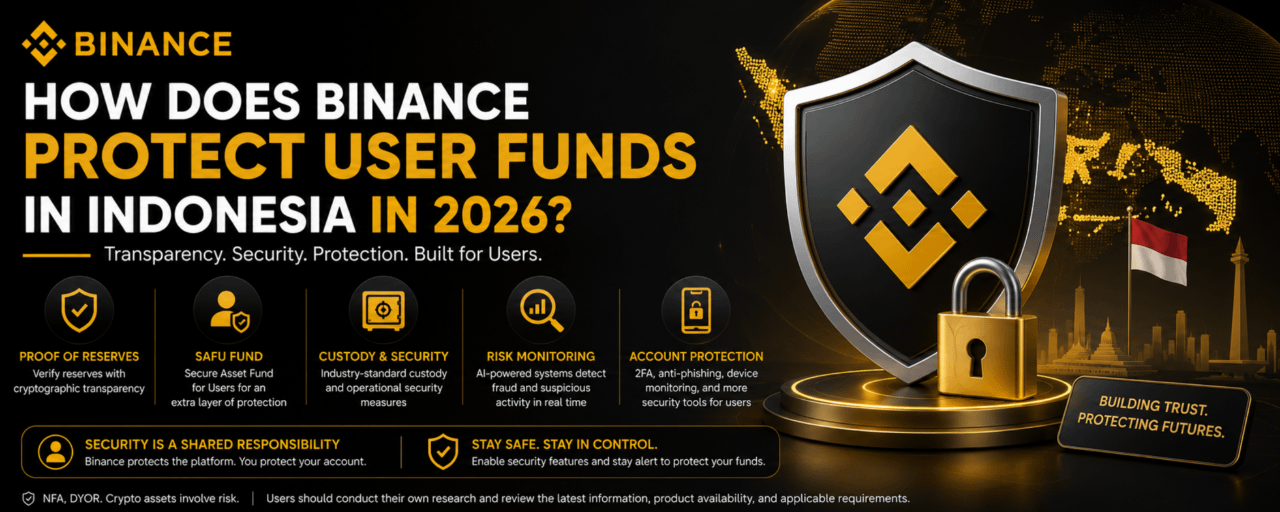
Binance protects user funds in Indonesia through multiple layers of security, including Proof of Reserves, the Secure Asset Fund for Users (SAFU), custody and operational security measures, risk monitoring, and account-level protection tools. However, no crypto platform can eliminate every risk, which means users also play an important role in protecting their own accounts.
For Indonesian users, understanding how these different layers work is more useful than simply asking whether an exchange is “safe” or “unsafe.” Security involves both how a platform manages assets and how users secure their personal accounts.
How Does Binance Protect User Funds?
Binance uses a combination of measures designed to protect user assets and monitor potential risks.
These measures include:
Proof of Reserves for greater transparency around certain user assets
The Secure Asset Fund for Users (SAFU)
Custody and operational security measures
Risk monitoring and fraud detection
Account-level security features that users can activate
Each layer addresses a different type of risk.
What Is Proof of Reserves and Why Does It Matter?
Proof of Reserves is a transparency mechanism that allows users to verify that an exchange holds reserves related to customer assets.
The purpose is not to eliminate all risks associated with crypto, but to provide additional visibility into how certain assets are backed. Binance has developed a Proof of Reserves system that uses cryptographic verification methods, including Merkle Tree-based verification, allowing users to check relevant information about assets included in the system.
For users, this adds an extra layer of transparency compared with simply relying on a platform's statements about its reserves.
What Is Binance's SAFU and How Does It Protect Users?
SAFU, or the Secure Asset Fund for Users, is an emergency fund established by Binance to provide an additional layer of protection in specific situations.
It is important to understand that SAFU does not mean every possible loss is automatically covered. Crypto users can still lose assets through phishing, compromised accounts, incorrect transactions, or other risks.
Instead, SAFU is one component of Binance's broader approach to managing platform-level risks.
How Does Binance Secure User Assets and Its Platform?
Protecting user funds is not limited to holding assets in reserve. Platform security also depends on how risks are monitored and suspicious activity is identified.
Binance uses security and risk management processes to help detect potentially fraudulent or unusual activity. As financial crime and online scams become increasingly sophisticated, technology and automated systems can help identify patterns that may require additional review.
This is particularly relevant in crypto, where transactions can move quickly and phishing or social engineering attacks often target individual users rather than the exchange itself.
How Does Binance Use AI to Detect Fraud and Suspicious Activity?
AI and advanced data analysis can help financial platforms identify patterns associated with suspicious activity and emerging risks.
Rather than replacing human oversight, these technologies can support risk and compliance teams by processing large amounts of information and helping prioritize potentially unusual behavior for further investigation.
For users, the practical takeaway is simple: platform-level monitoring can provide an additional layer of protection, but it does not replace personal security practices.
What Security Tools Can Binance Users Activate?
Account security is also a shared responsibility.
Binance users should consider using available security features and good account practices, including:
Two-factor authentication (2FA)
A strong and unique password
Anti-phishing protection where available
Device and account activity monitoring
Careful verification of withdrawal addresses
Avoiding suspicious links, messages, and fake support accounts
Users should also never share login credentials, verification codes, or recovery information with anyone claiming to represent Binance.
Is Binance Safe and Trustworthy for Users in Indonesia?
Security should not be viewed as a simple yes-or-no question. Binance provides multiple layers of protection, including Proof of Reserves, SAFU, platform-level security measures, and account security tools.
However, these measures do not remove all crypto-related risks.
For users in Indonesia, the safest approach is to understand the security features available, follow applicable requirements and service availability in their region, and actively protect their own accounts from phishing, scams, and unauthorized access.
Final Thoughts
Binance's approach to protecting user funds combines transparency, reserve verification, emergency protection mechanisms, operational security, risk monitoring, and user-controlled account security tools.
Proof of Reserves helps provide transparency around reserves, while SAFU adds another layer intended for specific emergency situations. Meanwhile, platform monitoring and account security features address other potential risks.
The most important takeaway is that exchange security and personal security work together. Even strong platform-level protections cannot fully protect users who share their credentials, approve malicious transactions, or fall victim to phishing attacks.
FAQs
Does Binance hold user assets 1:1?
Binance provides Proof of Reserves information for supported assets, allowing users to verify reserve information through its transparency system. Users should check the latest Proof of Reserves information directly through Binance.
Does SAFU cover every type of loss?
No. SAFU should not be interpreted as insurance against every possible loss. Users remain responsible for protecting their accounts and following good security practices.
How can Indonesian users make their Binance accounts more secure?
Enable 2FA, use a unique password, activate available anti-phishing protections, monitor account activity, and never share passwords or verification codes.
NFA, DYOR. Crypto assets involve risk. Users should conduct their own research and review the latest information, product availability, and applicable requirements before using any platform.