
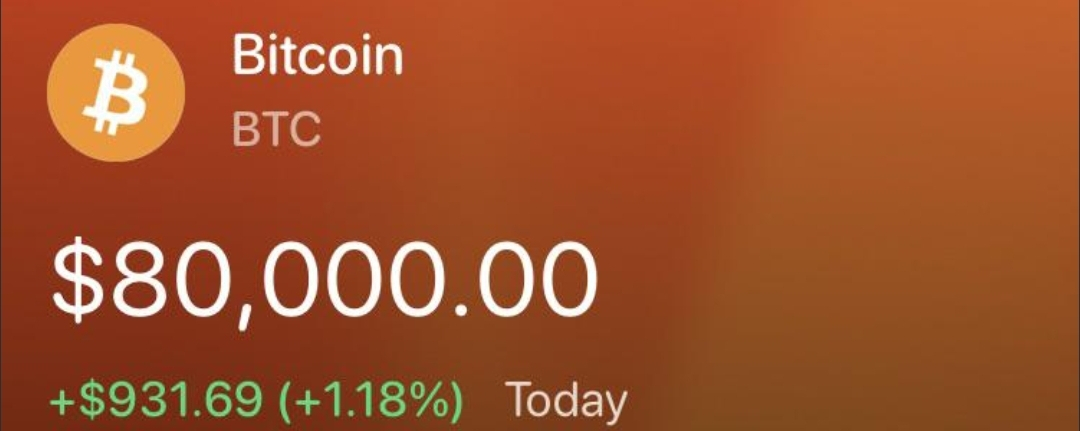


Bitcoin is back in the spotlight. After spending much of the summer struggling for momentum, BTC surged above $80,000 this week and briefly touched roughly $81,200, its highest level since mid-May.
The move has immediately brought one major question back to the market: Could $100,000 be Bitcoin’s next big target?
The answer depends on whether the forces behind the latest rally can continue. Unlike a random one-day spike, Bitcoin’s recovery has been supported by ETF demand, a weaker U.S. dollar, changing bond-market conditions and a major reset in bearish positioning.
What Pushed Bitcoin Back Above $80K?
Bitcoin’s recovery has been surprisingly fast.
BTC is up around 28% in August, putting it on track for its strongest monthly performance since November 2024. The rally accelerated after Bitcoin broke through several important psychological levels and eventually moved above $80,000.
One major factor has been the U.S. dollar. A softer dollar has helped increase interest in alternative assets such as Bitcoin and gold. Concerns surrounding government debt and currency purchasing power have also brought the so-called “debasement trade” back into focus.
Bitcoin tends to benefit when investors become concerned about the long-term value of traditional currencies because its maximum supply is fixed at 21 million coins.
ETF Buyers Are Returning
Perhaps the most encouraging development is renewed demand for spot Bitcoin ETFs.
U.S. spot Bitcoin ETFs recorded another $242 million in net inflows on August 27. That extended their positive streak to nine consecutive trading sessions.
This matters because ETF flows can provide a clearer picture of institutional demand than short-term social-media excitement.
Over the previous seven trading sessions alone, investors had poured approximately $2.5 billion into spot Bitcoin ETFs, according to Dow Jones Market Data.
If this demand continues into September, it could provide Bitcoin with additional support as the market attempts to establish $80,000 as a stronger base.
But Part of the Rally Came From Short Liquidations
There is another side to the story.
The initial Bitcoin breakout was accelerated by a huge wave of short liquidations. Traders betting on lower crypto prices were forced out of their positions as BTC moved rapidly higher.
That created additional buying pressure and helped Bitcoin climb much faster than it might have under normal market conditions.
The important question now is what happens after that forced buying disappears.
For Bitcoin to continue toward $90,000 and eventually $100,000, the market will likely need sustained spot demand rather than relying primarily on liquidations.
Recent ETF inflows suggest that genuine demand is present, but traders will be watching closely to see whether it continues.
Why $80K Is So Important
Bitcoin briefly trading above $80,000 is impressive, but simply touching the level isn't enough.
BTC needs to show that buyers are willing to remain active around this area.
The recent peak around $81,000 means the $80,000-$82,000 region has become an important short-term battleground.
If Bitcoin can establish itself above this area, market attention could gradually shift toward higher levels.
If buyers fail to defend the breakout, however, Bitcoin could move back into consolidation before attempting another major rally.
Could $100K Really Be Next?
A move from $80,000 to $100,000 would require another gain of approximately 25%.
For Bitcoin, that is significant but certainly not impossible during a strong market trend.
Some market analysts are already discussing the $95,000-$100,000 region. IG market analyst Tony Sycamore told Reuters that a sustained breakout could open the way toward that area.
But the word sustained is important.
Bitcoin needs more than hype around a round-number target. Continued ETF inflows, healthy spot demand and supportive macroeconomic conditions would make the case considerably stronger.
September Could Be the Real Test
September may tell us whether the August rally has enough strength to continue.
The market will be watching U.S. economic data, inflation, interest-rate expectations, Treasury yields and the dollar. These factors increasingly influence Bitcoin alongside crypto-specific developments.
There are risks as well. Inflation remains above the Federal Reserve's target, and uncertainty surrounding future interest-rate decisions hasn't disappeared. Reuters reported Friday that the dollar had strengthened toward a one-week high, showing how quickly the macro environment can shift.
A stronger dollar or tighter financial conditions could slow Bitcoin's momentum.
What Happens to Altcoins?
Bitcoin breaking higher could also have major consequences for Ethereum, XRP, Solana and the broader altcoin market.
Normally, traders first watch whether Bitcoin can hold its breakout. If BTC stabilizes at higher prices rather than immediately reversing, some capital may eventually rotate toward large-cap altcoins.
That could make Bitcoin dominance another important indicator to watch during September.
On the other hand, a sharp Bitcoin rejection could increase volatility across the entire crypto market.
The Bigger Picture
Bitcoin returning above $80,000 has changed market sentiment dramatically.
ETF investors are buying again, institutional interest has improved and macro conditions helped BTC recover from its summer weakness. Bitcoin's August gain alone shows how quickly sentiment can change in crypto.
But $100,000 shouldn't be treated as guaranteed.
The first challenge is much simpler: Can Bitcoin turn $80,000 from resistance into a sustainable area of support?
If it can, the conversation around $90,000, $95,000 and eventually $100,000 will become much more serious.
If it can't, the market may need more consolidation before another attempt.
For now, Bitcoin has momentum back on its side. September will show whether $80K was simply an impressive comeback—or the beginning of the road toward six figures.
This article is for educational and market-analysis purposes only. Cryptocurrency prices are highly volatile, and no price target is guaranteed.