
نشر

--

wiki002
·
--
I wasn’t really focused on the partnership headline today. The part I kept thinking about was what this could change for BNB Chain.
Crypto has spent years competing on speed, fees, liquidity and users.
Payments are a different game.
A payment product doesn’t need customers to become crypto users. It needs a reliable way to move value while keeping the blockchain complexity away from the end user.
That’s why @BNB Chain joining Mastercard’s Crypto Partner Program is interesting to me.
The obvious story is access to an established payments ecosystem.
The less obvious one is who gets to decide where the transaction actually settles.
If payment applications eventually gain more choice over blockchain infrastructure, simply being compatible with a payment network won’t be enough.
The real differentiator becomes the settlement environment underneath it.
For BNB Chain, that makes things like execution cost, confirmation reliability, liquidity depth, stablecoin availability and developer tooling important factors in that competition.
And there’s a deeper consequence here.
When the payment interface becomes separated from the underlying blockchain, the chain can compete on infrastructure rather than forcing users to choose a chain first.
That changes the demand model.
Instead of
user → wallet → blockchain → application
the direction I find interesting is
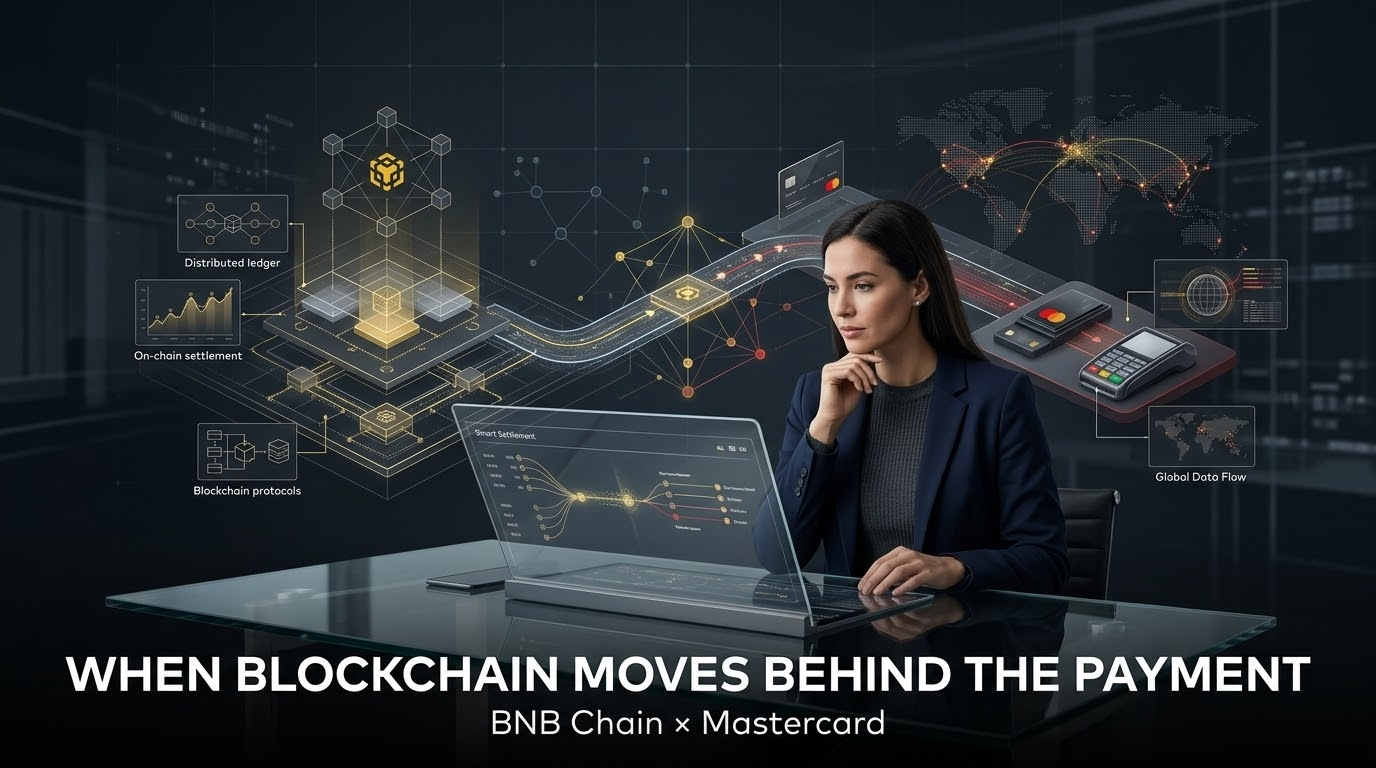
financial product → payment interface → settlement infrastructure
The user may never care which chain handled the transaction.
The developer and payment provider will.
That’s why I don’t see this as proof of mainstream adoption yet.
I see it as a more interesting test
Can BNB Chain become a technically attractive settlement environment when blockchain choice moves behind the payment experience?
If it can, Mastercard’s distribution isn’t the whole story.
The bigger opportunity is competing for the financial activity underneath it. 👍
$BNB #BNB $BB $HEI @Binance Square Official
Crypto has spent years competing on speed, fees, liquidity and users.
Payments are a different game.
A payment product doesn’t need customers to become crypto users. It needs a reliable way to move value while keeping the blockchain complexity away from the end user.
That’s why @BNB Chain joining Mastercard’s Crypto Partner Program is interesting to me.
The obvious story is access to an established payments ecosystem.
The less obvious one is who gets to decide where the transaction actually settles.
If payment applications eventually gain more choice over blockchain infrastructure, simply being compatible with a payment network won’t be enough.
The real differentiator becomes the settlement environment underneath it.
For BNB Chain, that makes things like execution cost, confirmation reliability, liquidity depth, stablecoin availability and developer tooling important factors in that competition.
And there’s a deeper consequence here.
When the payment interface becomes separated from the underlying blockchain, the chain can compete on infrastructure rather than forcing users to choose a chain first.
That changes the demand model.
Instead of
user → wallet → blockchain → application
the direction I find interesting is
financial product → payment interface → settlement infrastructure
The user may never care which chain handled the transaction.
The developer and payment provider will.
That’s why I don’t see this as proof of mainstream adoption yet.
I see it as a more interesting test
Can BNB Chain become a technically attractive settlement environment when blockchain choice moves behind the payment experience?
If it can, Mastercard’s distribution isn’t the whole story.
The bigger opportunity is competing for the financial activity underneath it. 👍
$BNB #BNB $BB $HEI @Binance Square Official
إخلاء مسؤولية: يتضمن آراء جهات خارجية. لا تُعدّ نصيحة. يُمكن استخدام Binance AI دون أي ضمان. اطلع على الشروط والأحكام.